Girl with a Pearl Earring
About this painting
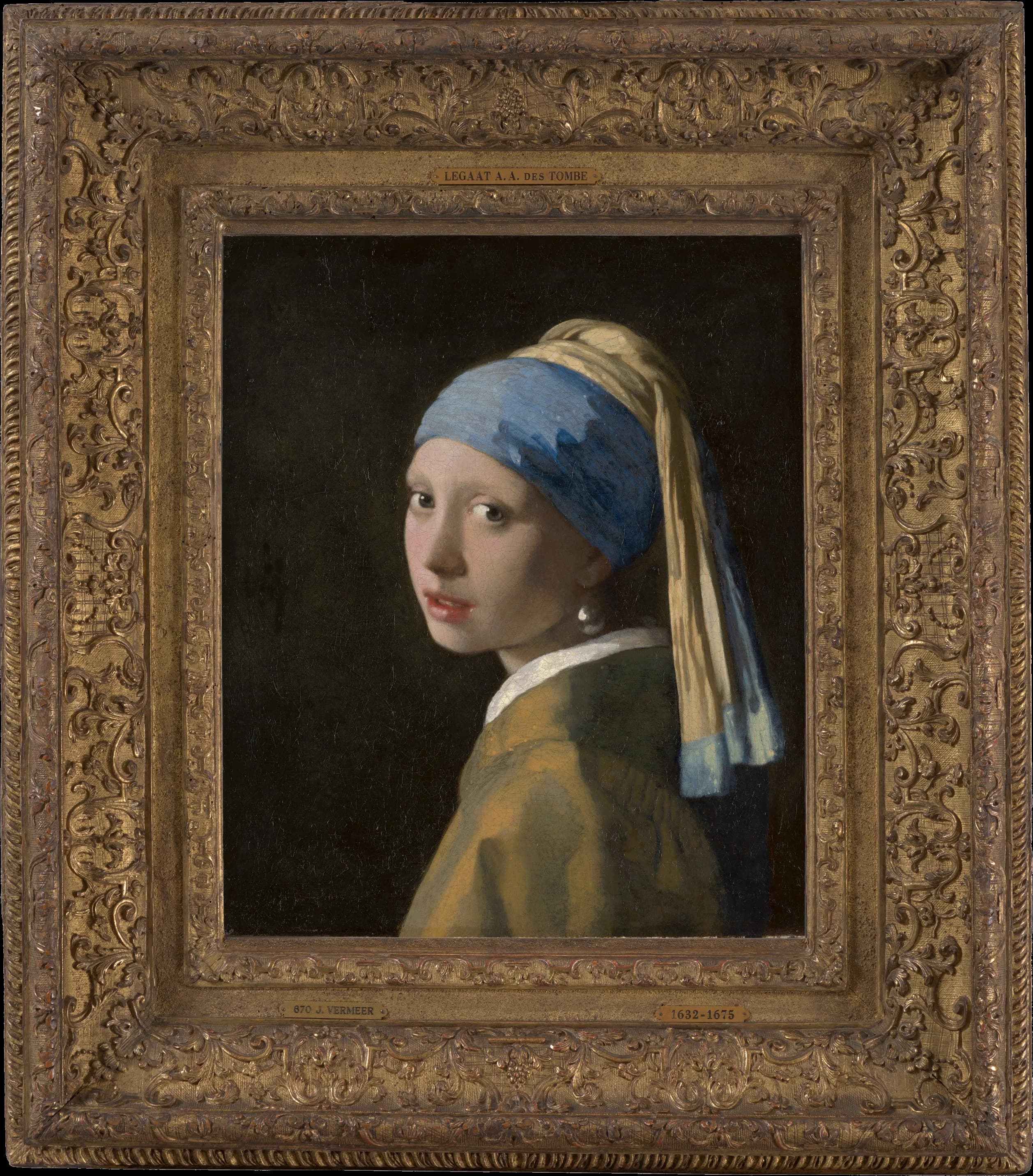
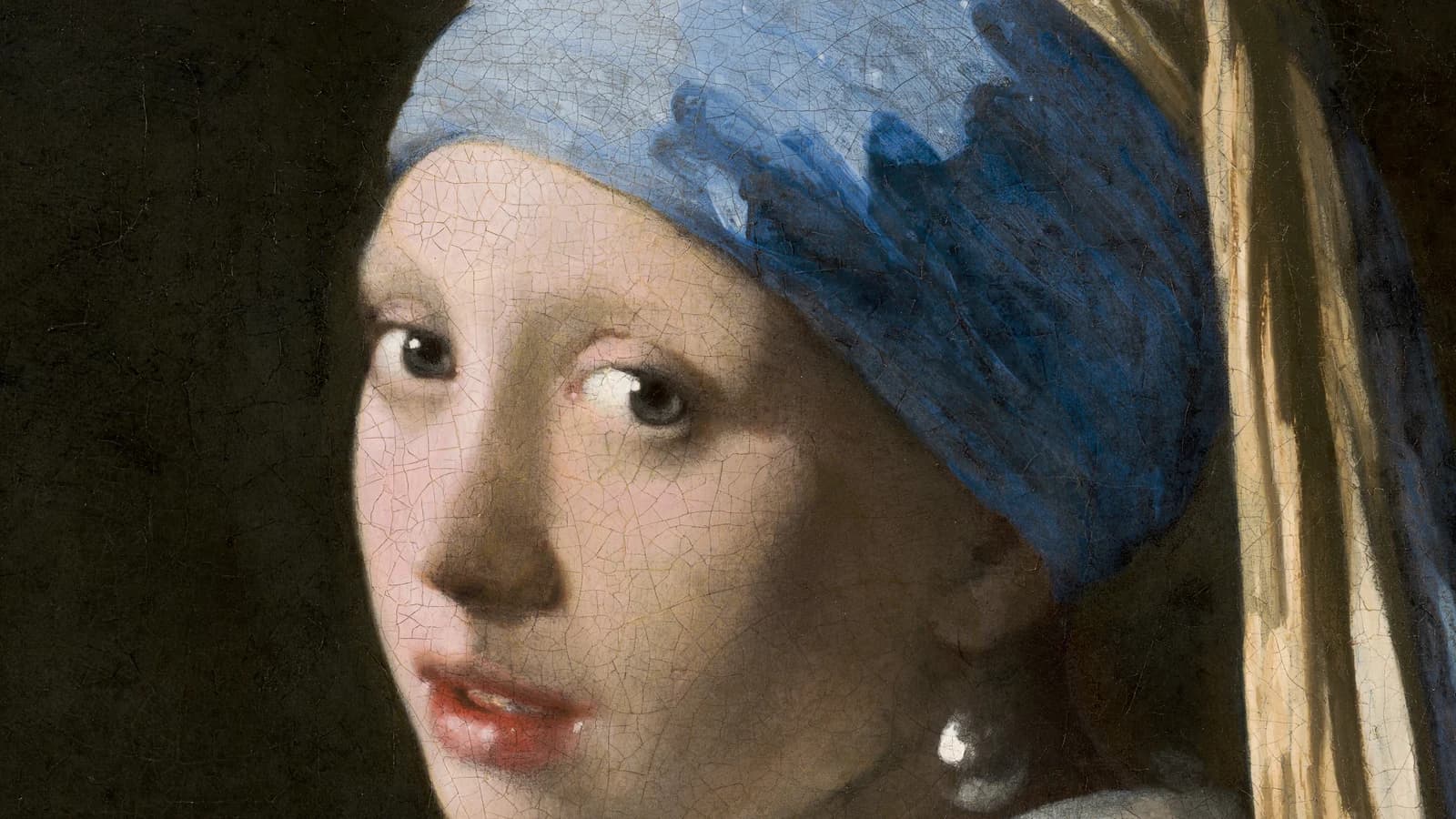
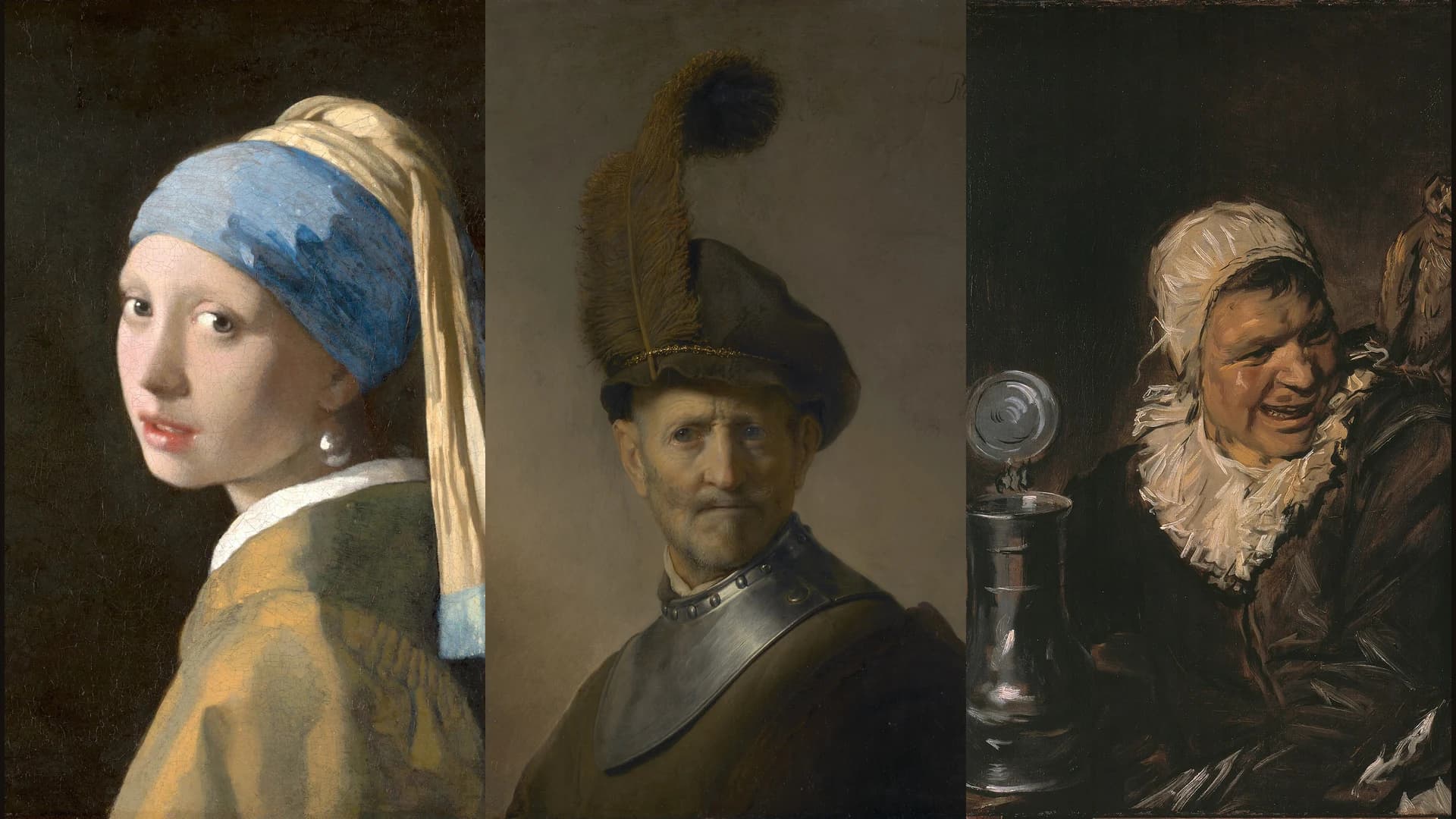
Painted around 1665, this is not a portrait of a named sitter but a tronie, a Dutch term for a study of a head or bust valued for its expression and costume rather than the identity of the model. A young woman turns her face over her shoulder toward the viewer, lips slightly parted, against a plain dark ground. She wears a blue and gold turban and a large drop pearl at her ear.
A face, not a portrait
As a tronie the picture was meant to catch a buyer’s eye rather than record an individual, and the turban and yellow garment are not ordinary Dutch dress. Scholars have suggested Vermeer took the idea of the headdress from figure studies by painters such as Michael Sweerts rather than from anything a Delft woman would actually have worn. The same impulse toward the anonymous, idealized head appears in Vermeer’s Study of a Young Woman, another tronie of comparable scale.
Light and a few pigments
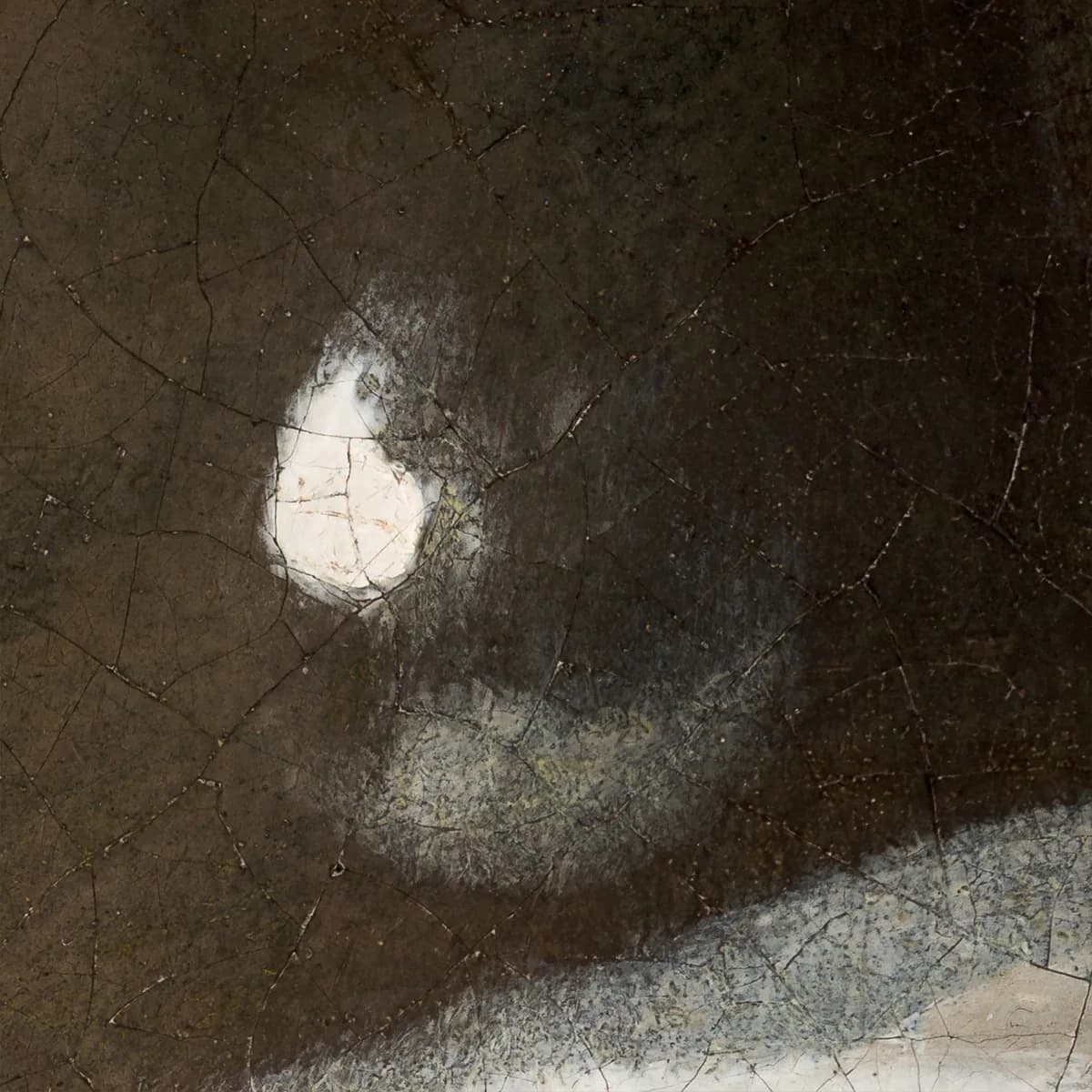
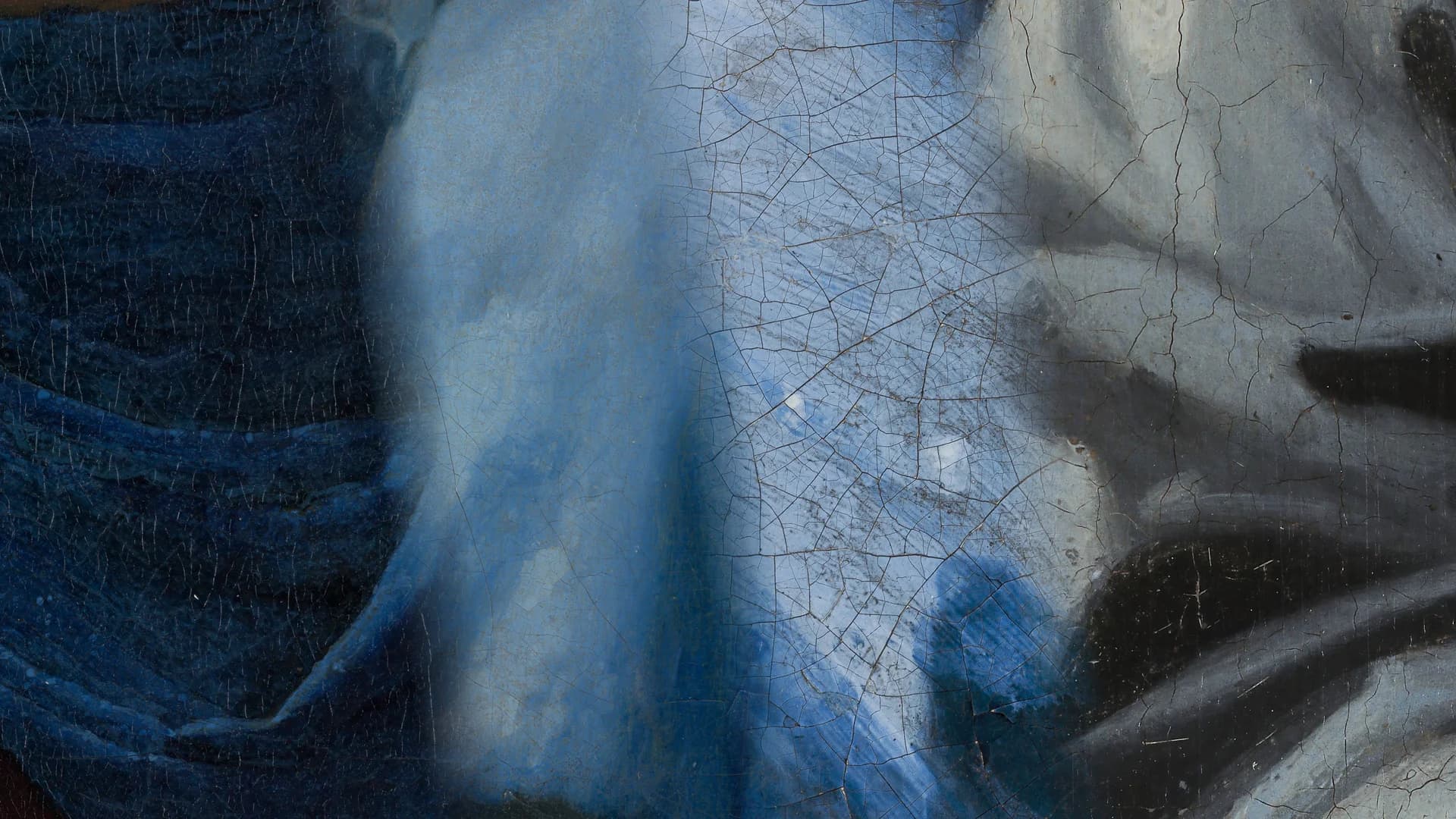
Vermeer built the face from a small palette, chiefly lead white, vermilion, ochre, and natural ultramarine, working the flesh with soft transitions that leave few visible brushstrokes. The pearl itself is suggested with only a couple of strokes, a soft diffused gleam on its underside and a single bright dab of white at the top, with no firm outline. Its size and shape have prompted debate: a real pearl this large would have been extraordinarily costly, and some observers have argued the highlight looks more like polished glass or tin than a natural pearl.
What the background once was
The background reads today as a flat black, but technical study has shown it was originally a deep translucent green, built from indigo and weld glazes over a dark underlayer that have since degraded and darkened. The 1994 restoration first revealed these subtleties, and the 2018 Girl in the Spotlight research project used imaging and microscopy to find further detail, including faint eyelashes and a suggestion of folded fabric or a curtain behind the figure.
From the Dissius sale to the Mauritshuis
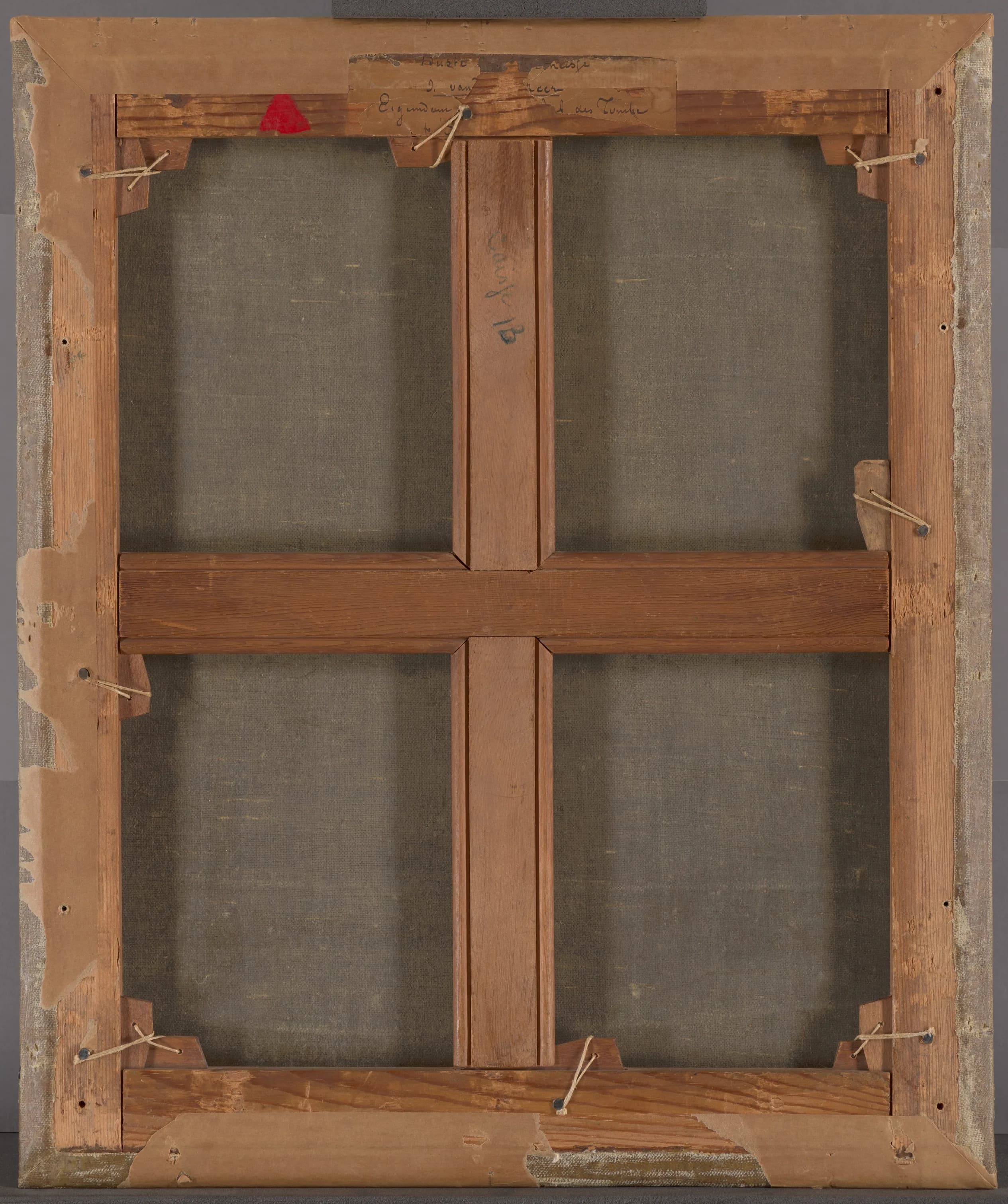
The painting most likely passed, with the rest of Vermeer’s pictures owned by his Delft patrons, into the 1696 Dissius sale in Amsterdam, where three tronies by his hand were sold cheaply. It surfaced again at a sale in The Hague in 1881, bought by Arnoldus Andries des Tombe for a small sum, and on his death in 1903 it was bequeathed to the Mauritshuis in The Hague, where it has remained. Its present fame is largely a modern phenomenon, and it is sometimes called the “Dutch Mona Lisa,” a nickname that says as much about its twentieth-century celebrity as about the picture itself.
- Date
- 1665
- Medium
- Oil on canvas
- Dimensions
- 44.5 × 39 cm
- Home
 Mauritshuis