The Little Street
About this painting
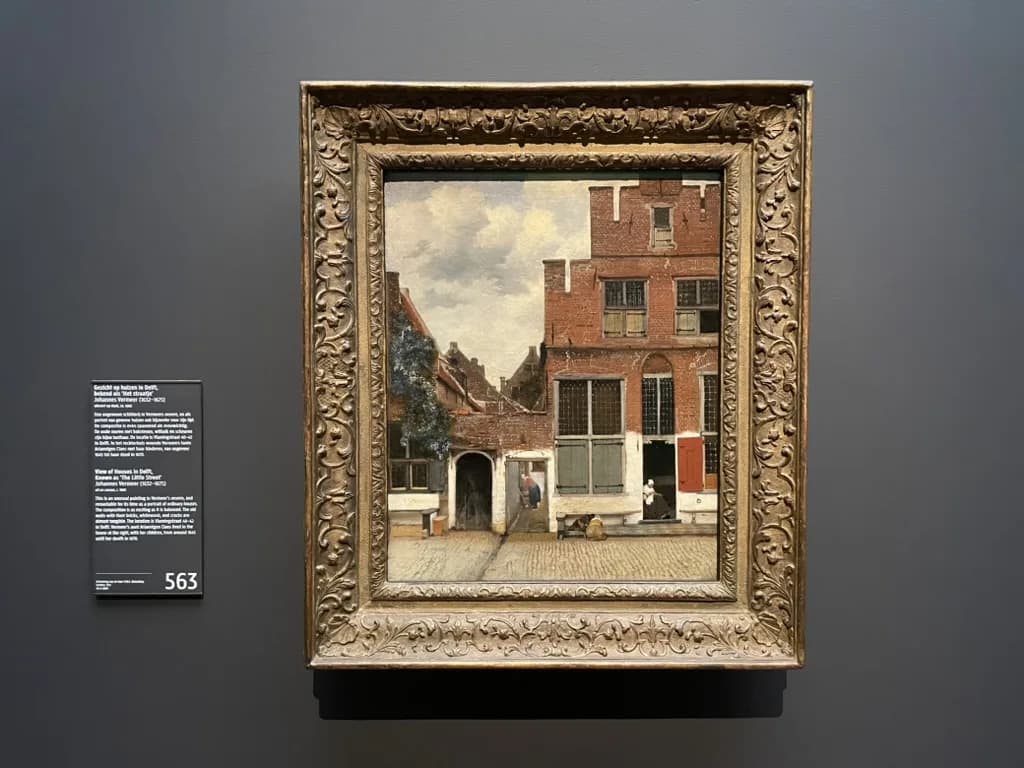
One of only two surviving Vermeer cityscapes, The Little Street depicts a modest Delft street with weathered brick façades, a woman sewing in a doorway, and children playing on the pavement. Painted around 1658, it is remarkable for its time as a portrait of ordinary houses rather than a grand civic monument.
The location
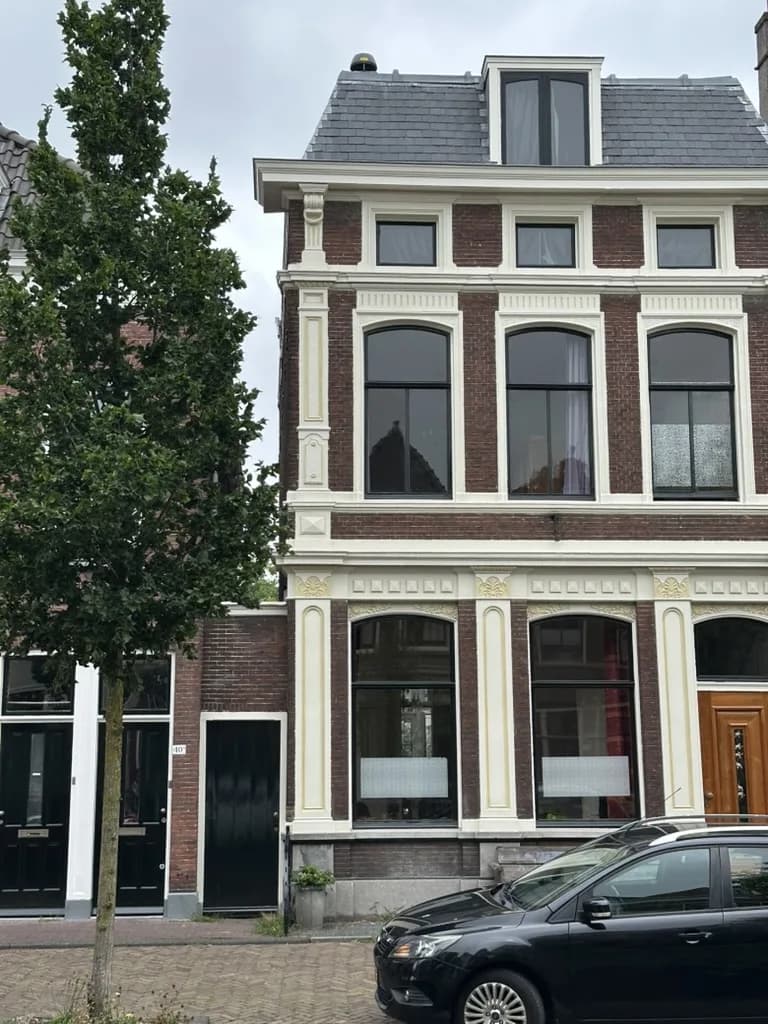
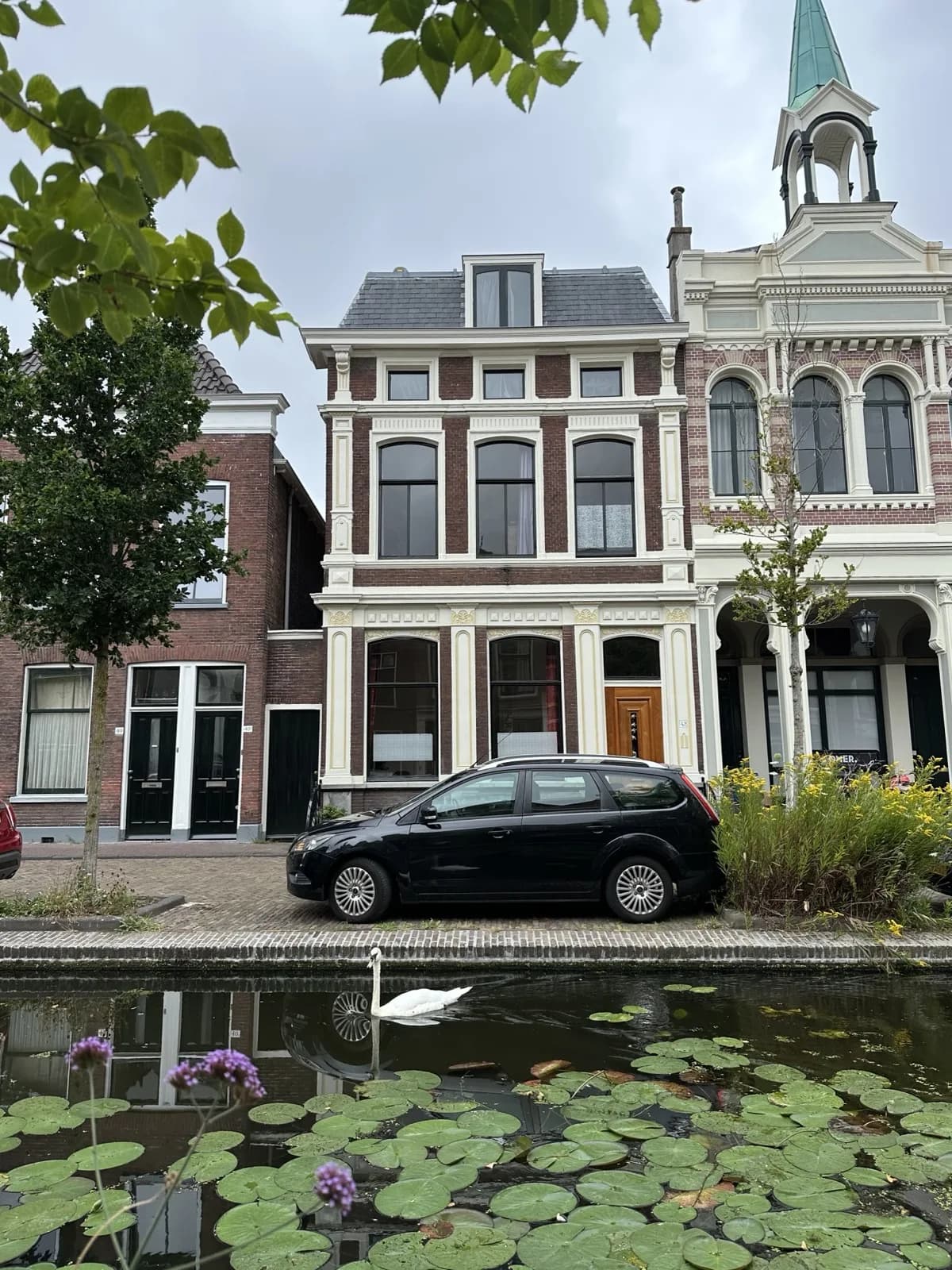
The houses stood on the Vlamingstraat, beside one of Delft’s canals. In 2015 the art historian Frans Grijzenhout pinpointed the spot as Vlamingstraat 40–42, matching the widths of the façades and the two passages in the painting to the “Legger van het diepen der wateren,” a register of the tax levied for dredging the city’s canals. The house on the right belonged to Vermeer’s widowed aunt, Ariaentgen Claes, who lived there with her children from around 1645 until her death in 1670 and sold tripe from it, giving the adjoining alley its name, the Penspoort, or “tripe gate.” That personal tie may help explain why Vermeer chose so unassuming a view. Not every scholar accepts the identification: the architectural historian Philip Steadman has pointed instead to the Voldersgracht, near Vermeer’s family home and the Guild of Saint Luke.
Composition and brickwork
The main house is pushed off-center and cropped at the top, a framing that lends the scene immediacy rather than the air of a commemorative record. Vermeer set straight courses of brick against the triangular gables and passages to give the quiet view its structure, and the Rijksmuseum calls the result as exciting as it is balanced. The old walls, with their bricks, whitewash, and cracks, feel almost tangible. Rather than paint each brick, Vermeer first laid in a broad, fairly uniform layer of thick reddish-brown paint, then, once it had dried, defined the mortar between the bricks with thin lines of light gray applied with notable verve.
The two cityscapes
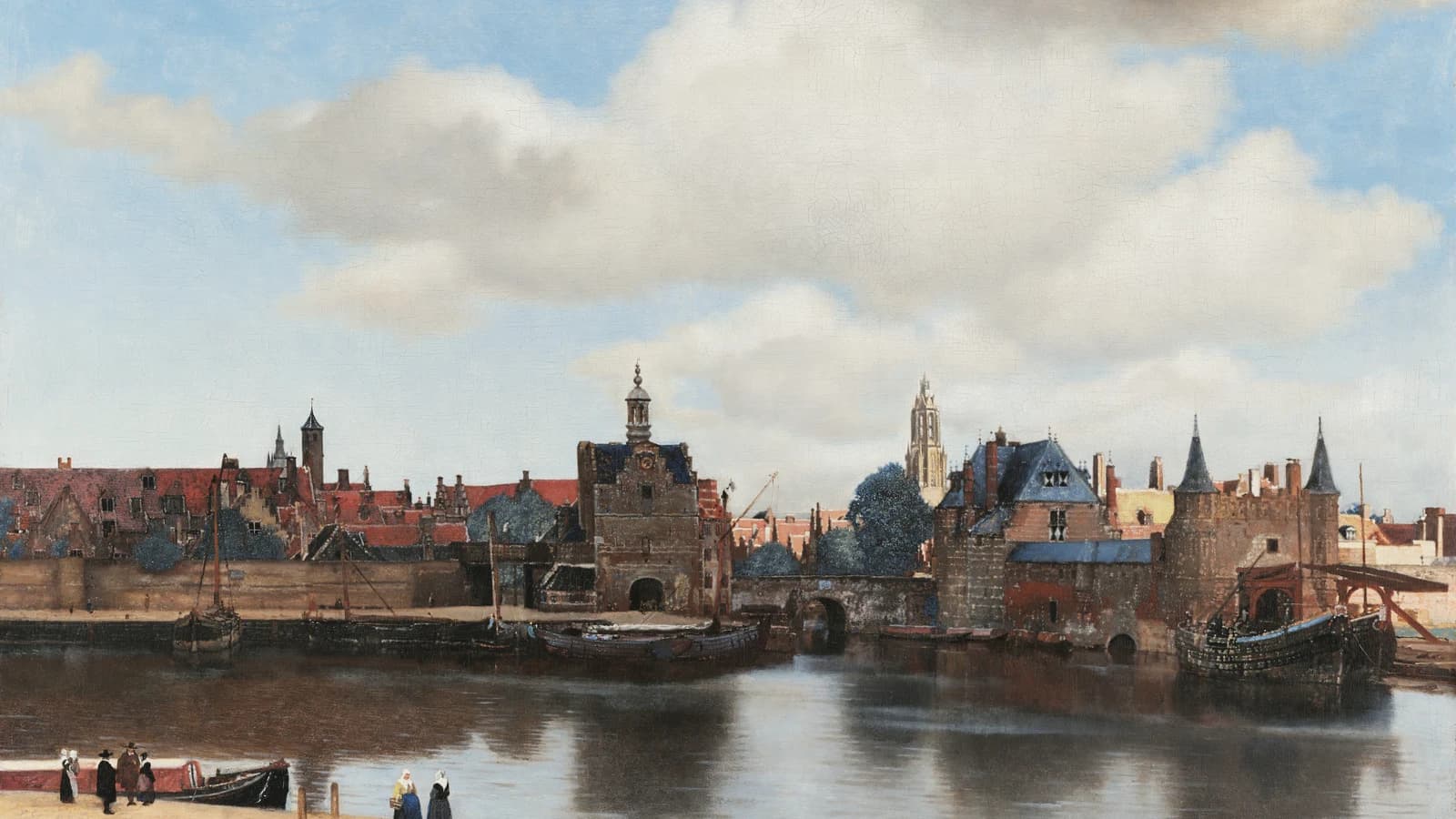
The Little Street is one of just two outdoor city views to survive from Vermeer’s hand, the other being the panoramic View of Delft. Documents record at least one further Delft view, a house standing in the city, that is now lost. Where the View of Delft surveys the town from across the water, this picture turns inward to a single block, achieving its realism with a narrow palette of red ochre and madder lake for the brick, lead white and ultramarine for the sky, and azurite with lead-tin-yellow for the green shutters.
From van Ruijven to the Rijksmuseum
The painting most likely belonged to Vermeer’s Delft patron Pieter Claesz van Ruijven and passed through his heirs to the 1696 Dissius sale in Amsterdam, where it appeared as lot 32 or 33. After moving through a series of Dutch collections, including the Six family of Amsterdam, it was bought by Sir Henry Deterding, who presented it to the Rijksmuseum in 1921, where it hangs today in the Gallery of Honour.
- Date
- 1657–1661
- Medium
- Oil on canvas
- Dimensions
- 54.3 × 44 cm
- Home
 Rijksmuseum