The 2000 Restoration of Diana and her Companions
A patch of blue sky had hung in the corner of one of Vermeer's earliest paintings for over a century. In 1999 and 2000 the Mauritshuis found it was painted in colours he could never have used, and took it back out.
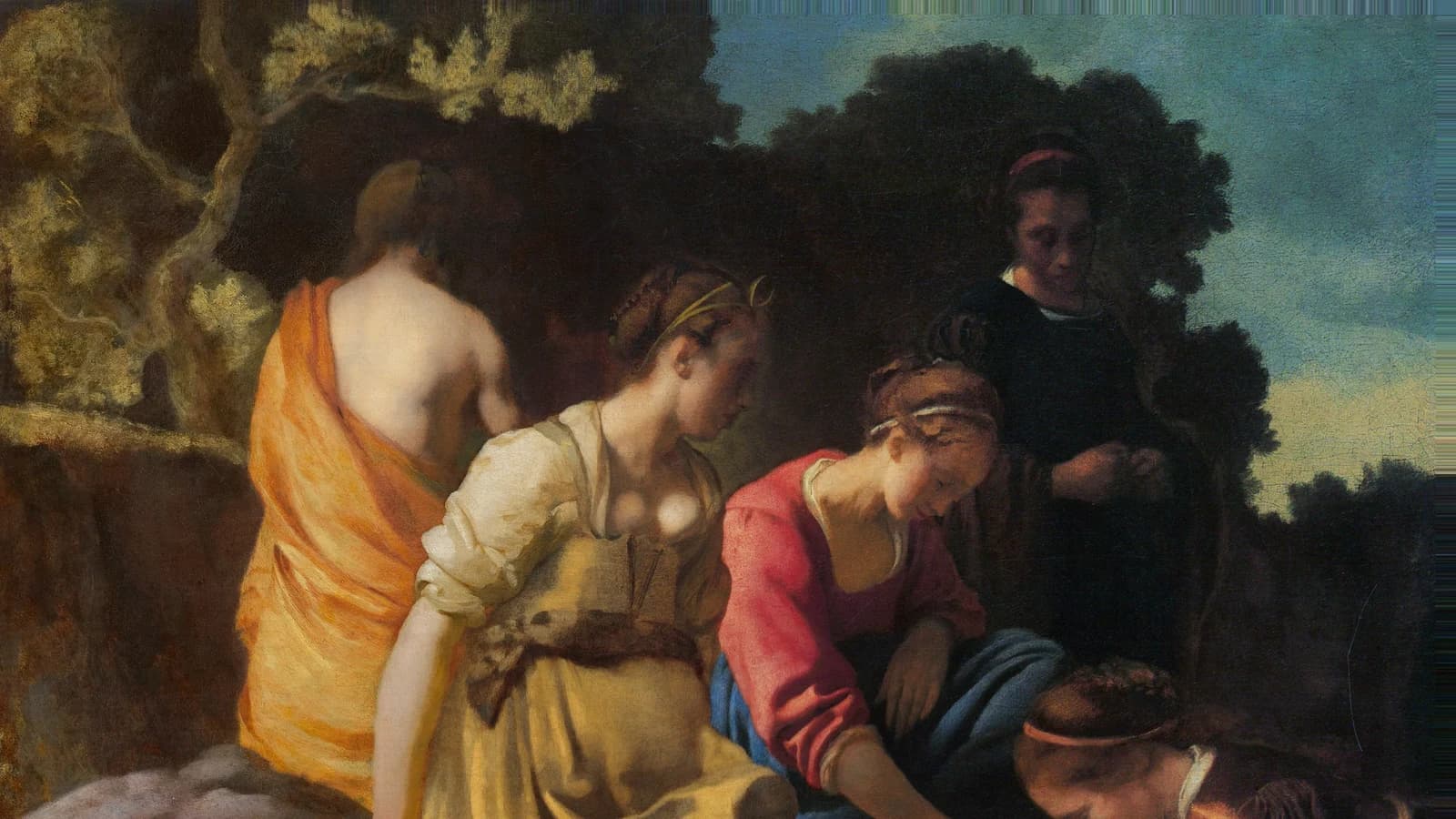
The sky in the corner
For more than a hundred years, anyone who looked at Diana and her Companions saw a patch of blue sky in the upper right corner. It is there in the old reproductions, a small opening of daylight behind the trees, and for a long time nobody questioned it. The painting is one of Vermeer’s earliest, made around 1653 to 1654, near the time he joined the Delft guild of painters, and by some accounts his very first surviving work. It hangs at the Mauritshuis in The Hague.
Drawn from Ovid, it shows the goddess Diana resting with four nymphs after the hunt, one of them kneeling to wash the goddess’s foot. It is a quiet, inward picture, the faces mostly in shadow, far from the sensual hunting scenes other painters made of the subject. When the Mauritshuis took it into the studio in 1999, the blue sky was one of the things the conservators looked at closely.
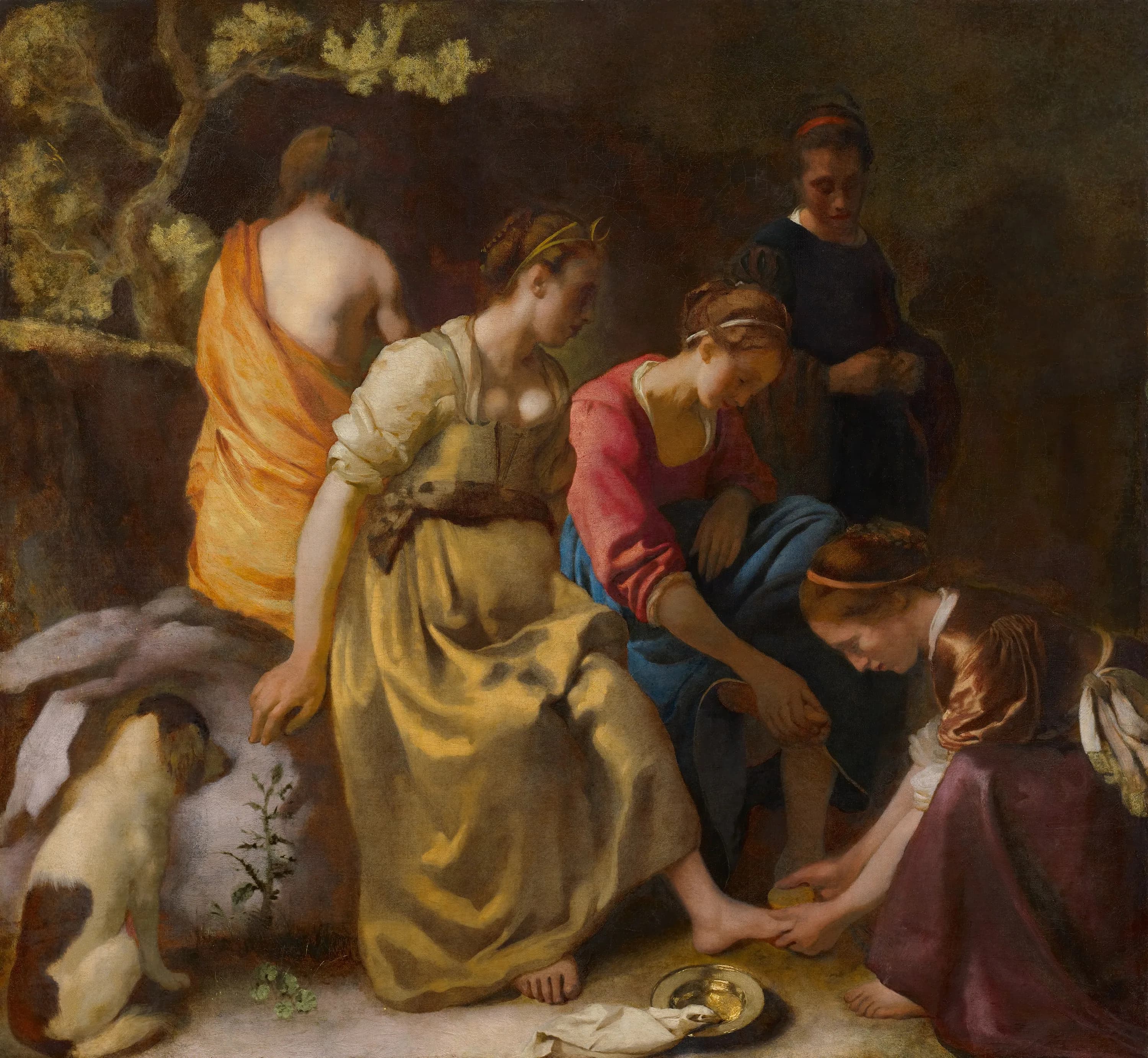
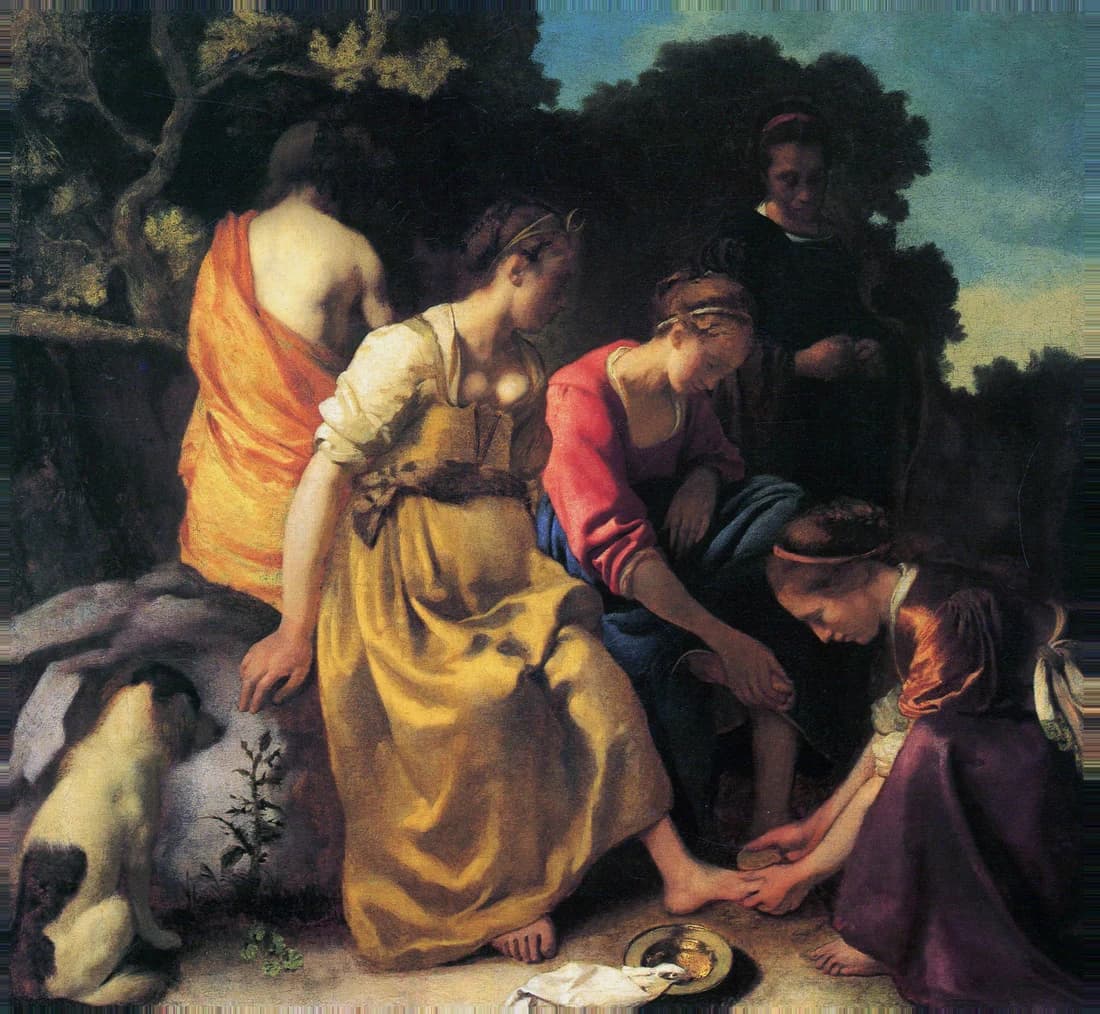
Pigments out of time
The test that settled the question was a simple one. When the museum analysed the paint of the sky, it turned up colours that did not exist in the seventeenth century. The blue was Prussian blue, a pigment first made in 1704, almost thirty years after Vermeer died, and the green mixed into it was a chrome green that only came into use around 1840. Neither was available to him. The sky could not be his.
So the daylight in the corner was a later invention, brushed in by a nineteenth-century hand over a passage that had grown dark and hard to read. Whoever added it was trying to brighten a murky corner, not to forge a Vermeer, but the effect was the same: for generations the painting was seen with a sky its maker never gave it.
The 1999 to 2000 restoration
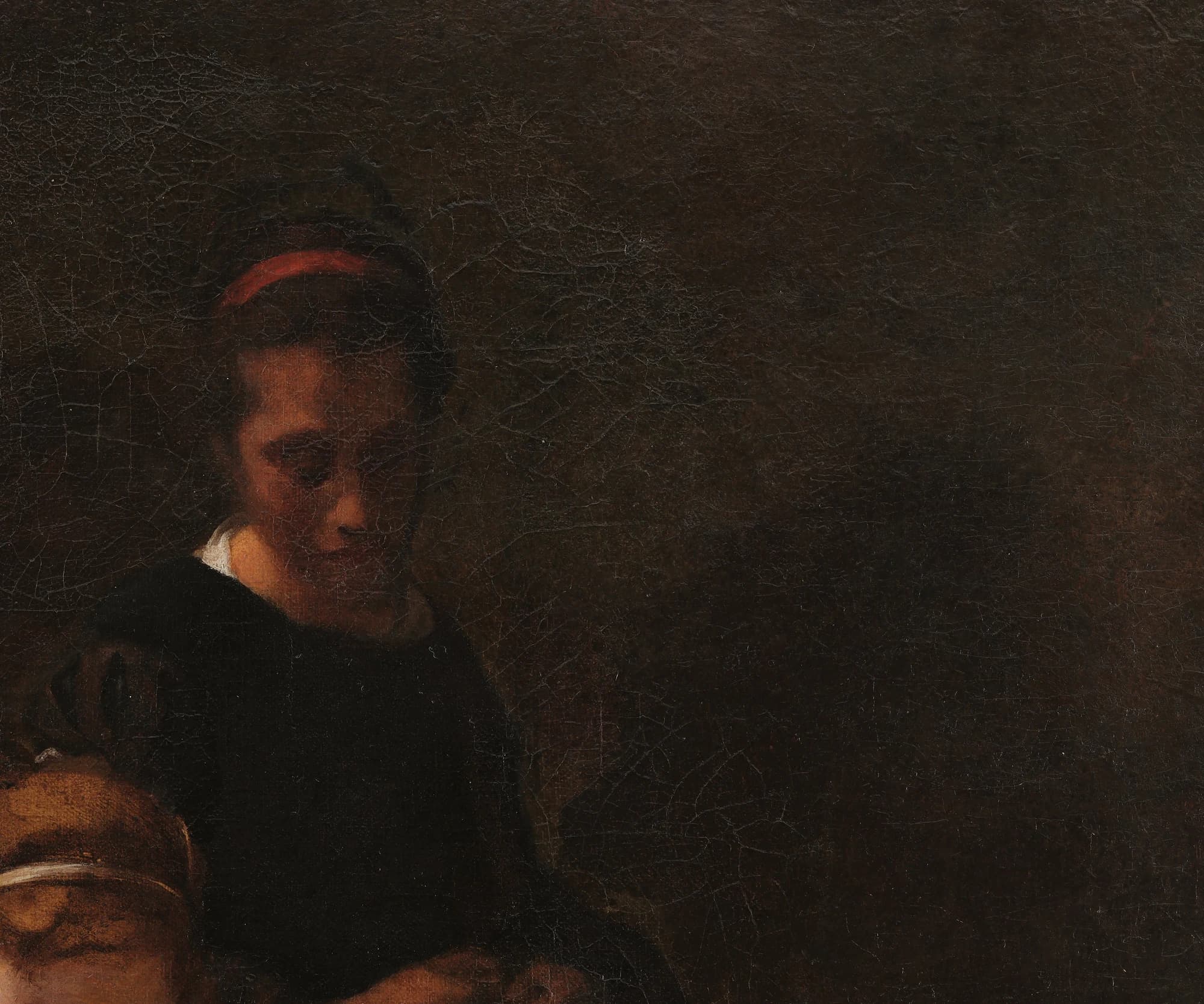
Removing the false sky was not as easy as deciding it was false. Underneath the blue, the original dark paint had survived, but it was too damaged to bring back as Vermeer left it. Stripping the blue risked taking the fragile layer beneath it with it.
Rather than gamble with the original, the conservators left the nineteenth-century sky in place and covered it instead, laying a thin layer of dark brown over the blue to match the rest of the background. The cleaning also dealt with the rest of the surface: an old lining from 1882, the second canvas glued to the back for support, had perished and was renewed, and discoloured varnish and overpaint came off. The aim, in the museum’s words, was to bring the painting back into line with Vermeer’s intentions.
A darker background
Closing the corner changed how the whole picture reads. With no window of daylight pulling the eye to the right, the light that falls across the figures from the left does the work, modelling the yellow dress and the bowed heads against a single dark ground. The nymph in the shadowed corner, often identified as Callisto, is no longer lost against a bright sky; she stands out as a watchful, withdrawn presence in her heavy dark dress.
The Mauritshuis describes the recovered scene as a nocturnal one, lit by moonlight, which sits well with the small crescent moon Vermeer set on Diana’s brow. Whether or not the picture is read as night, the dark background is the one he painted, and it gives the group the inward, gathered mood that the blue sky had quietly broken.
A cut-down canvas
The sky was not the only way the painting had drifted from its original state. At some point a strip of about twelve centimetres was cut from the right-hand edge. The loss is easy to miss until you notice the woman kneeling at the lower right to wash Diana’s foot: she is crowded against the edge now, but on the full canvas she would have sat comfortably inside the scene, and the composition would have been more evenly balanced around the foot-washing at its centre.
The quiver Vermeer painted out
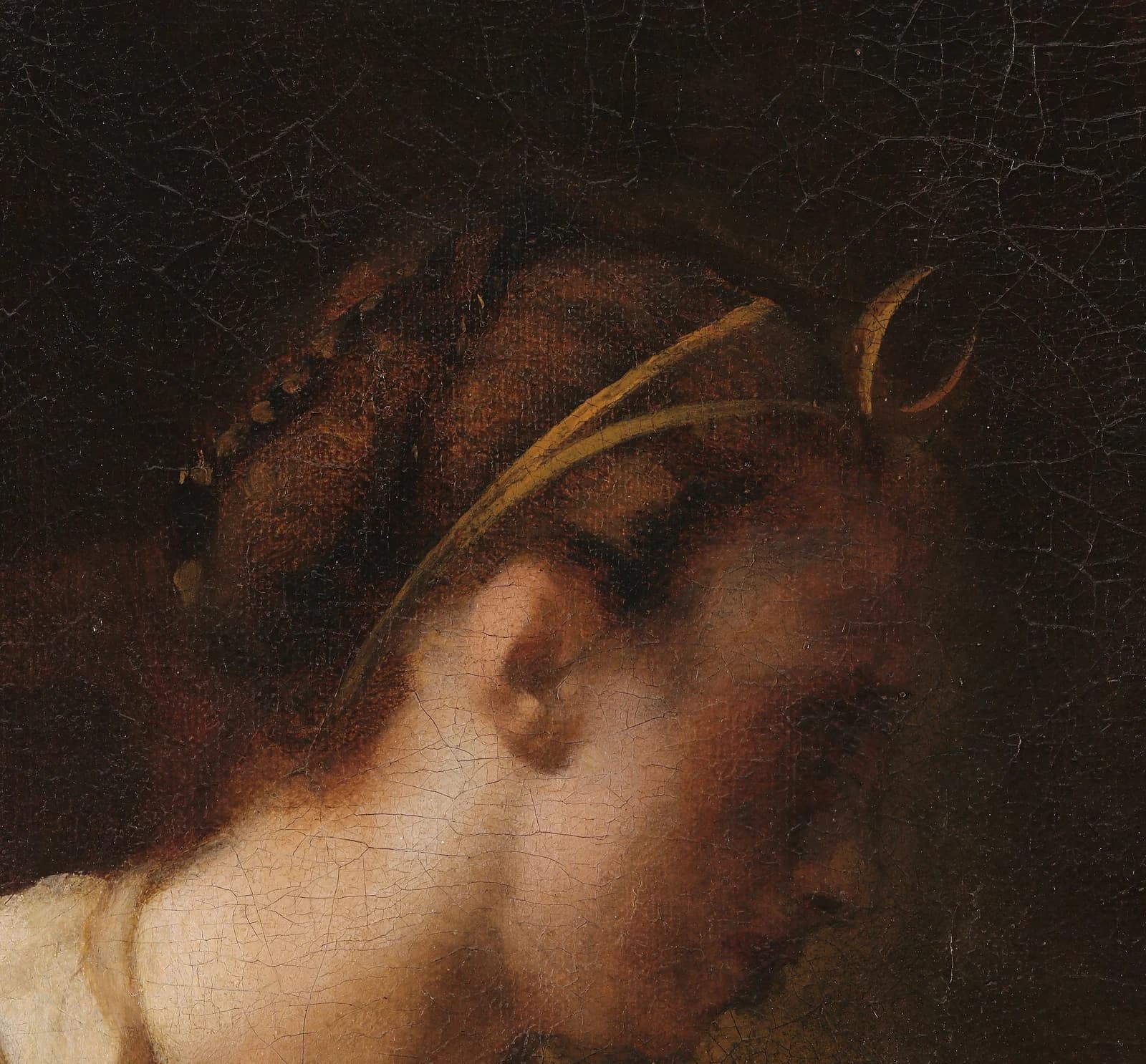
Later imaging found a change of mind below the surface. Macro X-ray fluorescence scanning, which maps the chemical elements in the paint and so picks up layers the eye cannot see, showed that Vermeer had first laid in a decorated quiver of arrows on the rock beside the figures, and then painted it out.
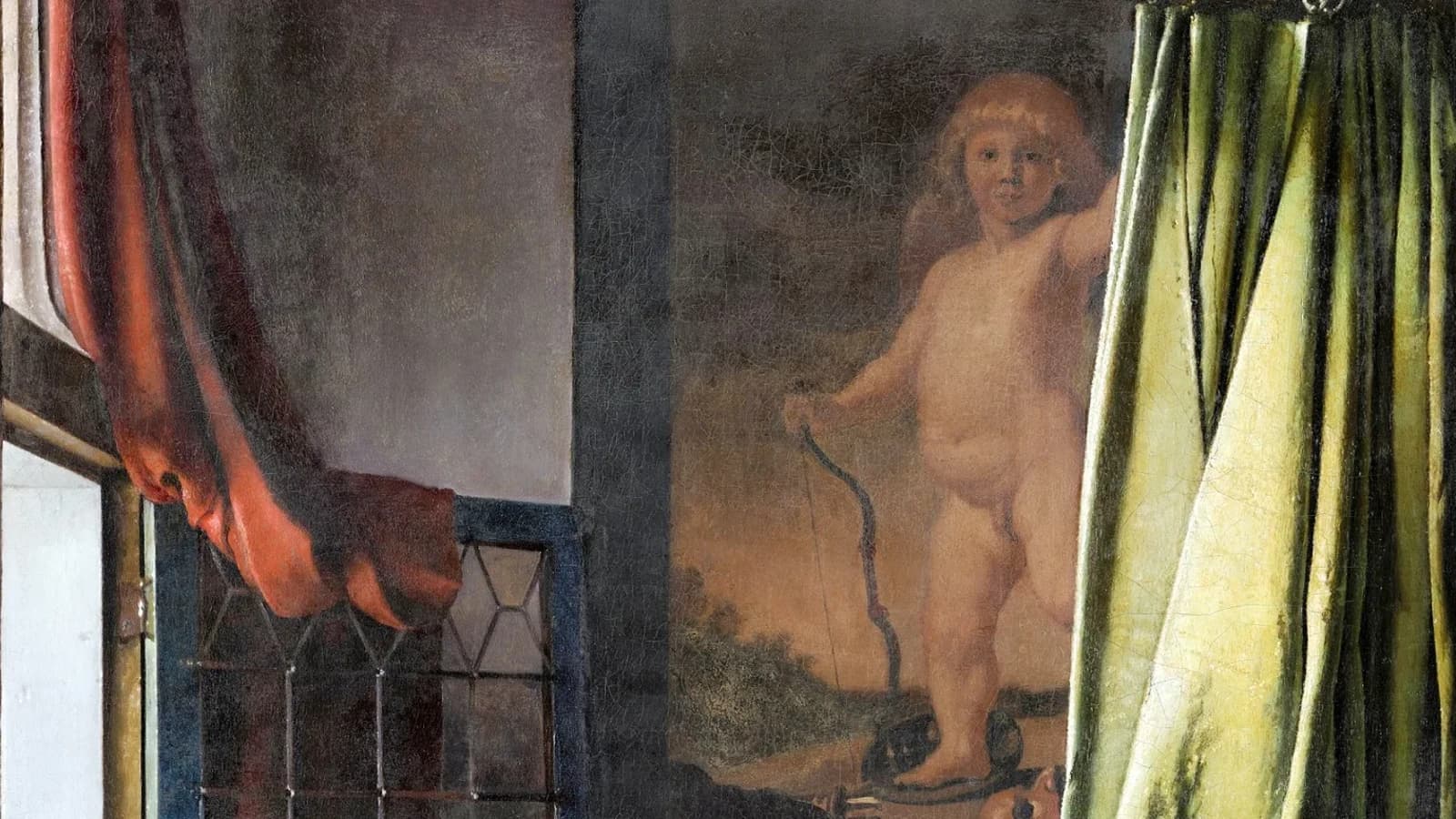
Removing it left Diana with a single attribute, the crescent moon at her brow, and nothing else to spell out who she is. The quiver resembles the one that lies at Cupid’s feet in the painting hidden behind the curtain in his later Girl Reading a Letter at an Open Window. Even at the start, Vermeer was already paring a scene down to less than convention asked for.
An early eye for surface
For all that the painting has been through, the cleaning left the early signs of the painter Vermeer would become easier to see. The brass basin held out to catch the water is among the first passages in his work to dwell on the feel of a material, the dull gold of the metal caught against the white cloth beside it. The yellow of Diana’s satin dress is the start of a lifelong attachment to that colour, and in the dog at the left he drew the handle of his brush back through the wet paint to scratch in the hairs of its ear, a trick he would use again.
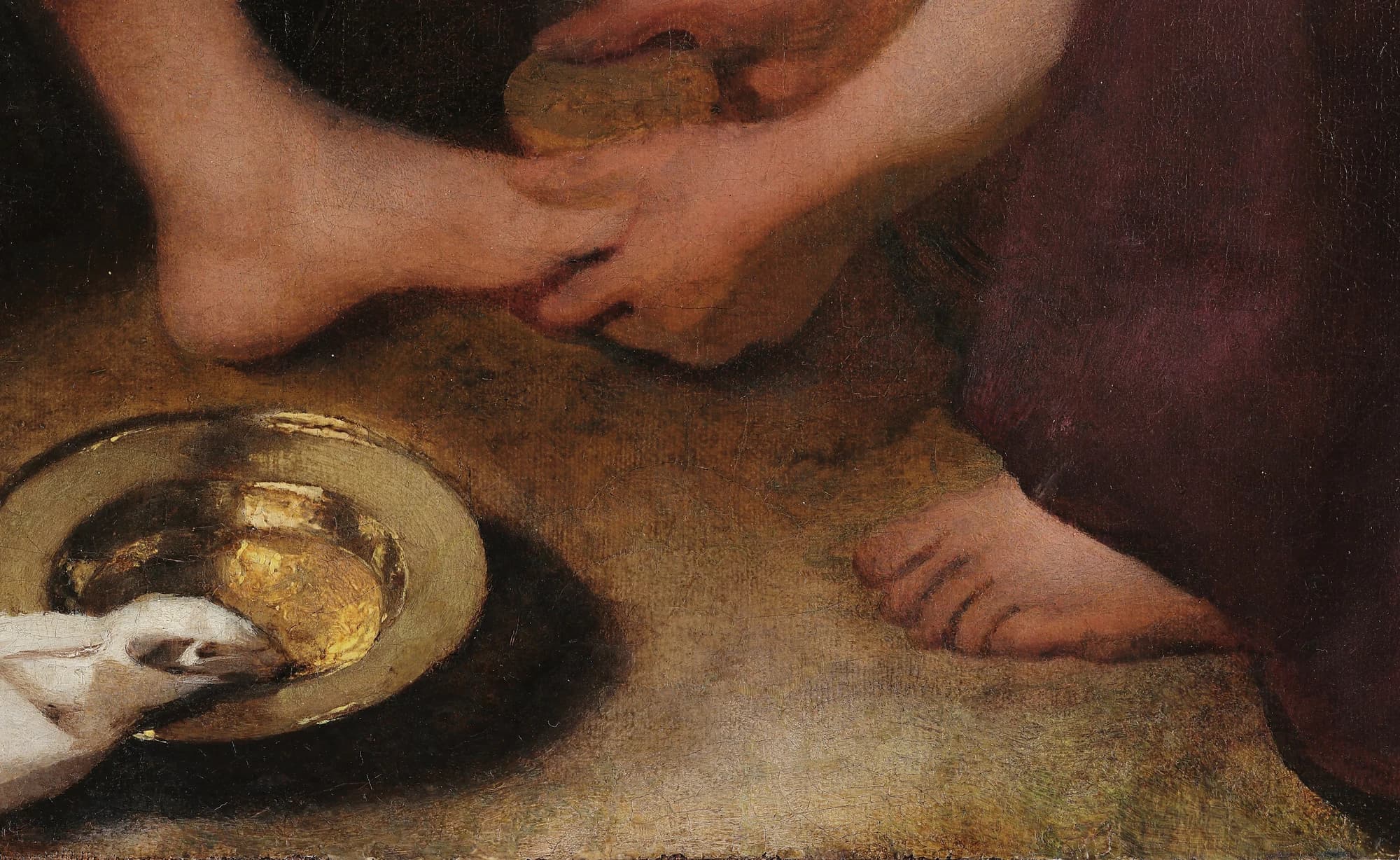
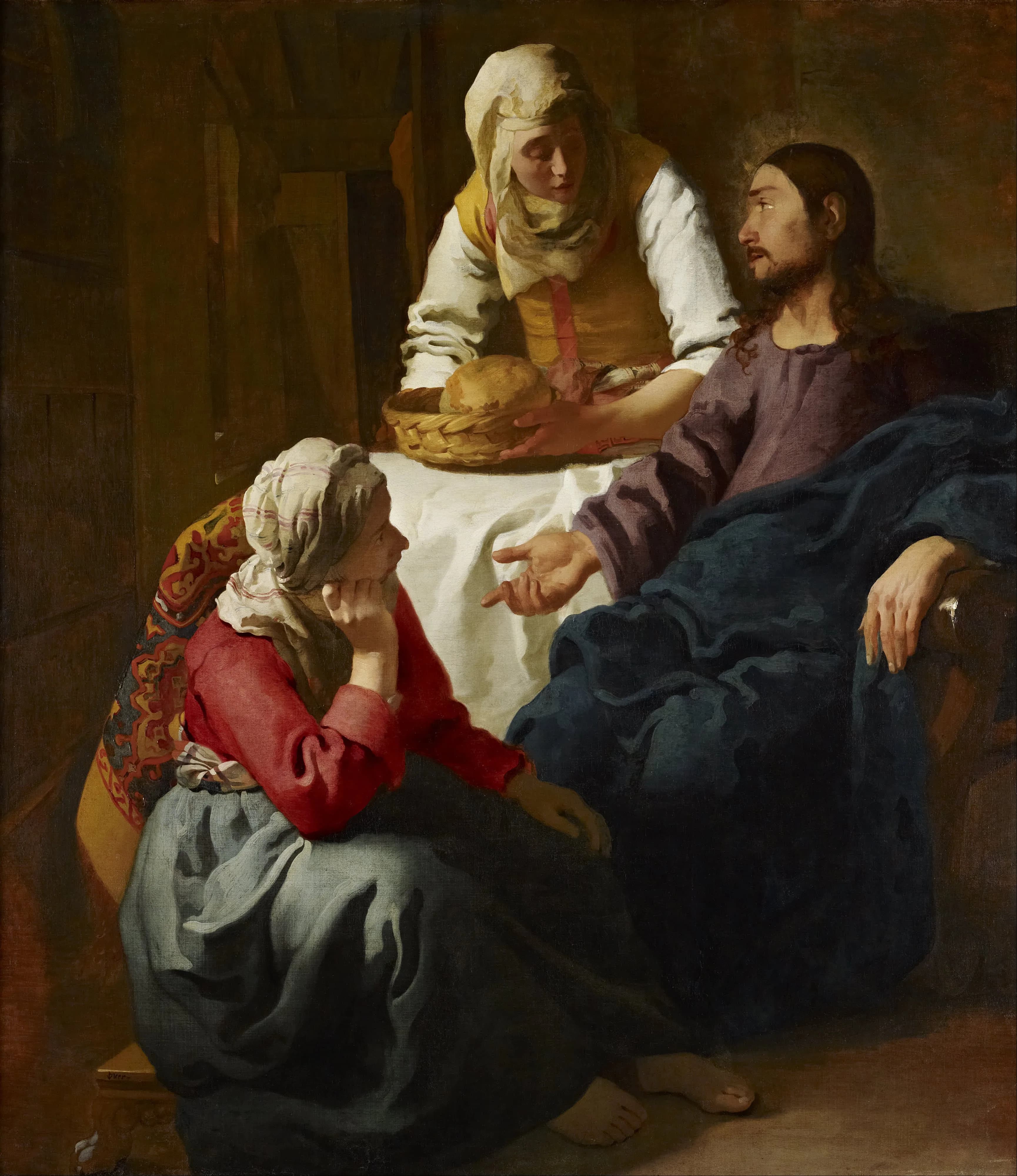
None of this was settled when the picture was young. It belongs to Vermeer’s brief spell as a painter of history subjects, alongside Christ in the House of Martha and Mary, before he turned to the quiet domestic interiors he is known for. For a time the work was not even thought to be his: it was sold in 1876 as a Nicolaes Maes, and only later recognised as a Vermeer, by which point the signature had been lost to an earlier cleaning.
Shown together again
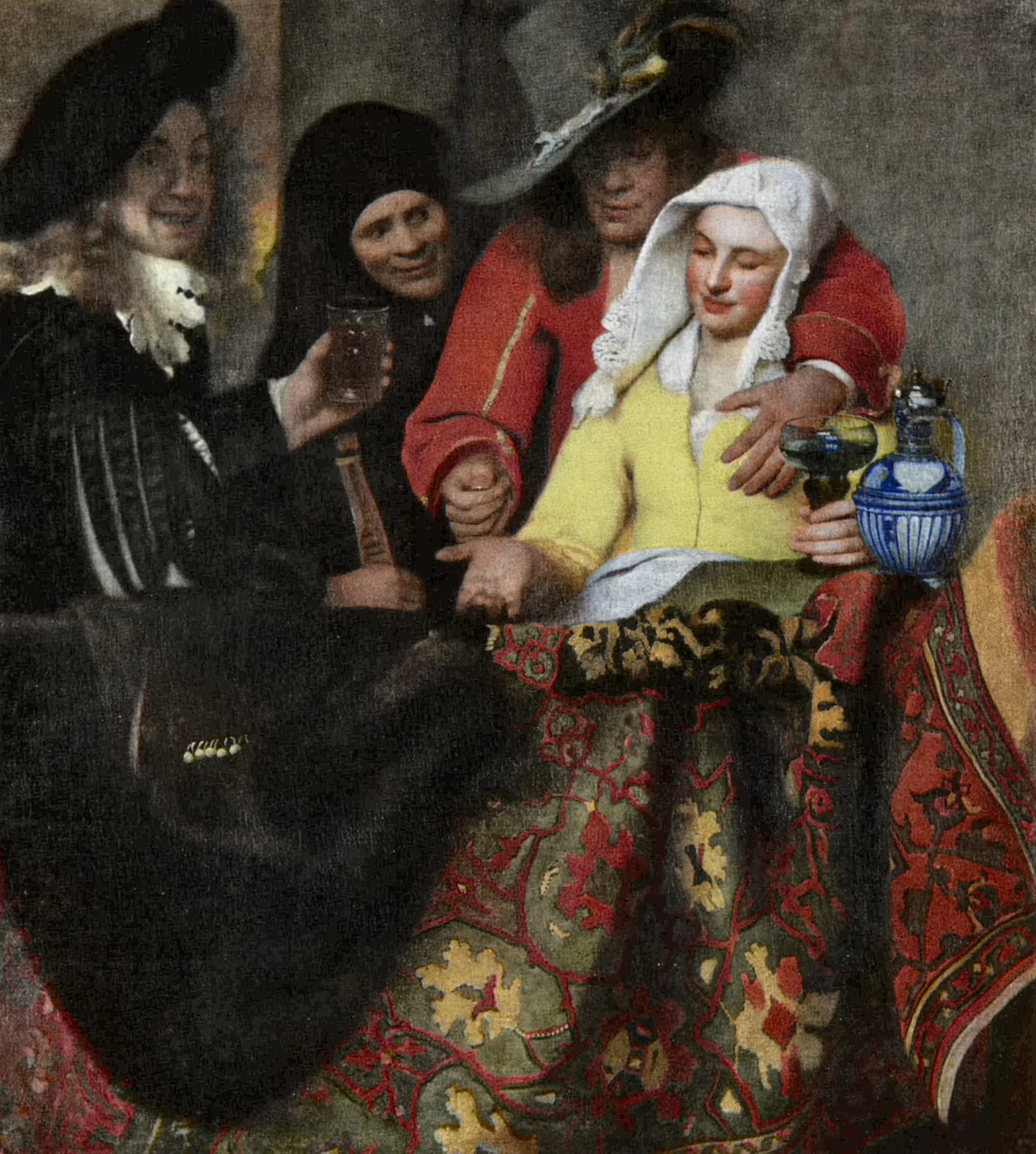
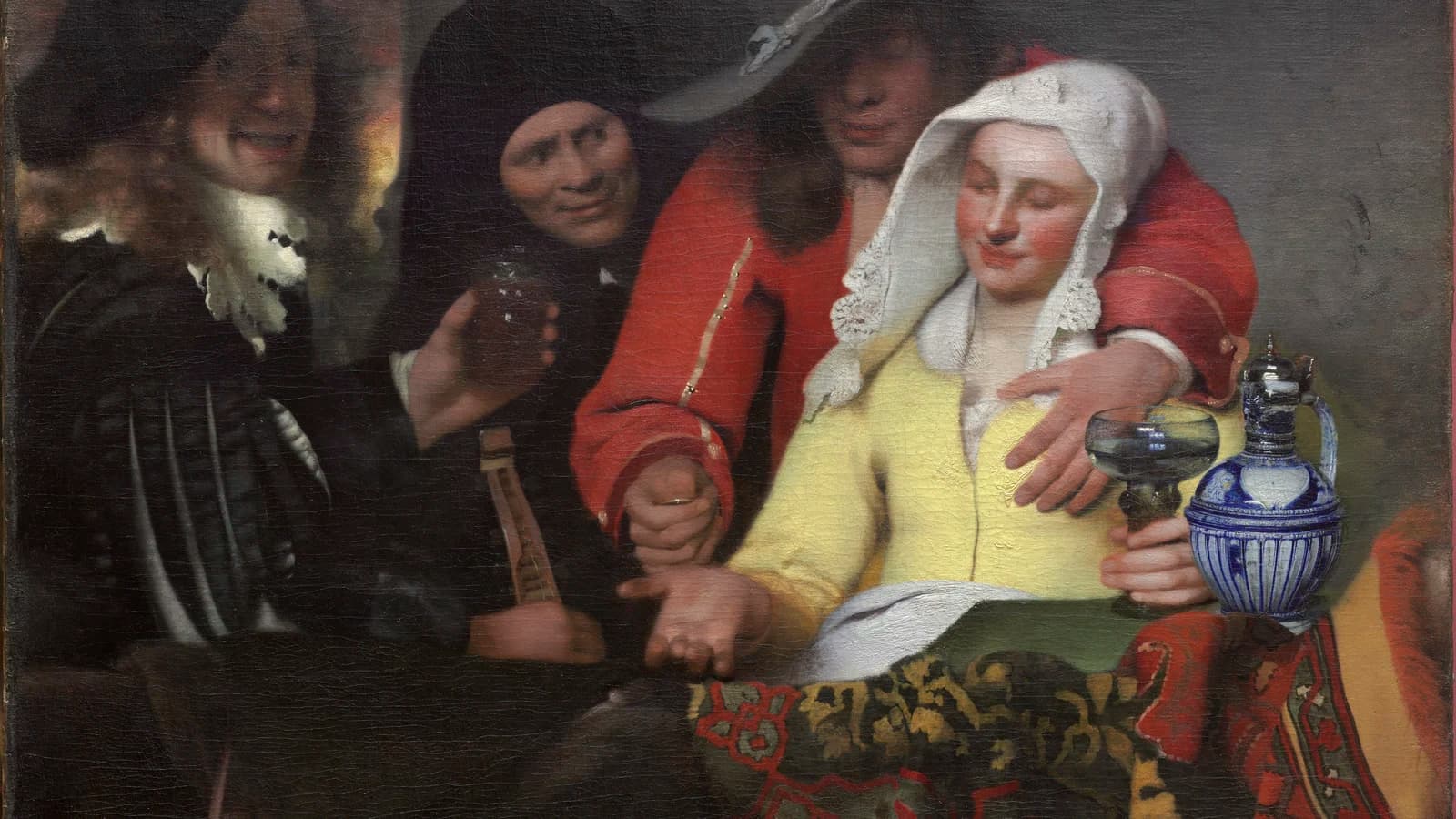
The restored painting found its way back into the public eye in 2010, when the Mauritshuis brought three of Vermeer’s earliest works together in The Young Vermeer, a show that travelled on to Dresden and Edinburgh. All three had been cleaned in the years before, and seeing Diana beside Christ in the House of Martha and Mary and The Procuress set out, in one room, how much there already was to look at before Vermeer ever painted a quiet room with a window.
What came off the surface was the work of other hands: a nineteenth-century sky, a perished lining and a coat of yellowed varnish. What stayed was Vermeer’s. The cleaning handed back a darker, quieter, more gathered scene than the one the nineteenth and twentieth centuries had grown used to, the same kind of recovery that the later cleanings of his mature interiors would bring.
Notes
- 1.The Mauritshuis records that the painting was restored in 1999 and 2000, and dates it to about 1653 to 1654. See the museum object page, “Diana and her Nymphs,” Mauritshuis no. 406, and the museum’s own account on Google Arts & Culture.
- 2.In the museum’s account, the sky was found to contain Prussian blue, invented in 1704, and chrome green, introduced around 1840, neither of them available in Vermeer’s lifetime, which dated the passage to the nineteenth century. See the Mauritshuis, “Facelifts & Makeovers”. The museum’s object page states more simply that the sky paint contained “pigments that were not yet available during Vermeer’s lifetime”; see Mauritshuis no. 406.
- 3.The Mauritshuis explains that the original, darker paint survived beneath the blue but could no longer be restored, so the conservators covered the blue sky with a thin layer of dark brown paint matching the rest of the background, “bringing the painting back into line with Vermeer’s intentions.” See the museum’s account and “Facelifts & Makeovers.”
- 4.With the corner darkened, the Mauritshuis notes, the light falling on the figures from the left gains in importance, and the museum describes the recovered picture as a nocturnal scene lit by moonlight, in keeping with the crescent moon on Diana’s brow. See the Mauritshuis, “Facelifts & Makeovers.”
- 5.The Mauritshuis records that a strip of about twelve centimetres was cut from the right-hand edge at some point, so that the woman kneeling at the lower right would once have appeared in full, making the composition more balanced. See Mauritshuis no. 406 and “Facelifts & Makeovers.”
- 6.Macro X-ray fluorescence scanning, which maps the chemical elements in the paint and so reveals earlier layers, showed that Vermeer first painted a decorated quiver of arrows lying on the rock and later painted it out, leaving the crescent moon as Diana’s only attribute. The finding is reported in Anna Krekeler and others, Closer to Vermeer: New Research on the Painter and His Art (London: Thames & Hudson, 2025), and summarised in Galerie magazine, “A New Tome Revisits Vermeer’s Works.”
- 7.Three of Vermeer’s earliest paintings, all recently restored, were shown together in “The Young Vermeer”: the Mauritshuis (12 May to 22 August 2010), the Gemäldegalerie Alte Meister in Dresden, and the National Gallery of Scotland in Edinburgh (10 December 2010 to 13 March 2011). See the Staatliche Kunstsammlungen Dresden, “The Young Vermeer.”