The 2004 Restoration of The Procuress
Dresden's earliest Vermeer had gone dull under a yellowed varnish. Cleaned between 2002 and 2004, it gave back a bright lead-tin yellow jacket, and a record of the changes Vermeer made as he worked.
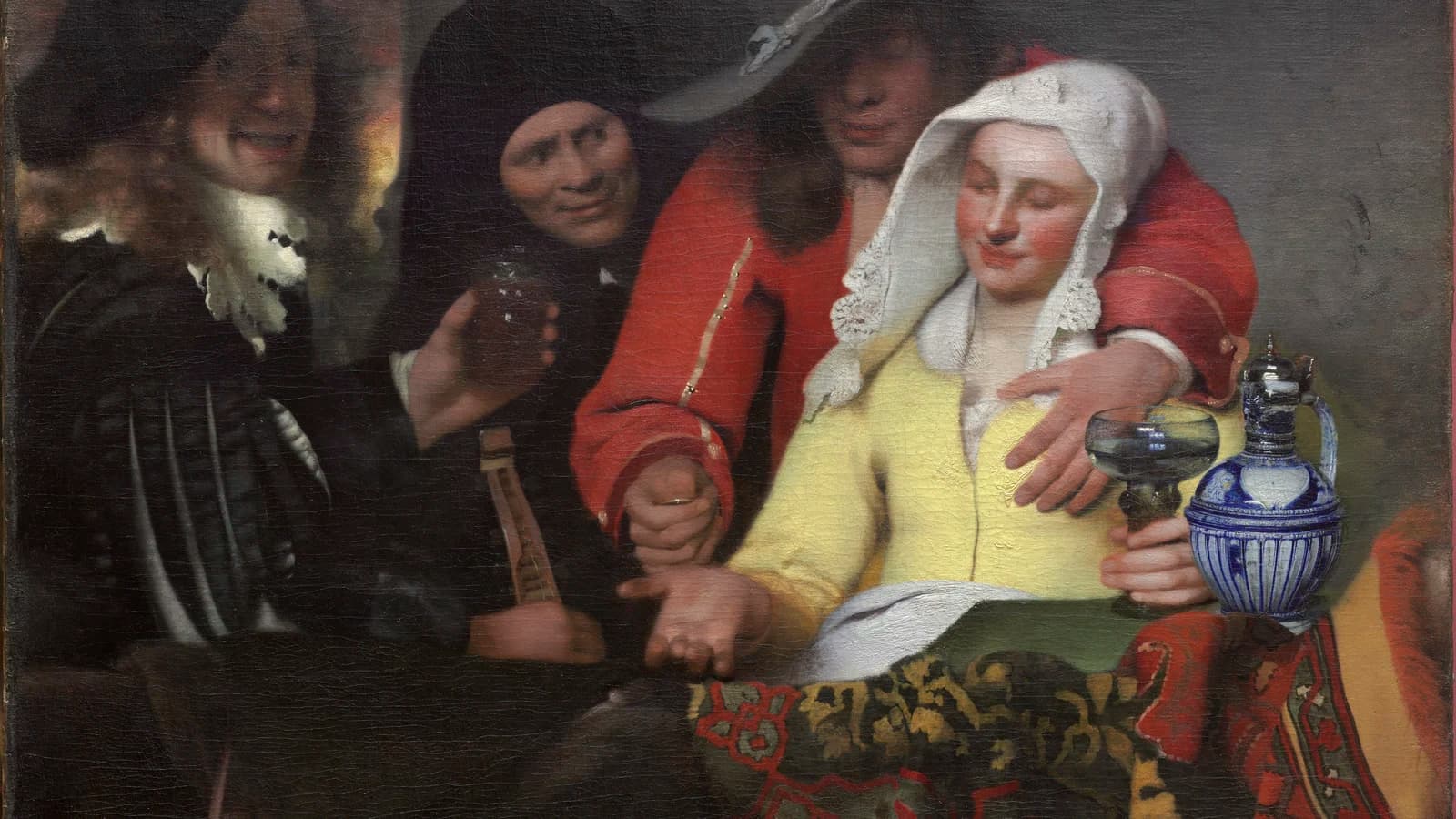
Dresden’s earliest Vermeer
The Procuress is the earliest painting Vermeer signed and dated, marked 1656 at the lower right, and one of his largest. It shows a soldier in red dropping a coin into the hand of a young woman in yellow while a procuress in black looks on and a fourth figure, glass raised, grins out at the viewer. It has hung in Dresden since 1741, and is the only Vermeer in the Gemäldegalerie Alte Meister.
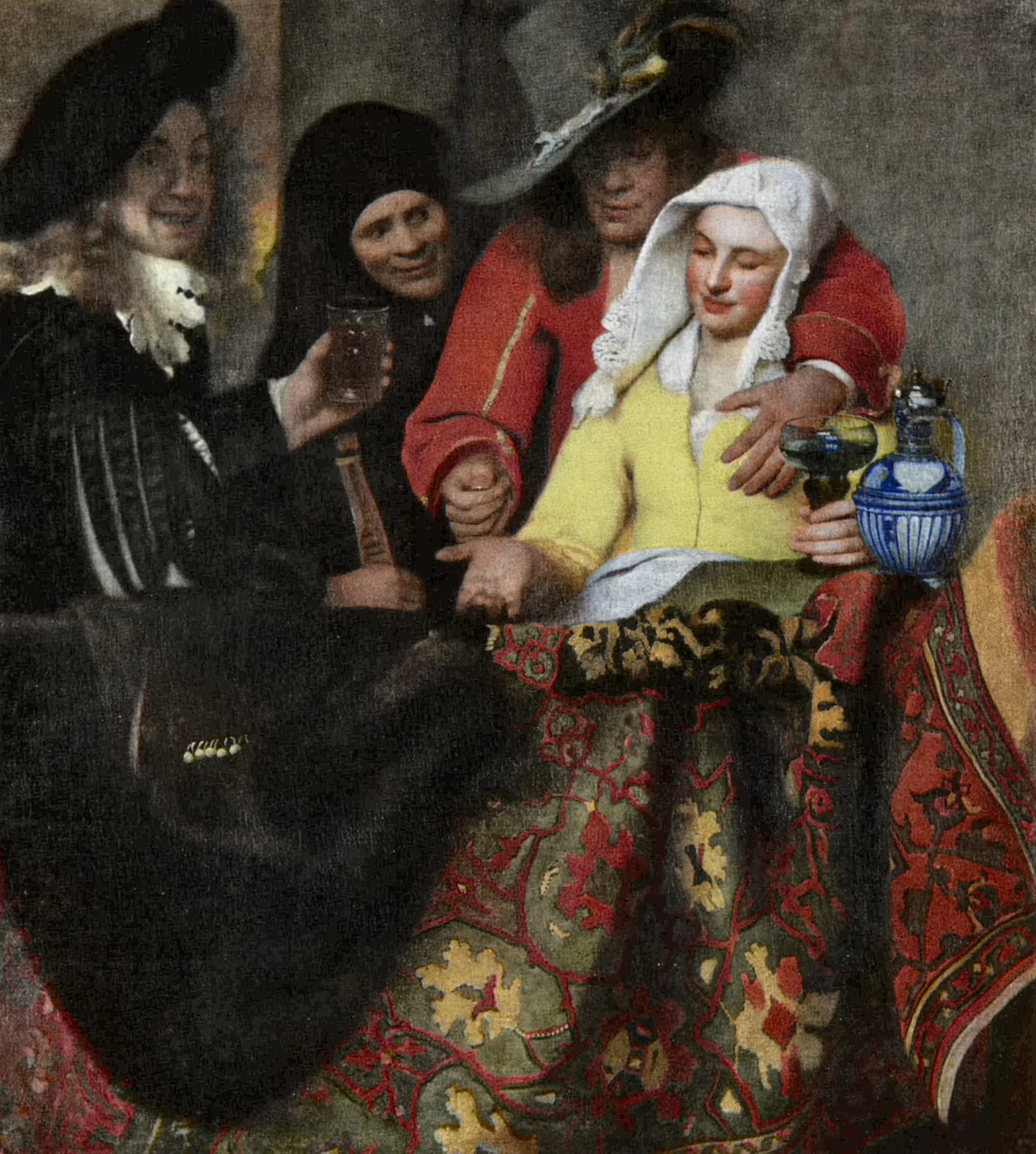
By the turn of this century its colours had gone quiet. A thick, yellowed varnish, the protective coat that ambers and darkens as it ages, lay over the surface together with old grime and earlier retouching, warming the picture and flattening the differences between its tones. Between 2002 and 2004 the gallery’s conservators, Uta Neidhardt and Marlies Giebe, took the painting into the studio for a full cleaning and technical examination, with scientific support from the Doerner Institute in Munich.
Removing the varnish
The cleaning began with tests. The conservators tried solvents on small areas first to settle on a mixture that would dissolve the discoloured varnish without touching the paint beneath, then lifted the old coating a little at a time with swabs. As it came away the picture’s range returned: the reds of the soldier’s coat and the carpet, the cool of the wine jug, and the deep blacks that set the figures against the dim interior.
What the varnish had hidden most was the colour the painting now turns on. The young woman’s jacket, dulled for years to a muddy tone, came back as a clear, light yellow, the brightest note in the room and the thing the whole composition leans toward.
The lead-tin yellow jacket
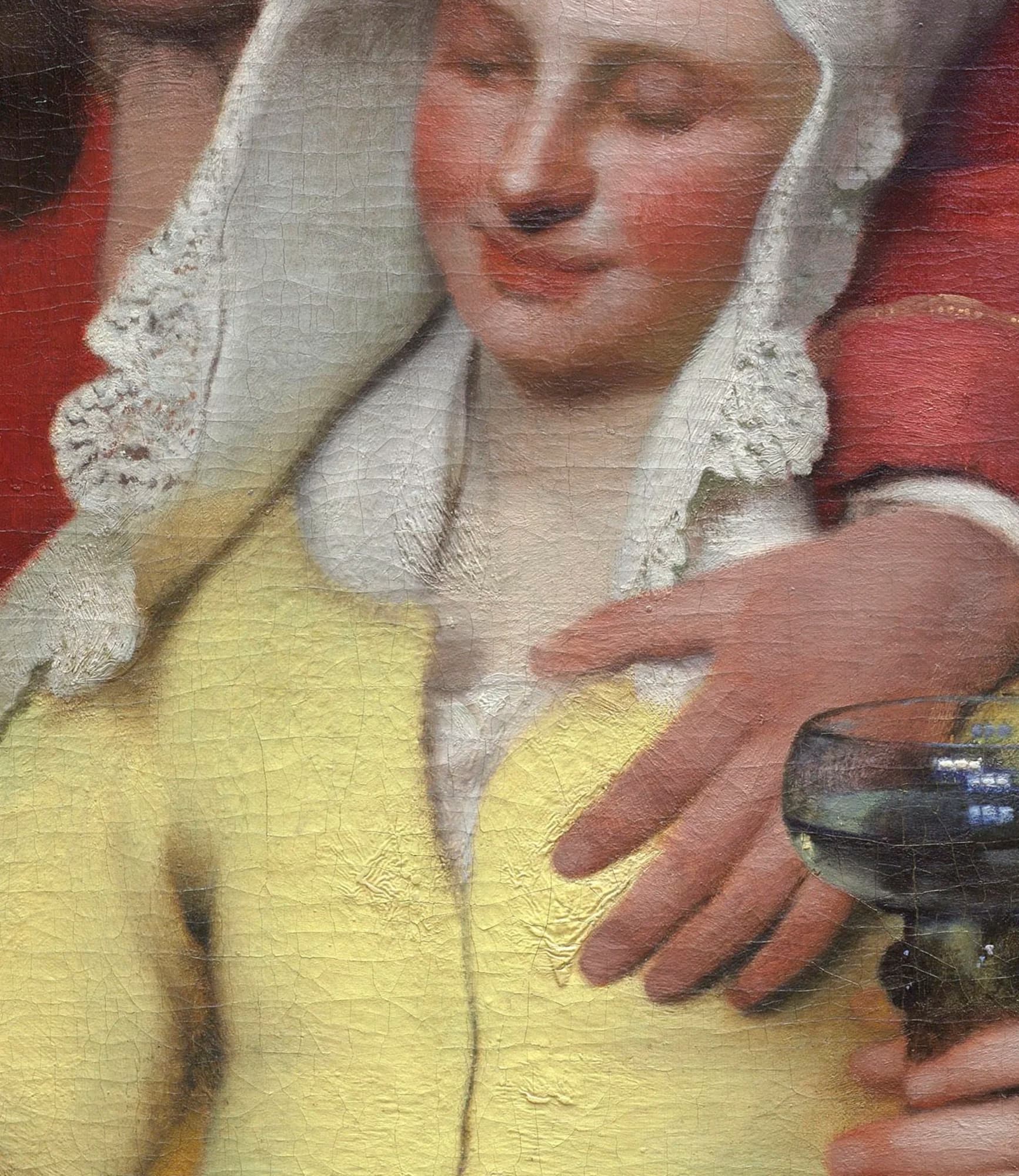
The jacket is painted in lead-tin yellow, a warm, opaque yellow that was the standard bright yellow of the seventeenth-century palette. The Gemäldegalerie Alte Meister found that the cleaning restored its original vibrancy, and that Vermeer had reworked the jacket repeatedly as he painted it, building up to the strong, even yellow that now reads as the focus of the picture.
With the colour clean again the room recovered its order. The yellow of the jacket, the red of the coat and the blue of the jug stand apart as separate, saturated colours rather than the single warm haze the varnish had blended them into.
The suitor’s hat and gaze
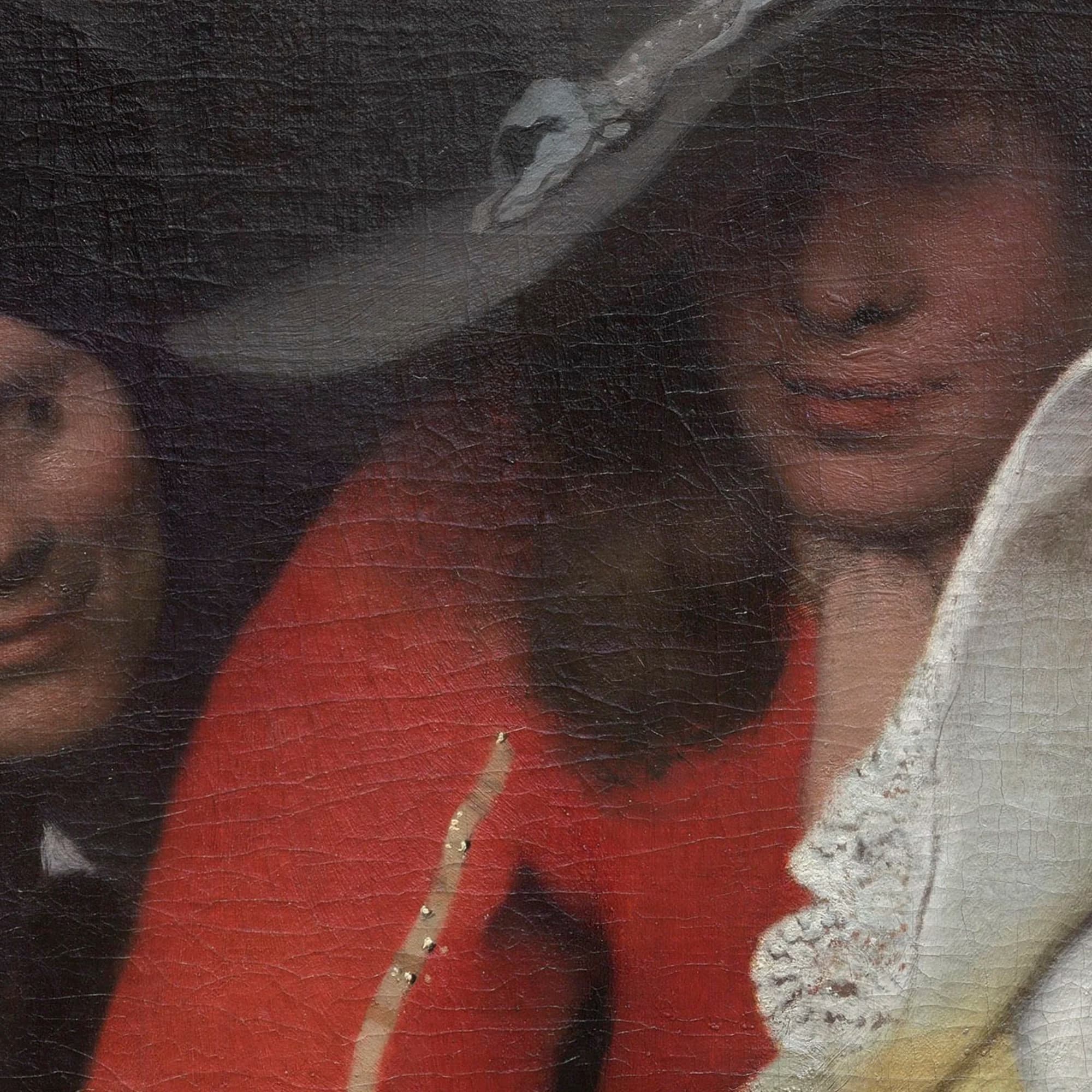
A cleaning also reads what lies under the surface, and the Dresden examination, using X-radiography and infrared, recovered the changes Vermeer made as he worked. The most telling concerned the soldier.
He was first painted without a hat, his head lit much like the young woman’s and turned either toward her face or out of the picture. Vermeer then added the broad-brimmed hat, put the man’s face into shadow and turned his eyes downward, toward the coin passing between them. The effect of all three changes is the same: light and attention shift onto the woman, and the man becomes the darker figure who acts on her.
The procuress’s hand
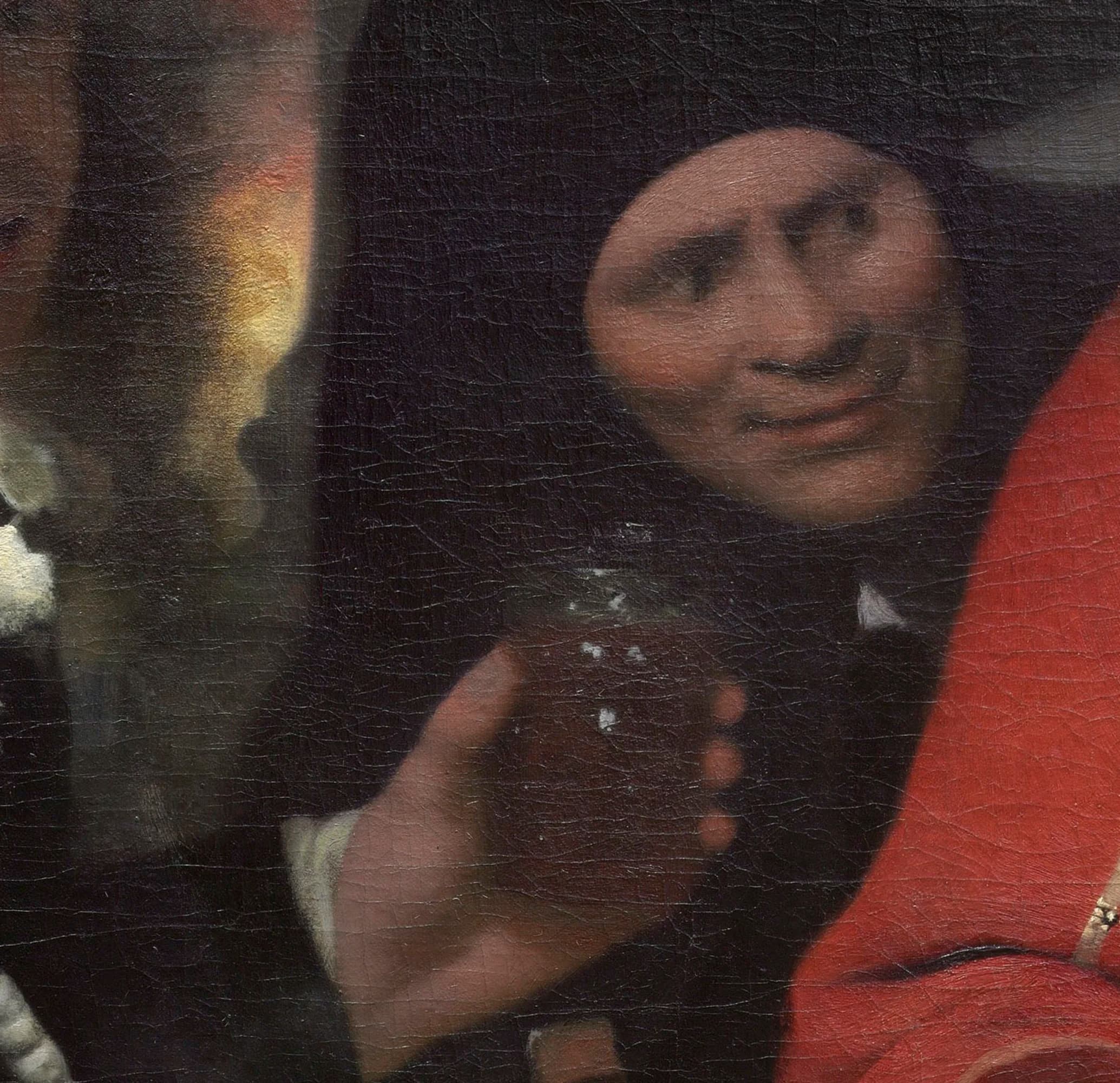
The procuress gave up a change of her own. The X-radiograph showed a pale shape beside the grinning man with the cittern, which the conservators read as her right hand, once stretched out toward the exchange of money. Vermeer painted it out, covering it with the black of her garment, so that she now only watches.
These are pentimenti, the changes a painter makes and then hides as the picture takes shape. Vermeer rarely left so many in one canvas, and together they show him steering a crowded, talkative scene toward the quieter balance of the finished work.
The wine jug and the palette
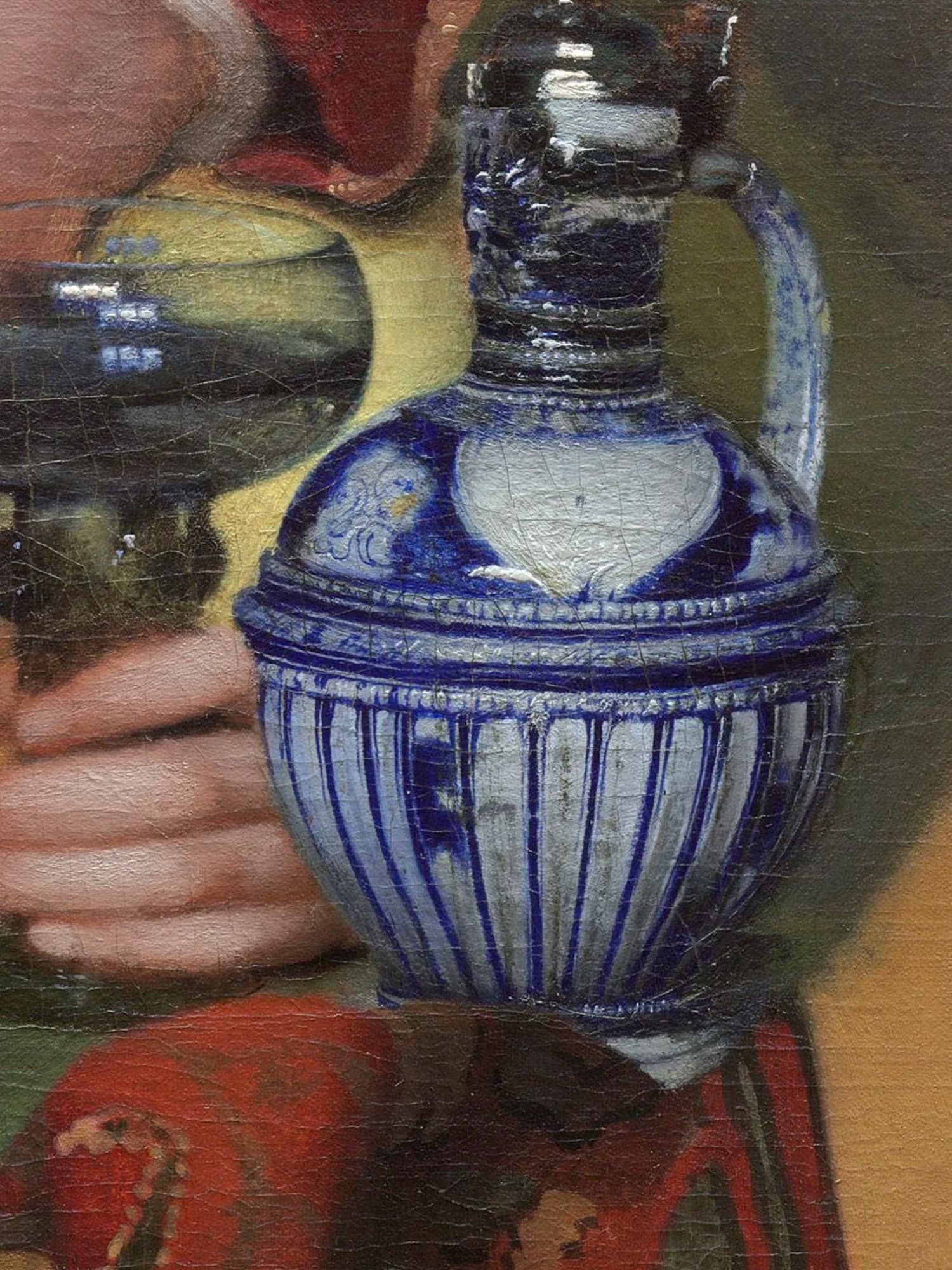
The cleaning also returned the picture’s costliest colour. The blue-and-white wine jug at the right is painted in natural ultramarine, ground from lapis lazuli and the most expensive pigment on any seventeenth-century palette, used here in a picture from the very start of Vermeer’s career. He drew the jug’s rounded body with a compass before painting it.
The examination confirmed how varied the young Vermeer’s materials already were, from the lead-tin yellow and red madder of the figures to smalt and, in the carpet, vivianite, a rare blue that is so sensitive to light it can shift colour over time.
The restored masterpiece
The cleaning handed back a brighter, cooler, more legible picture than the one the twentieth century had grown used to. What it added was a record of how Vermeer built it: the colours restored to the values he set them at, and a set of changes, the suitor’s hat, his lowered gaze, the procuress’s painted-out hand, that show him steering the scene as he worked.
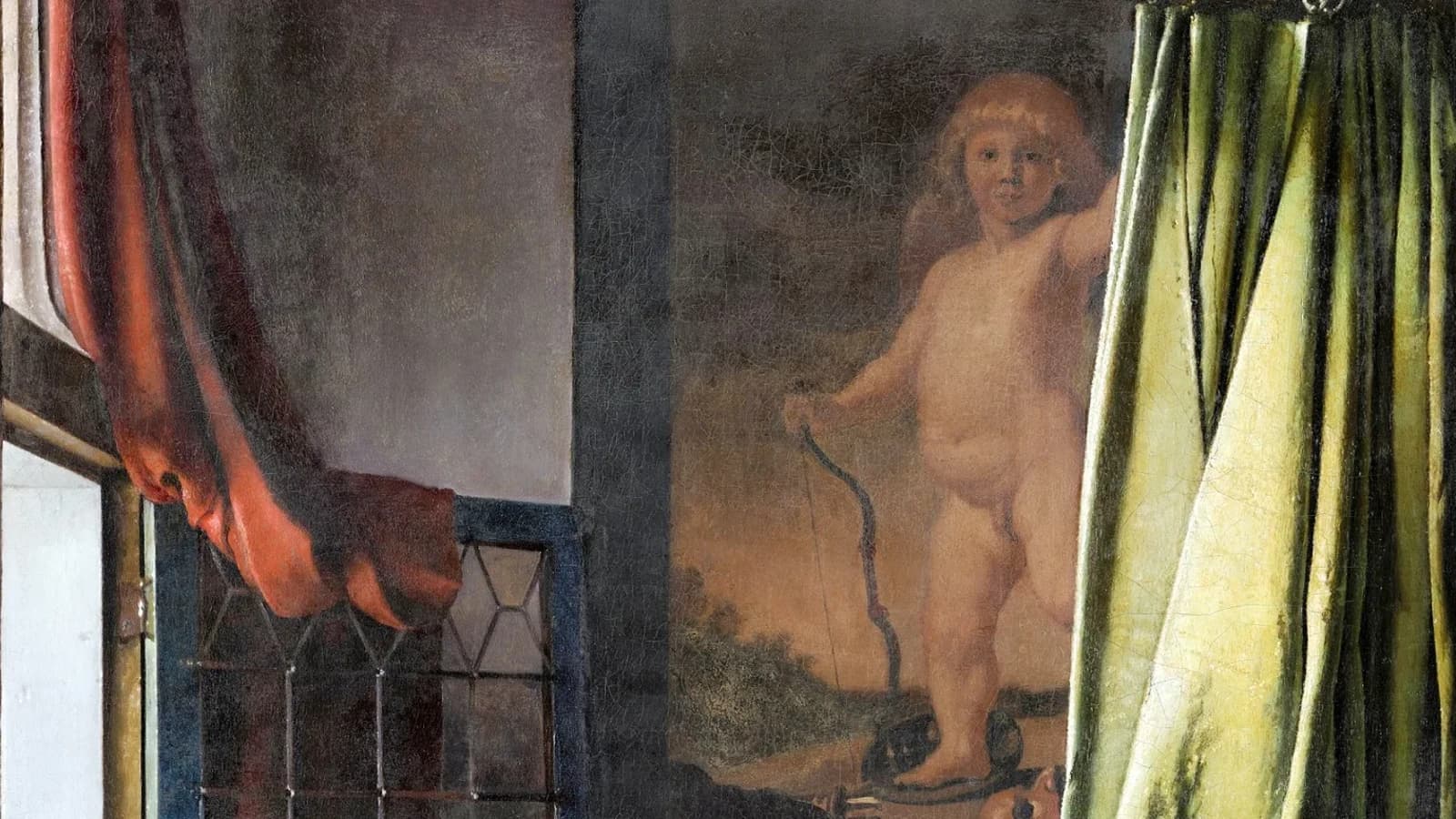
Dresden put the result on show at once. The cleaned painting was the subject of a small exhibition, Das restaurierte Meisterwerk: “Die Kupplerin” von Vermeer, over the winter of 2004 to 2005. The campaign also set the Gemäldegalerie’s conservators on their next Vermeer: the long cleaning of Girl Reading a Letter at an Open Window that, years later, would uncover a hidden Cupid on its back wall.
Notes
- 1.Vermeer’s Procuress was restored at the Gemäldegalerie Alte Meister, Dresden, between 2002 and 2004 by the gallery’s conservators Uta Neidhardt and Marlies Giebe, with scientific analysis from the Doerner Institute in Munich and documentation shared by the Mauritshuis, the National Galleries of Scotland and the Metropolitan Museum of Art. The findings were published in Uta Neidhardt and Marlies Giebe, Johannes Vermeer: “Bei der Kupplerin” (Dresden, 2004). See also the Staatliche Kunstsammlungen Dresden, “A ‘new’ Vermeer in Dresden”.
- 2.The Gemäldegalerie Alte Meister records that “the restoration of the painting from 2002–04 brought back to light the original vibrancy of the jacket that was painted in lead-tin yellow and repeatedly altered during the painting process.” See the gallery’s Google Arts and Culture feature on The Procuress.
- 3.The restoration found that the suitor was first painted without a hat and lit much like the young woman, looking toward her face or out of the picture rather than down at the coin; Vermeer later added the broad hat, shadowed the man’s head and turned his eyes downward. Reported in Neidhardt and Giebe, Johannes Vermeer: “Bei der Kupplerin” (Dresden, 2004), and summarised in the Essential Vermeer before-and-after survey.
- 4.X-radiography showed a light form beside the man with the cittern, read as the procuress’s outstretched right hand, afterwards painted over with her black garment, and a coin in the young woman’s hand. Reported in Neidhardt and Giebe, Johannes Vermeer: “Bei der Kupplerin” (Dresden, 2004), and summarised in the Essential Vermeer catalogue entry.
- 5.The blue-and-white wine jug is painted in costly natural ultramarine, the ground-lapis pigment, its rounded body laid out with a compass; the carpet contains the rare, light-sensitive blue vivianite, and smalt appears elsewhere. See the Essential Vermeer catalogue entry and, for the recovered colour, the gallery’s Google Arts and Culture feature.
- 6.The cleaned painting was shown at the Gemäldegalerie Alte Meister as Das restaurierte Meisterwerk: “Die Kupplerin” von Vermeer, from 3 December 2004 to 27 February 2005. The same museum’s later cleaning of Girl Reading a Letter at an Open Window grew out of it: as the Staatliche Kunstsammlungen Dresden put it, “after Vermeer’s The Procuress was successfully restored at the Staatliche Kunstsammlungen Dresden between 2002 and 2004, the focus increasingly shifted to Girl Reading a Letter.” See the CODART exhibition listing and the SKD press release.