The 2021 Restoration of Girl Reading a Letter at an Open Window
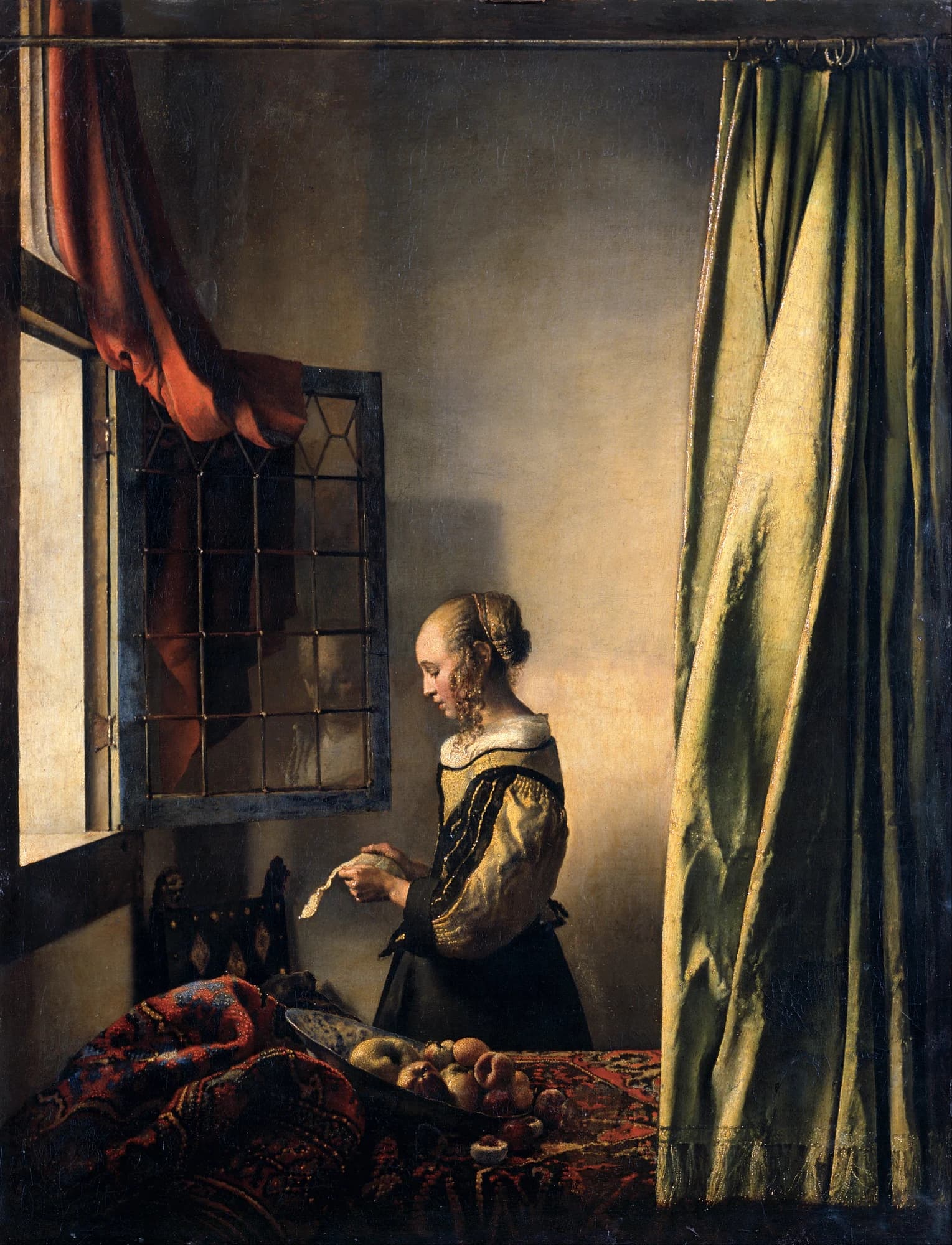
For 250 years Vermeer's Girl Reading a Letter at an Open Window hung in Dresden behind a blank wall. In 2021 a restoration uncovered the Cupid beneath it.
A blank wall
Johannes Vermeer, the Dutch painter who worked in the small city of Delft in the 1660s, is famous for stillness. Soft light, a hushed room, a single figure caught in a quiet moment. One of his earliest interiors is Girl Reading a Letter at an Open Window, painted around 1657 to 1659. A young woman stands in profile at an open window, absorbed in a letter, her face reflected faintly in the glass.
It has hung in Dresden since 1742, when it was bought for the collection of the Saxon rulers, at first in the belief that it was a Rembrandt. Only in 1860 did a French critic recognise it as a Vermeer. For all that time the wall behind the woman was a large, calm expanse of pale plaster, and visitors and scholars alike came to admire that emptiness as part of the painting’s peace.
A ghost in the X-ray
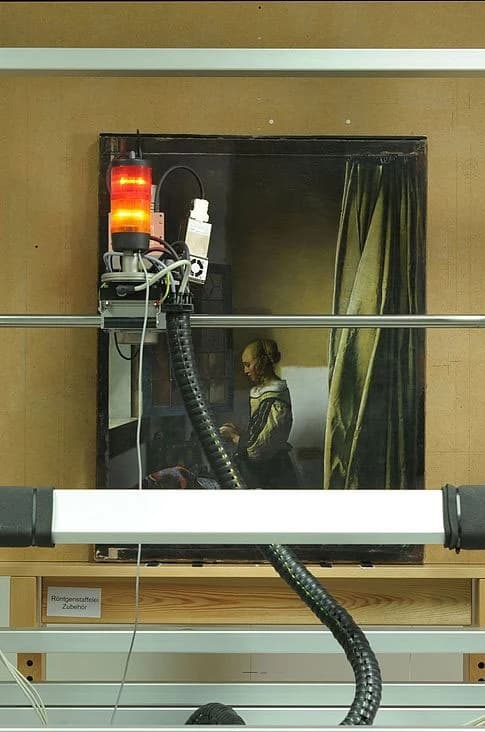
The wall was not always empty. In 1979 the museum X-rayed the canvas and a surprise rose out of the plaster: the outline of a large painting hidden beneath it, a standing figure of Cupid, the boy-god of love, nearly life-sized. Infrared photography in 2009 confirmed he was really there, lying under the surface.
For decades the explanation seemed obvious. Vermeer must have painted the Cupid in, looked at his picture, and decided it was stronger without him, painting him out again while the work was still on the easel. Artists change their minds all the time, and the blank wall was simply the version he had settled on. Or so everyone assumed.
A layer of dirt
In 2017 the museum began a full restoration, and the old story fell apart. As conservators studied the surface, they found something telling between the Cupid and the paint covering him: a thin film of dirt and old binding medium. Vermeer could never have laid one coat straight onto the other if grime had had time to settle in between.
The covering paint, they realised, had been added decades after he finished, by another hand entirely. Sometime in the eighteenth century, long after Vermeer’s death, someone had decided the picture looked better without the god of love, and quietly painted him out.
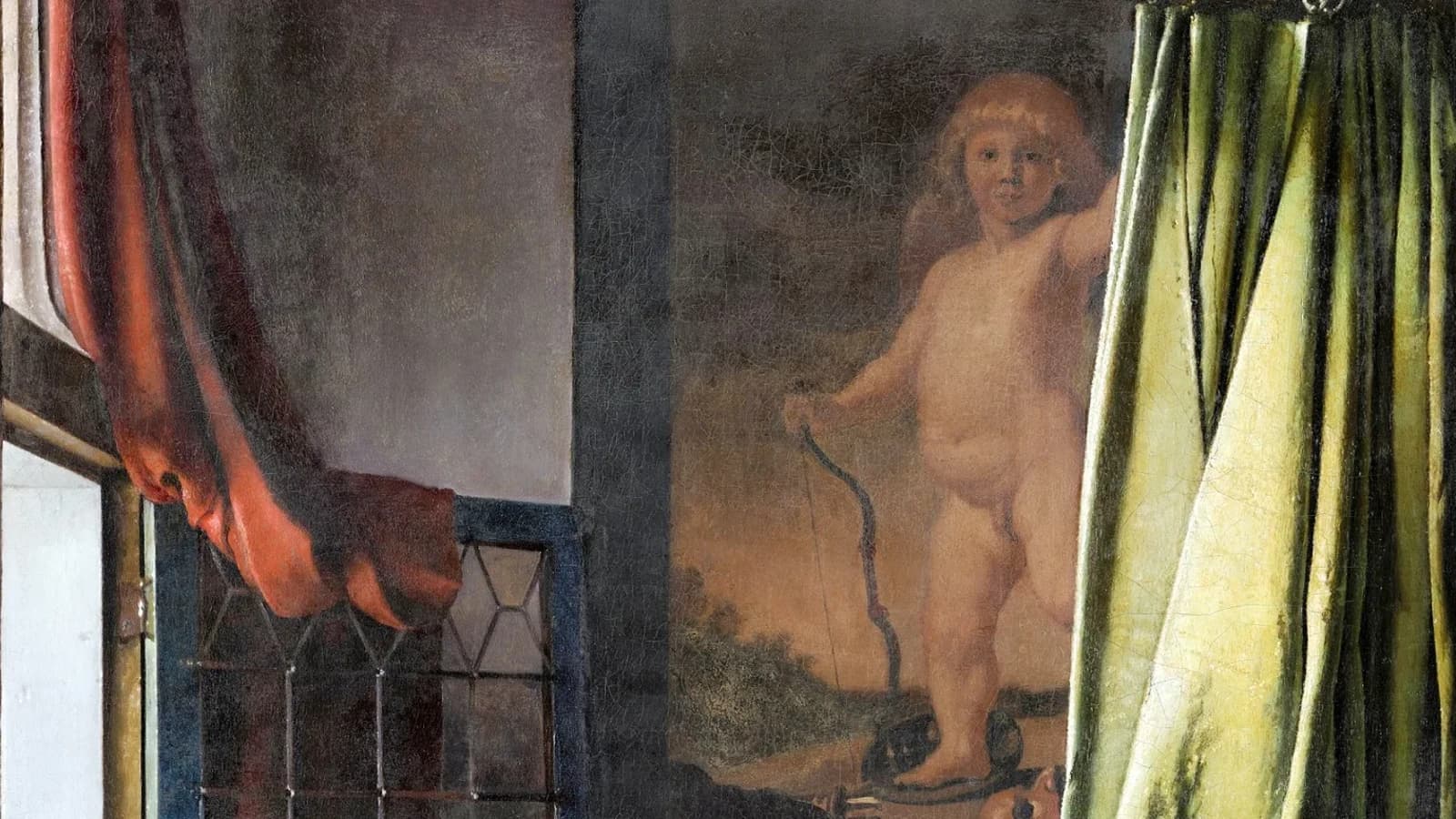
That changed everything. A blank wall the artist had chosen is untouchable. A blank wall painted on by a stranger is censorship, and censorship can be reversed. In 2018, after weighing the evidence with experts from museums across Europe, Dresden made a bold call: take the stranger’s paint off, and let Vermeer’s Cupid back into the room.
Four years with a scalpel
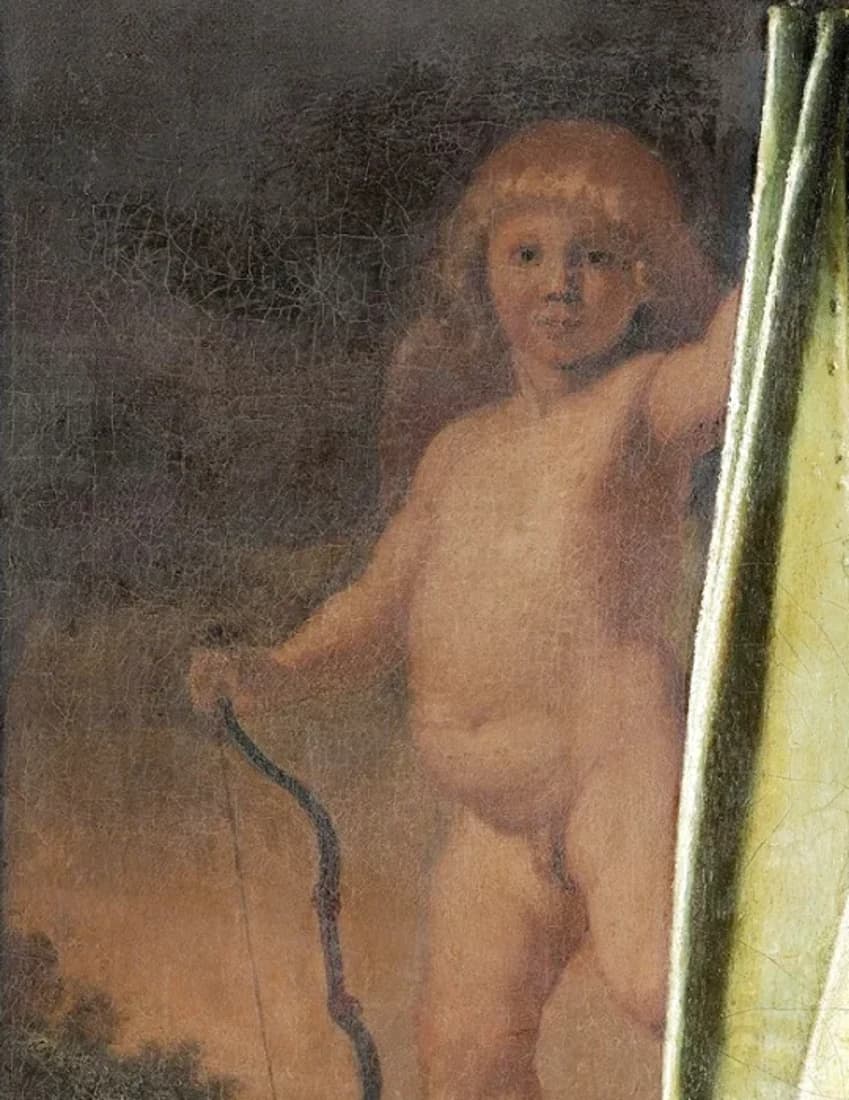
Undoing the cover-up was painstaking work. The lead conservator, Christoph Schölzel, worked under a microscope with a scalpel, lifting the later paint away speck by speck without touching Vermeer’s own surface beneath. The job took the best part of four years.
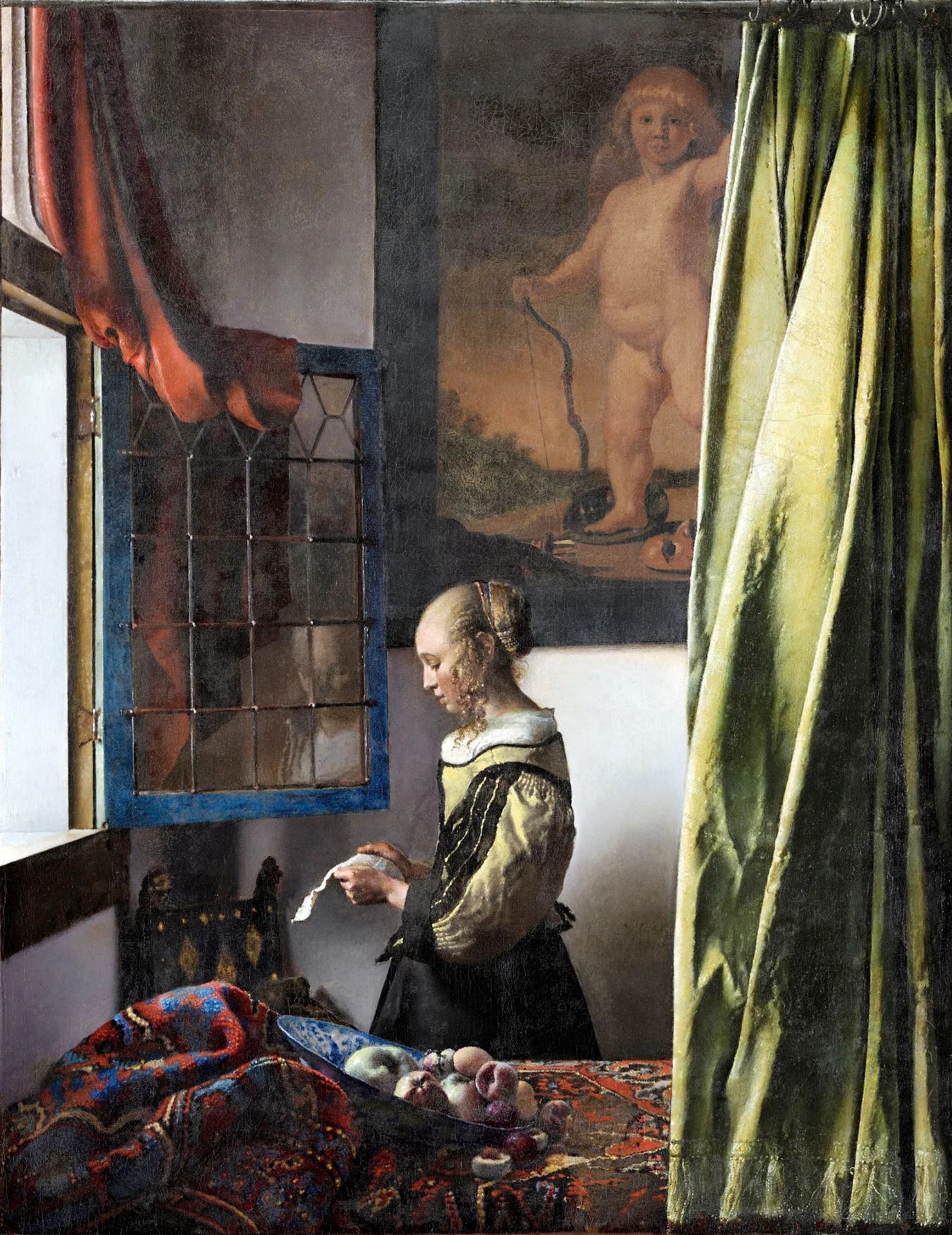
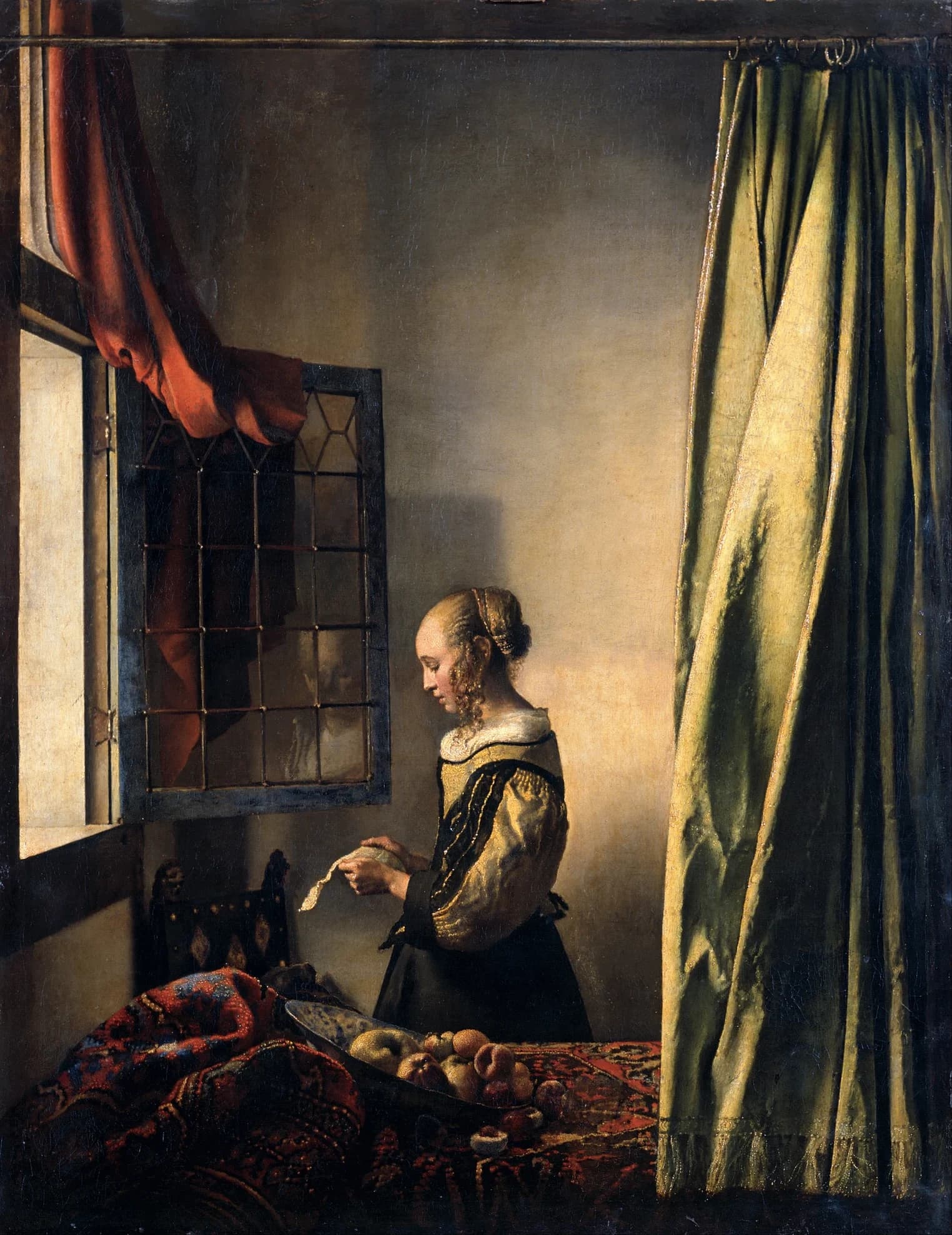
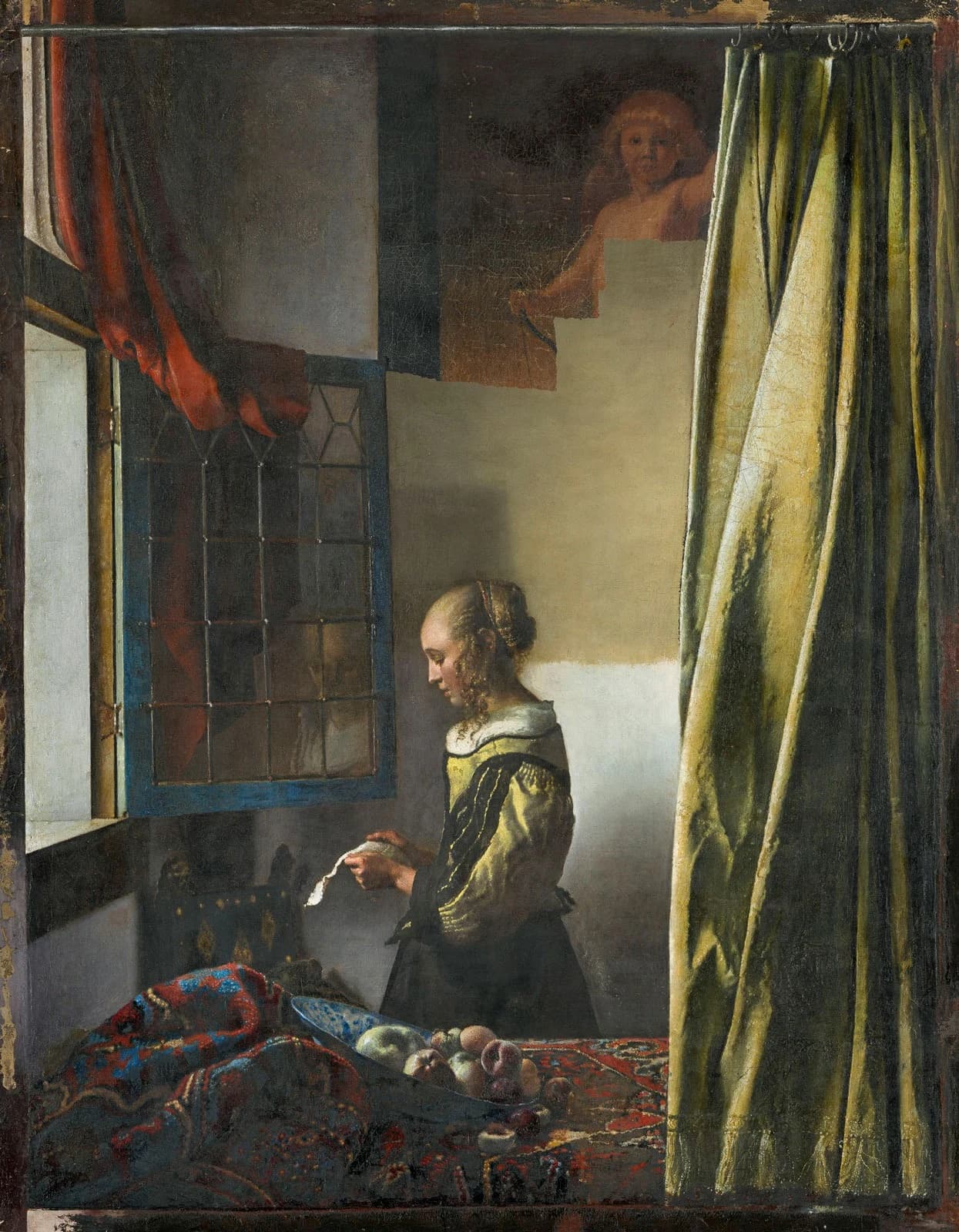
When the work was done, a room the world had known as serene and empty had a god of love standing over it. It was the same Vermeer, and yet a completely different picture.
It makes it a different painting.
Uta Neidhardt, the senior conservator who had lived with the picture for years, called the discovery the most sensational experience of her career.
What the Cupid means
The Cupid is not just decoration. He holds up a bow, and at his feet he tramples a pair of masks. In the visual shorthand of Vermeer’s time, that pose came from a popular love emblem, a printed picture with a motto attached, whose message was that true love is faithful to one person alone. The trampled masks stand for deceit and pretence, kicked aside.
Hang that over a woman reading a letter, and the letter quietly becomes a love letter, a sincere one. The empty wall had made the scene a riddle. The Cupid answers it. This is what the picture had been about all along, until a stranger’s brush hid the clue for two and a half centuries.
Vermeer clearly liked the figure. The same standing Cupid turns up on the walls of three of his other interiors, all of them scenes of music or courtship, a small recurring actor in his theatre of quiet rooms.
On reflection
The restored painting was unveiled in Dresden in September 2021, at the heart of an exhibition called Johannes Vermeer: On Reflection, which brought together around ten of the roughly thirty-five paintings the world still has from his hand. Visitors who thought they knew the picture met it again with a new presence looking back at them.
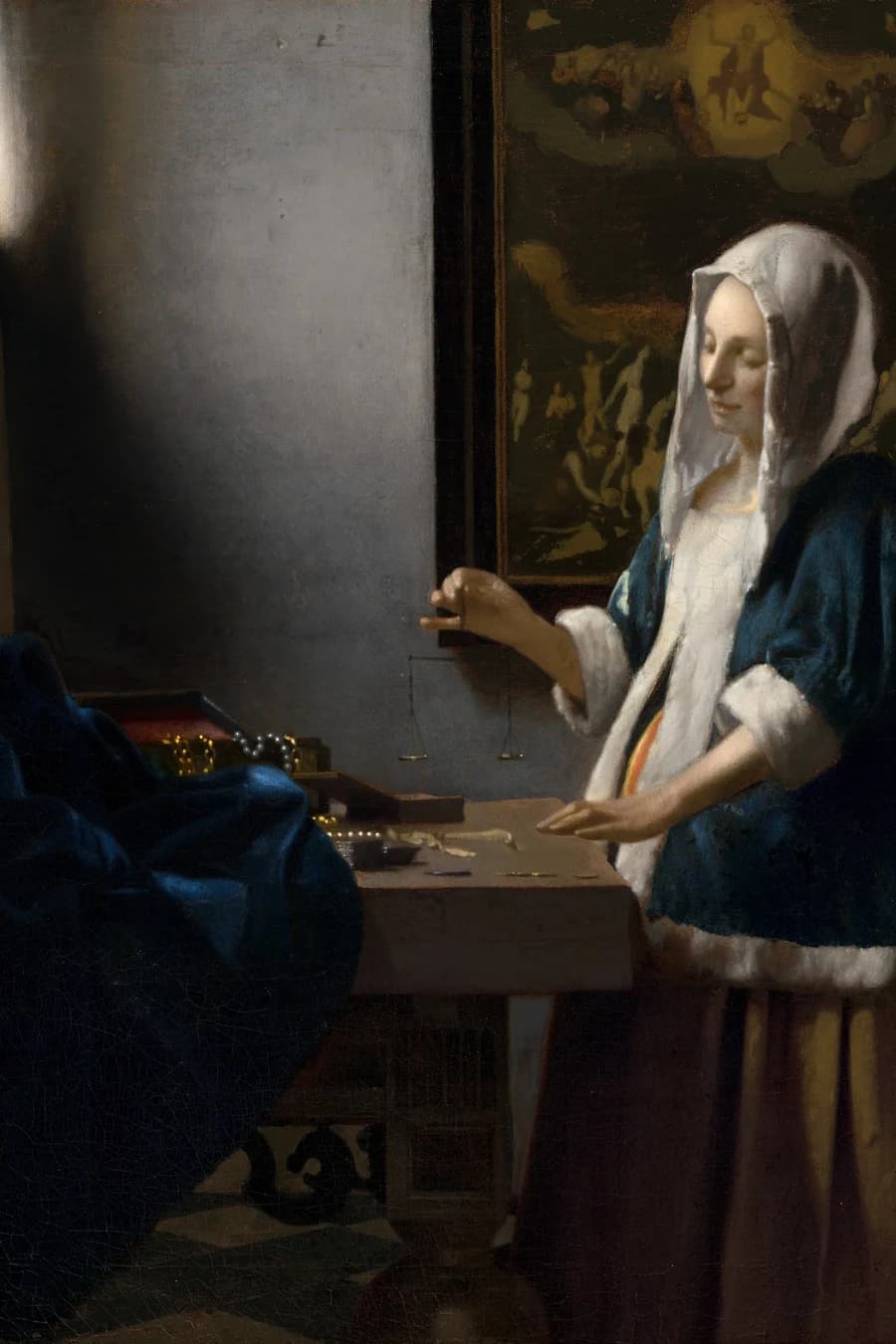
The Cupid is one example of a habit that runs right through Vermeer’s work: he loved to hang a second picture on the wall behind his figures, a quiet caption that comments on the scene below. Once you start noticing them, you find them almost everywhere.
Notes
- 1.The dating (c. 1657–1659) and the Dresden provenance (bought in 1742, at first as a Rembrandt, and only recognised as a Vermeer in 1860 by the French critic Théophile Thoré) are set out in Wikipedia, “Girl Reading a Letter at an Open Window”.
- 2.The hidden figure showed up on an X-ray taken in 1979 and was confirmed by infrared imaging in 2009, but for decades it was assumed to be a change Vermeer made himself. See The Art Newspaper, “First full image of ‘new’ Vermeer with uncovered Cupid released by Dresden museum”.
- 3.During the restoration begun in 2017, conservators found a layer of dirt and binding medium between Vermeer’s Cupid and the paint covering it, meaning decades had passed before the overpainting was added, so it could not have been Vermeer’s own hand. The museum’s expert panel took the decision to remove it in 2018. See the Staatliche Kunstsammlungen Dresden press release and Smithsonian Magazine.
- 4.The overpaint was removed under a microscope with a scalpel, layer by layer, over a restoration that ran from 2017 to early 2021. The lead conservator was Christoph Schölzel of the Staatliche Kunstsammlungen Dresden. See ARTnews and the museum press release.
- 5.The senior conservator Uta Neidhardt called the discovery “the most sensational experience of my career” and said the recovered Cupid “makes it a different painting.” See The Art Newspaper.
- 6.The standing Cupid trampling masks echoes a love emblem from Otto van Veen’s Amorum emblemata (1608), whose motto runs that perfect love is for one person alone; the trampled masks stand for deceit cast aside. See Wikipedia, “Girl Reading a Letter at an Open Window”.
- 7.The same standing Cupid appears in three other Vermeers, A Maid Asleep, Girl Interrupted in Her Music, and A Lady Standing at a Virginal. See Wikipedia, “Lady Standing at a Virginal”.
- 8.The restored painting was unveiled in the exhibition Johannes Vermeer: On Reflection at the Gemäldegalerie Alte Meister, Dresden (10 September 2021 to 2 January 2022), which gathered around ten of Vermeer’s surviving works. See The Art Newspaper.