The 1971 Theft of The Love Letter
How a Belgian hotel waiter cut Vermeer's Love Letter from its frame in a Brussels exhibition, held it for two weeks in the name of famine relief, and left the Rijksmuseum a year of repair.
A loan to Brussels
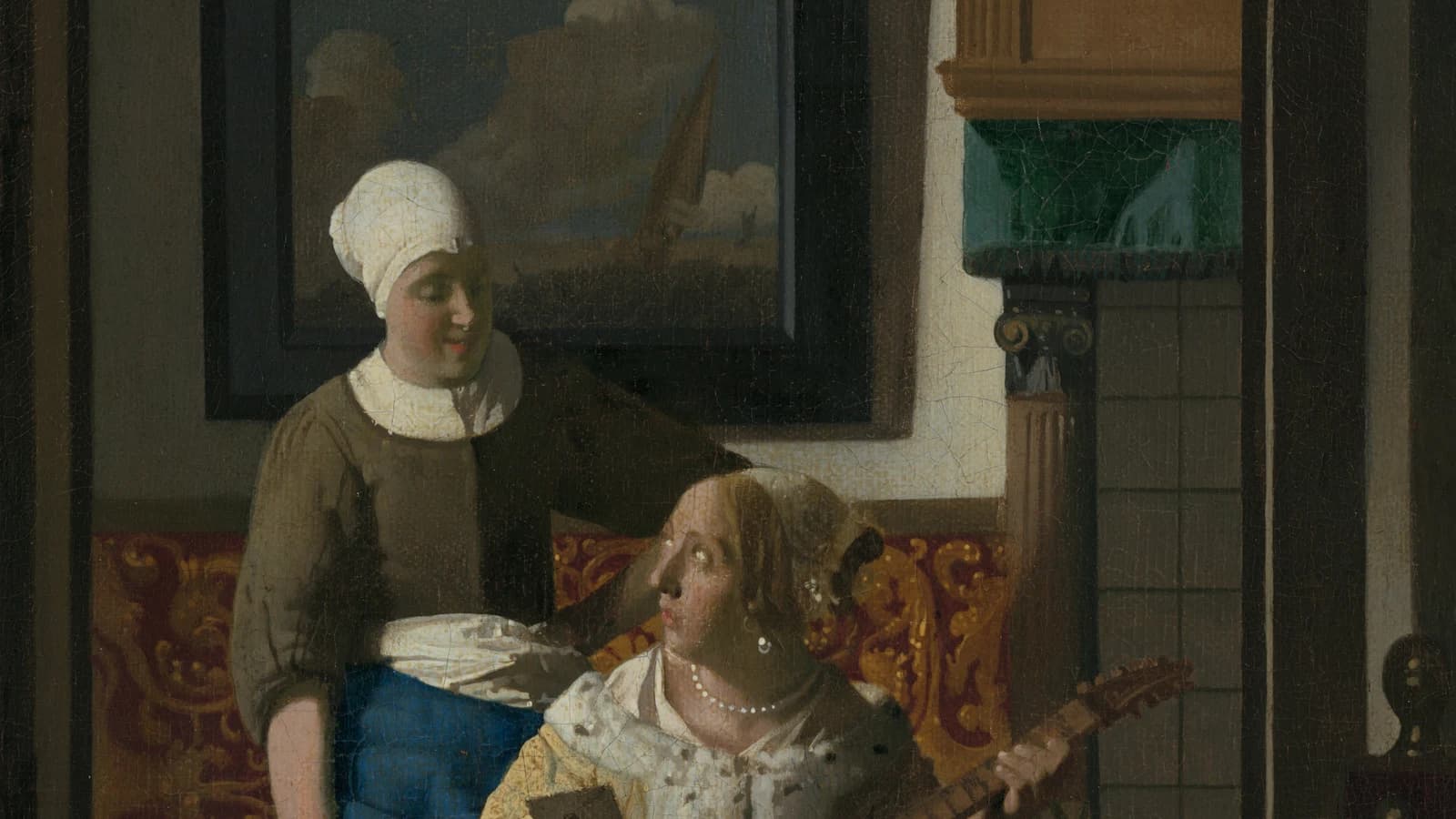
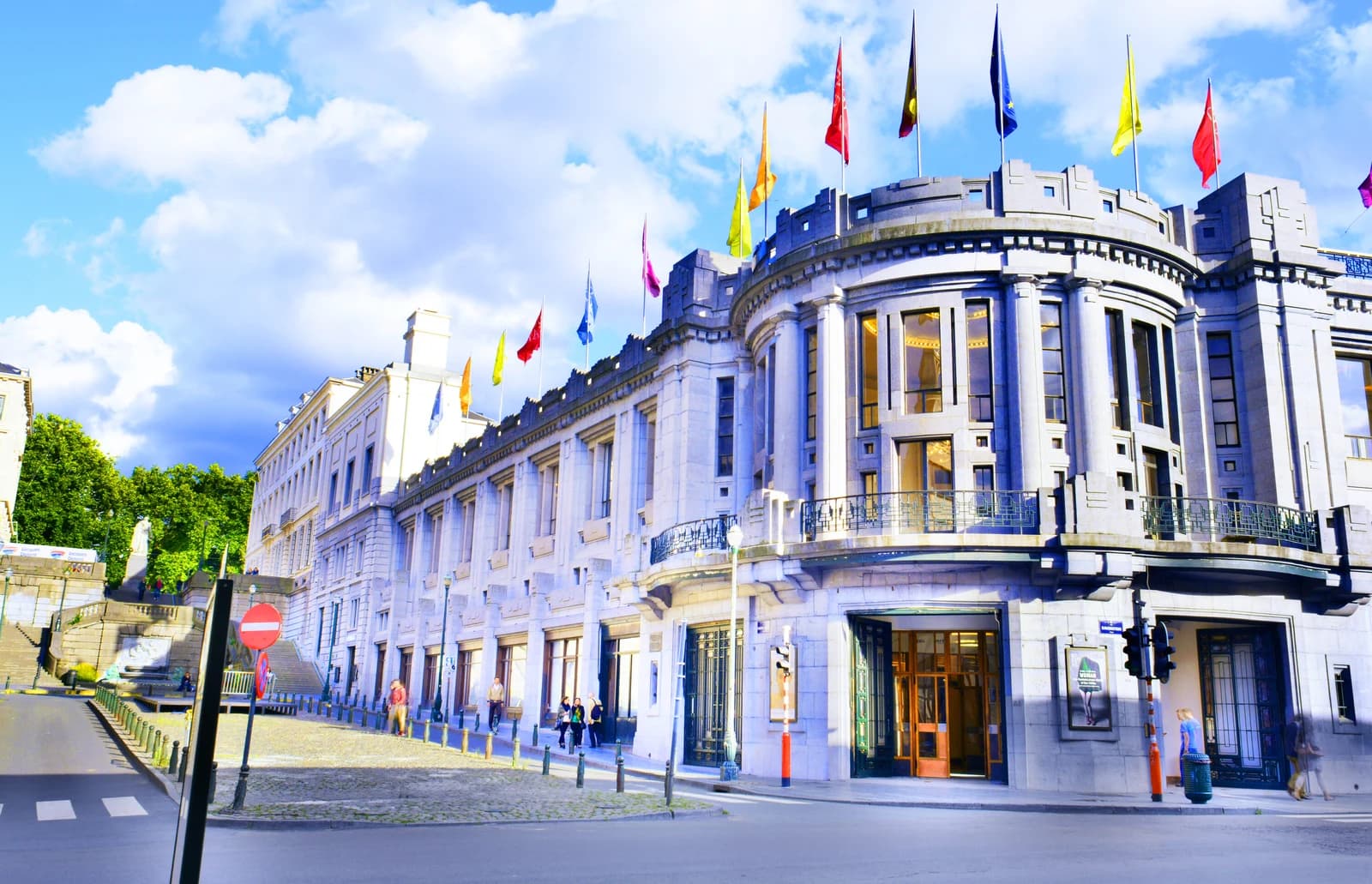
In the autumn of 1971 Vermeer's The Love Letter left Amsterdam for a few weeks. The small late canvas, a maid handing a letter to a startled mistress who looks up from her cittern, had belonged to the Rijksmuseum since 1893. It travelled south as one of the loans to Rembrandt en zijn tijd (Rembrandt and His Time), a large survey of Dutch seventeenth-century painting at the Palais des Beaux-Arts in Brussels, where it hung as catalogue number 112.
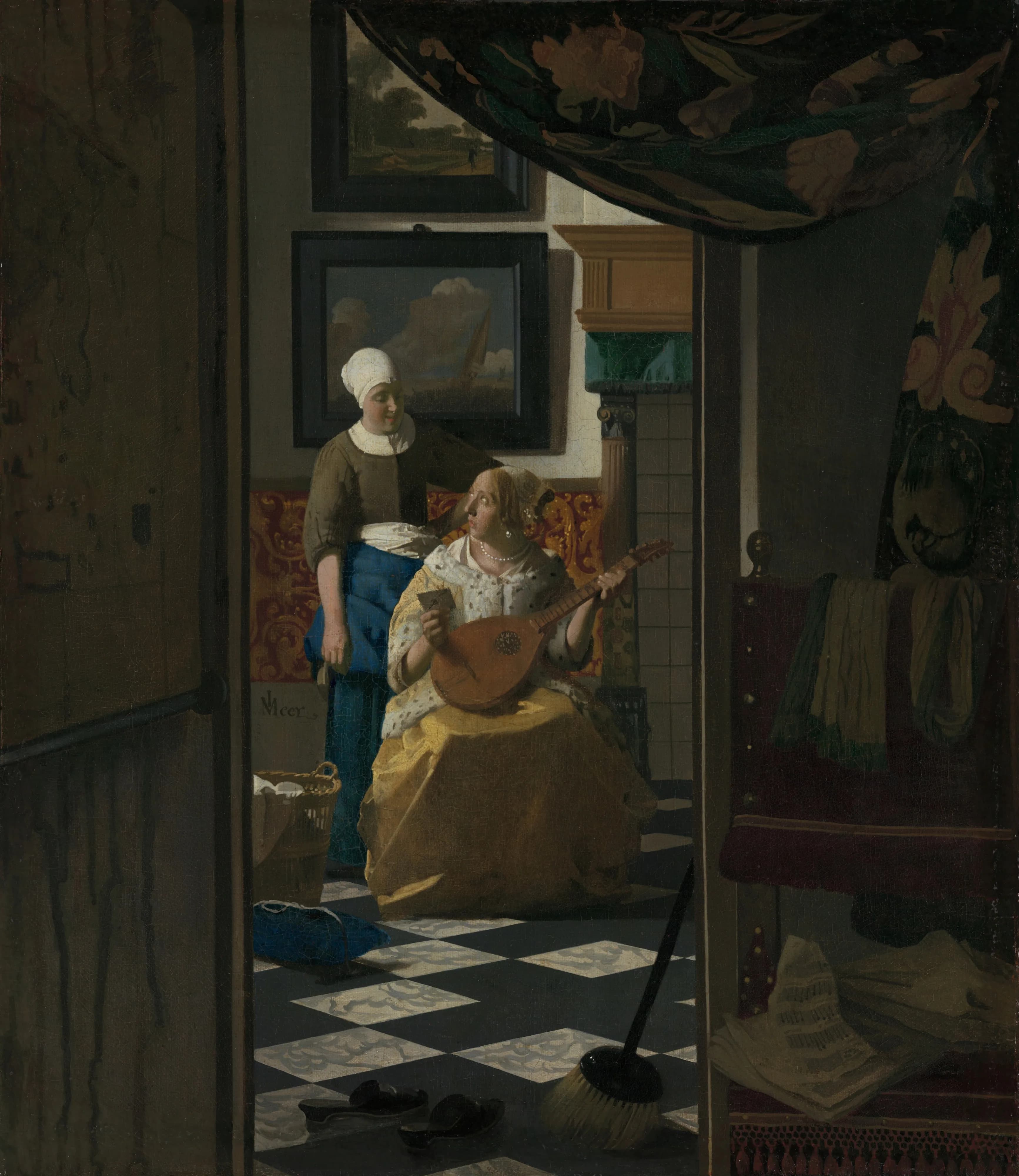
The exhibition opened on 23 September. That same evening the painting was taken off the wall, and it would be missing for a little over two weeks.
The night of 23 September 1971
The thief was a twenty-one-year-old hotel waiter from the Belgian Limburg named Mario Pierre Roymans. By the accounts reconstructed afterward, he remained inside the building until it closed and emptied, then lifted The Love Letter from the wall and carried it to a window he had chosen as his way out.
The framed picture would not pass through the window. Rather than abandon it, Roymans cut the canvas from its stretcher. The Rijksmuseum conservator Esther van Duijn describes what happened next plainly: the thief "roughly cut the painting on canvas from its stretcher, folded it once and tucked it in his trousers." A picture that had survived three centuries was now a loose, once-folded sheet of paint carried against a man's body.
The theft was discovered the next morning: an empty frame, a bare stretcher, and a ragged margin of canvas where the picture had been. No one had seen the intruder leave, and there was, at first, no ransom note and no name.
When word did come, it made clear that this was not an ordinary theft for profit. Roymans wanted nothing for himself.
The demands
Roymans made contact through anonymous letters and the Belgian press, and the ransom he set out was not for himself. He demanded that 200 million Belgian francs be given to the refugees of East Pakistan, where war and famine had driven millions across the border into India that year.
The camps along the Indian border held some of the roughly ten million people displaced by the conflict that would end the year as the independent state of Bangladesh, a crisis then reaching European audiences through news coverage. Roymans framed the theft as a hostage-taking on the refugees' behalf: the painting for the money, the money for the starving.
Arrest and recovery
The ransom was never raised. Roymans was arrested in early October, and the painting, which he had kept in a pillowcase in his hotel room, was recovered about two weeks after it had been taken and returned to the Rijksmuseum on 8 October 1971.
It had been out of its frame, folded and hidden, for a fortnight. What came back was unmistakably Vermeer's picture, and unmistakably a damaged one.
The damage
Cutting a painting from its stretcher does its worst harm at the edges, where the blade runs, and folding a stiff, three-hundred-year-old paint film cracks and lifts it along the crease. Both had happened here. The later RKD study Counting Vermeer records that the canvas was "brutally cut out of its frame," with paint loss running along its edges, damage still plainly visible in the painting's X-radiograph as gaps where the original paint is simply gone.
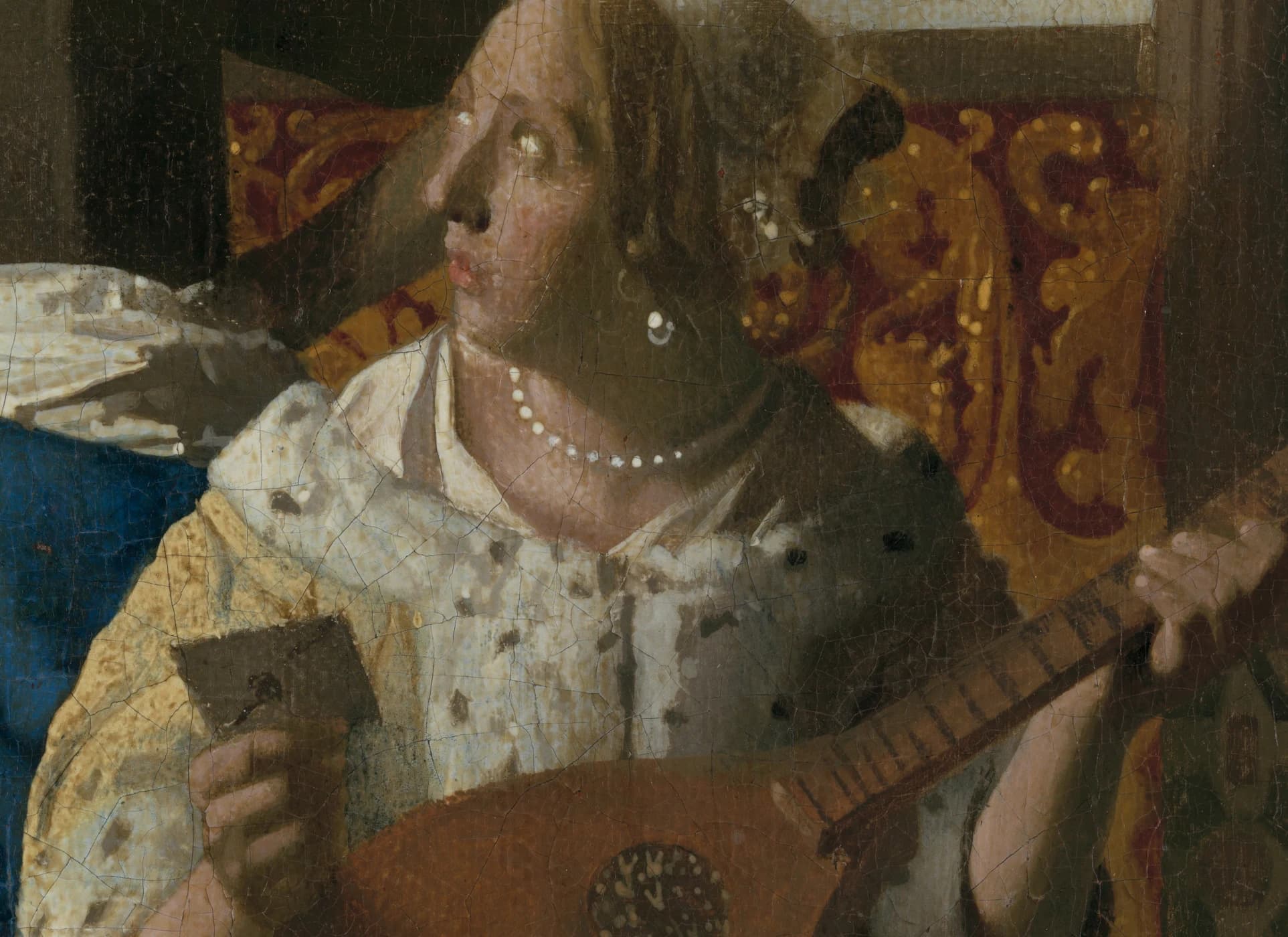
The losses were concentrated along the cuts and the fold rather than in the faces and hands at the heart of the picture, which is much of why recovery was possible at all. Still, the Rijksmuseum now held a national treasure with bare canvas showing through it, and had to decide what to do about that.
The restoration
The museum's director, Arthur van Schendel, did not simply hand the picture to a restorer. He convened an international advisory committee of conservators, museum directors and scientists to guide the treatment, a degree of oversight commensurate with the painting's standing.
The committee first had to settle a question that was not obvious. Some voices, among them artists and art historians, argued that the painting should be left unrepaired, kept as a document of what had been done to it. Others proposed a visible, honest kind of retouching, a neutral tone in the losses or the fine hatching known as tratteggio, so that the repairs would read as repairs. In the end the committee chose the opposite course: the picture should be made whole again as invisibly as possible, so that a viewer would see Vermeer's interior and not its wounds.
The work fell to Luitsen Kuiper, who had become the Rijksmuseum's chief restorer in 1970. He gave the canvas a new wax-resin lining, a supporting layer fused to the back to hold the torn and folded fabric flat and stable, and then filled and retouched the losses so that they disappeared into the surrounding paint. The treatment took close to a year. In 1972 the restored Love Letter went back on view, accompanied by an issue of the Bulletin van het Rijksmuseum given over to what had been damaged and how it had been mended.
Aftermath
The ransom was never paid, and no famine-relief campaign of the kind Roymans had demanded was launched. He was arrested, tried in Brussels, and imprisoned. What his two weeks produced instead was a badly cut Vermeer and, in exchange, close to a year of conservation to undo the cutting.
The Love Letter hangs today in the Rijksmuseum's Gallery of Honour. It was not the only Vermeer pulled from a wall in these years; within three years two more would be stolen, in Britain and in Ireland.
Notes
- 1.The painting's ownership by the Rijksmuseum since 1893 (inv. SK-A-1595) is recorded on the Rijksmuseum object page. Its loan to Rembrandt en zijn tijd as catalogue no. 112 is listed in the RKD record for the painting.
- 2.That the thief "roughly cut the painting on canvas from its stretcher, folded it once and tucked it in his trousers" is quoted by the Rijksmuseum conservator Esther van Duijn in "Vandalism and the Rijksmuseum: three vandalized paintings restored by Luitsen Kuiper in the nineteen seventies," CeROArt (2018). The episode was documented at the time by the museum's own staff in P.J.J. van Thiel and L. Kuiper, "Purloined, damaged, recovered, restored: Vermeer's The Letter," Delta 16 (1973).
- 3.Van Duijn records that Roymans "hid it in a pillowcase at his hotel and demanded 200 million Belgian francs for Pakistani refugees through anonymous letters and press contact": CeROArt (2018).
- 4.Van Duijn notes that the painting, kept in a pillowcase at Roymans' hotel, was recovered about two weeks after the theft: CeROArt (2018). Its return to the Rijksmuseum on 8 October 1971 is recorded in the painting's object record.
- 5.The RKD study Counting Vermeer records that the canvas was "brutally cut out of its frame," that the loss ran along its edges, and that the missing original paint is still legible in the X-radiograph. The damage was catalogued in detail by P.J.J. van Thiel, "Beschadiging en herstel van Vermeer's Liefdesbrief," and L. Kuiper, "Restauratieverslag," in the Bulletin van het Rijksmuseum 20, no. 3 (1972).
- 6.Van Schendel's international advisory committee, the debate over whether to restore the painting at all, and the decision to give it a new wax-resin lining and an "integral or invisible" retouching are described by Esther van Duijn in CeROArt (2018). The conservators published their own English-language account as P.J.J. van Thiel and L. Kuiper, "Purloined, damaged, recovered, restored: Vermeer's The Letter," Delta 16 (1973).