The Heist of The Guitar Player
How Vermeer's The Guitar Player was stolen from Kenwood House in 1974, held for seventy-three days, and why nobody was ever charged.
A painting that came to Hampstead
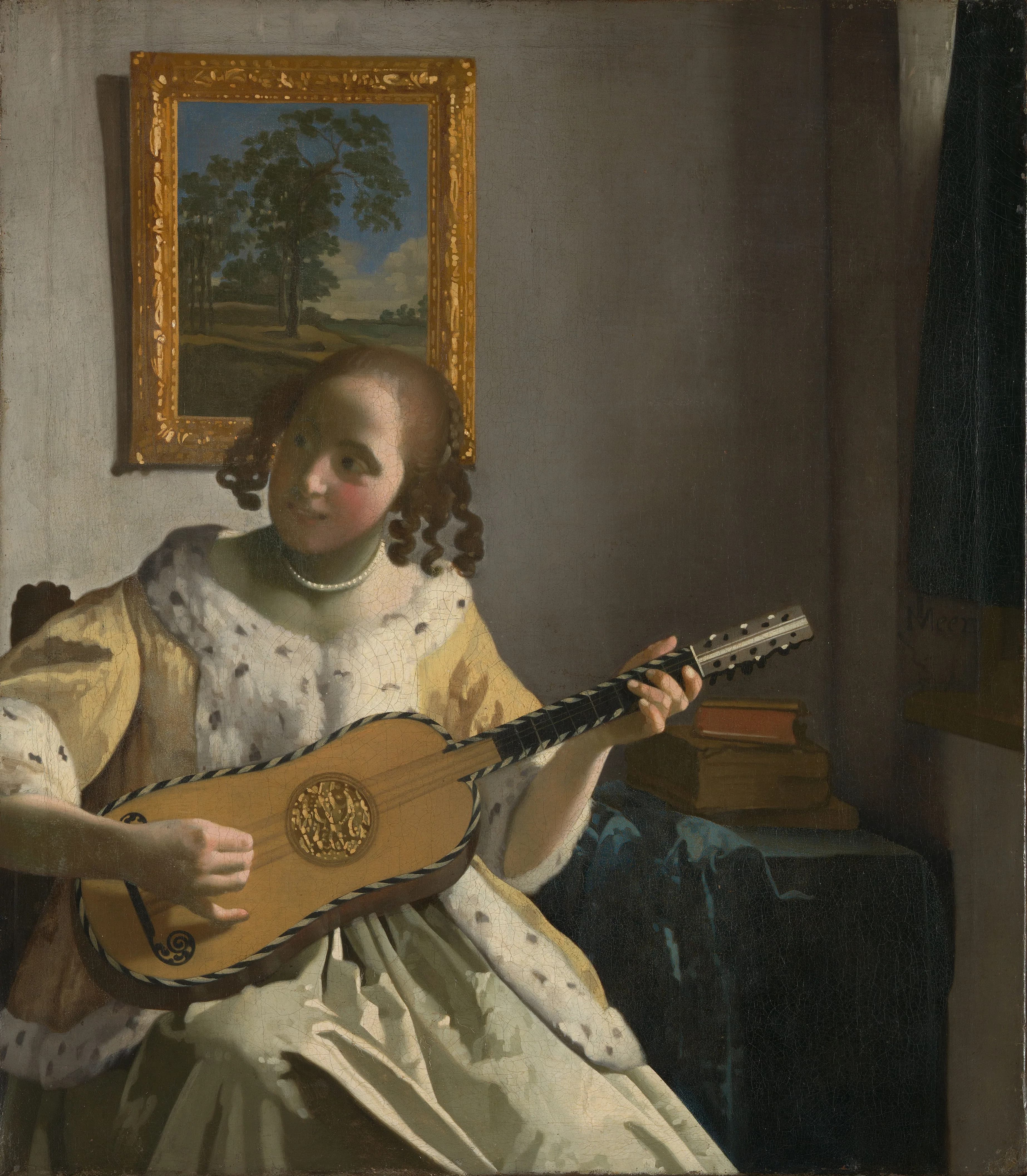
In 1927, Edward Cecil Guinness, the first Earl of Iveagh, died and left Kenwood House on the edge of Hampstead Heath to the nation, together with the art he had assembled inside it. Among the works that passed to public hands was Vermeer's The Guitar Player, a small late canvas of a woman in an ermine-trimmed yellow jacket caught mid-chord. Guinness had bought it through the London dealer Agnew's in 1889; before that it had descended through the Palmerston family from the 1696 Dissius sale in Amsterdam, where Vermeer's collection was dispersed after his death.
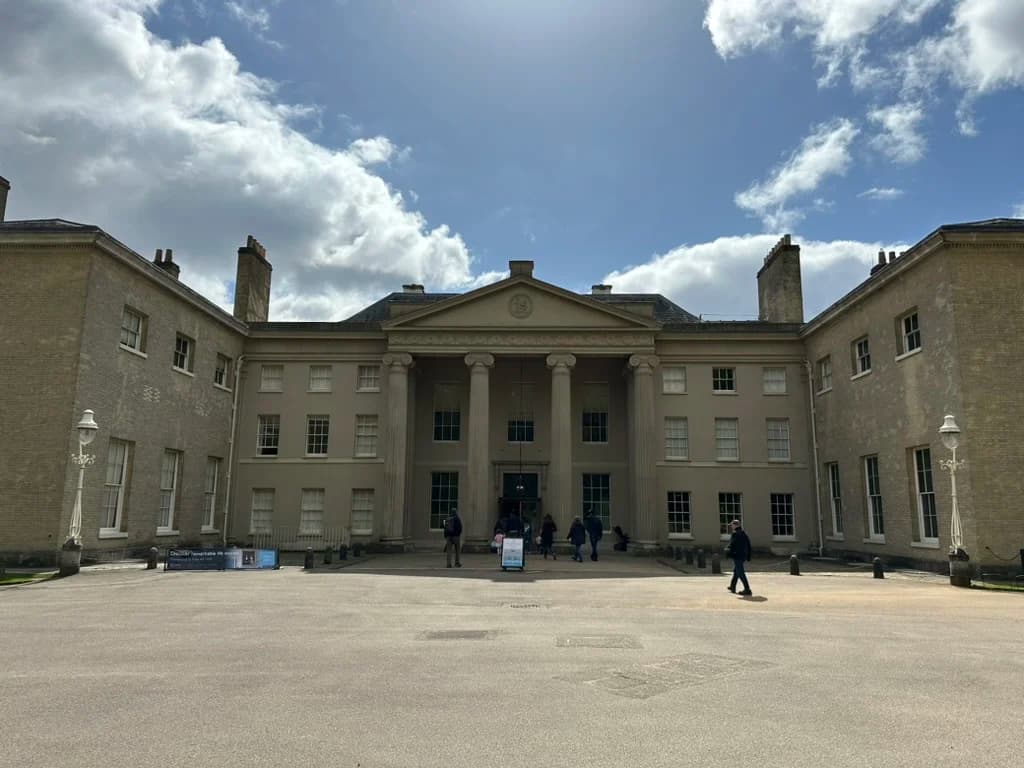
Kenwood was not an institutional museum. Robert Adam had remodelled the villa for the Earl of Mansfield in the 1760s, and it remained a house in arrangement and feeling: works hung on walls rather than in cases, rooms opened into one another, and the perimeter was a Georgian park rather than a modern security cordon. The Iveagh Bequest had operated as a free public attraction since 1928, and by the early 1970s it was among the pleasures of north London: a country house, effectively, on the city's doorstep.
On a Saturday night in February 1974, that informality left Vermeer's painting exposed.
The night of 23 February 1974
Whoever stole The Guitar Player came prepared. Before approaching the house, they cut the telephone lines to Kenwood, so the alarm could not be relayed to Hampstead police station. Then, with a sledgehammer, they smashed through the shutters and the steel bars of a ground-floor window, reached in, and lifted the painting from the wall. They scaled a ten-foot perimeter wall and were gone before any alarm was answered.
We are looking for either a master thief or a madman.
The frame was left behind. Police searched the Heath and found it half a mile from Kenwood, on the open ground. A Romani clairvoyant named Nella Jones had come forward in the immediate aftermath with a hand-drawn sketch of where the frame would be found, which she said had come to her while watching a television news report on the theft. Whether the sketch guided the search or simply matched its outcome, the frame was recovered where she had indicated.
The painting itself was nowhere. Scotland Yard had a smashed window, an empty frame, and no suspects.
Two demands, one painting
In the days after the theft, anonymous messages began reaching Scotland Yard and the newspapers, and it quickly became clear that the painting had been taken in service of more than one agenda.
One demand was political and specific. An anonymous note called for the IRA prisoners Marian and Dolours Price to be transferred from English jails to a prison in Northern Ireland. If the government refused, the note said, The Guitar Player would be destroyed.
A separate demand arrived by telephone, from a caller with a West Indian accent who appeared to have no connection to Irish republicanism. He demanded that food aid worth more than a million dollars be distributed to the poor of Grenada.
To demonstrate that the threat was real, someone cut a strip from the edge of the canvas, approximately an inch long and a quarter of an inch wide, and posted it to The Times in London with a typed note. The painting, the note warned, would be burned on St Patrick's night.
St Patrick's Day was 17 March 1974, three weeks after the theft. It came and went. No painting was burned. No demand was met. The Guitar Player remained missing, and the police remained without leads.
Marian and Dolours Price
The ransom demand about the Price sisters was legible to anyone following the news that winter. In March 1973, Marian and Dolours Price had been part of an IRA active service unit that drove car bombs to the Old Bailey and the Ministry of Agriculture in London. The explosions killed one person and injured more than two hundred others. The sisters were convicted in November 1973 and sentenced to life imprisonment.
From the moment of their conviction, they demanded to serve their sentences in Northern Ireland, near their families and within the republican tradition of treating such imprisonment as political internment. When the British government refused, they began a hunger strike. By February 1974, they had been on hunger strike for more than three months and were being force-fed in prison, a process reported in detail throughout that winter's newspapers.
Whoever framed the demand in those terms had chosen it with care. The sisters were not asking to be freed, only to be moved a few hundred miles. Refusing looked intransigent; conceding would mean appearing to yield to extortion. The demand was designed to be difficult to answer in either direction, and it placed the government in exactly that position.
Recovered in Smithfield
On 7 May 1974, acting on an anonymous tip, police went to the churchyard of St Bartholomew-the-Great in Smithfield, in the City of London. They found The Guitar Player propped against a gravestone, wrapped in newspaper and tied with string. The canvas had been outdoors, in varying conditions, for seventy-three days.
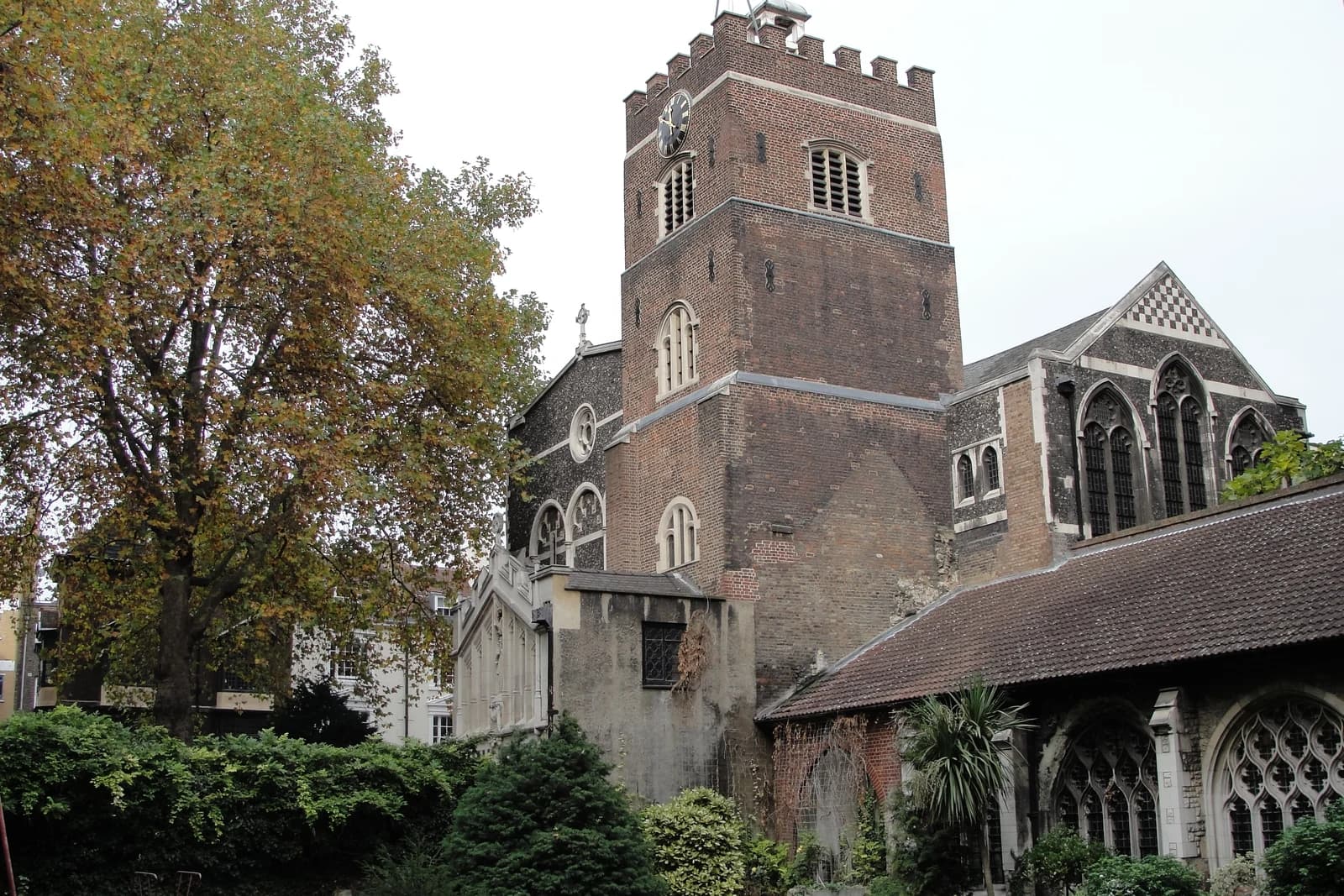
It was damp. It was otherwise undamaged.
No ransom had been paid. No demand had been met. The Price sisters remained in English prisons. The painting was returned to Kenwood House, where it has hung ever since.
A mystery half-solved
No one was ever charged with the theft of The Guitar Player. The police investigation closed without a prosecution, and for five decades the identity of the thieves remained officially unknown.
Then, in the summer of 2025, Paul Hodgson gave an interview to the Islington Tribune. His uncle, a window cleaner named David Knight, had confessed to the theft before his death, Hodgson said. Knight was not a stranger to the criminal courts: he had previously spent three years in prison following a conviction for the theft of the Colenso Diamond from the Natural History Museum, a case later considered a miscarriage of justice, in which detectives who claimed Knight had made a verbal confession were themselves subsequently jailed for falsifying evidence.
He just smashed that, cut the phone wires so they couldn't call the police, reached in and got it.
According to Hodgson, Knight had found himself with something he could not sell. A Vermeer was recognizable to any dealer and worthless on any legitimate market. He had apparently come to some arrangement with police, returning the painting in exchange for a suspended sentence on a separate minor charge. The anonymous tip that brought officers to St Bartholomew's may have been part of that arrangement.
The ransom notes, if Knight had indeed acted alone, remain unexplained. Whether he wrote them, whether he was working with others who did, or whether a third party sent them opportunistically after the theft became public, no account has clarified. The two demands, for Grenada food aid and the transfer of IRA prisoners, appear to reflect different political preoccupations entirely, which has led some investigators to doubt they came from the same source.
A separate line of inquiry has pointed to Rose Dugdale, a wealthy Oxford-educated Englishwoman who had become a committed IRA supporter. Two months after The Guitar Player was stolen, in April 1974, Dugdale led a raid on Russborough House in County Wicklow, stealing nineteen paintings and making demands for the transfer of IRA prisoners, a pattern that closely resembled the Kenwood operation. She was convicted and imprisoned for the Russborough theft. Whether she had any role in the theft of The Guitar Player, as some investigators have speculated, has never been established.
The painting hangs at Kenwood House today, undamaged. The strip of canvas posted to The Times in 1974 is presumably lost.
Notes
- 1.The provenance from the Dissius sale through the Palmerston family to Guinness and the Iveagh Bequest is detailed in the painting record and in the English Heritage account at english-heritage.org.uk.
- 2.The method of entry, the cut telephone lines, and the Scotland Yard assessment follow Essential Vermeer's account of the 1974 theft, drawing on contemporary press reports. See also Joseph Collins in The New York Times, 26 February 1974.
- 3.Nella Jones and the frame recovery from Essential Vermeer.
- 4.Both ransom demands, the canvas strip sent to The Times, and the St Patrick's night threat are documented in The New York Times, 26 February 1974 and Essential Vermeer.
- 5.Background on Marian and Dolours Price from New York Review of Books, March 2021.
- 6.The recovery at St Bartholomew-the-Great is described in Essential Vermeer.
- 7.David Knight's alleged role and his nephew Paul Hodgson's account from the Islington Tribune, 4 July 2025.
- 8.The speculation linking Dugdale to the Kenwood theft is reviewed in New York Review of Books, March 2021.