Rembrandt and His Time
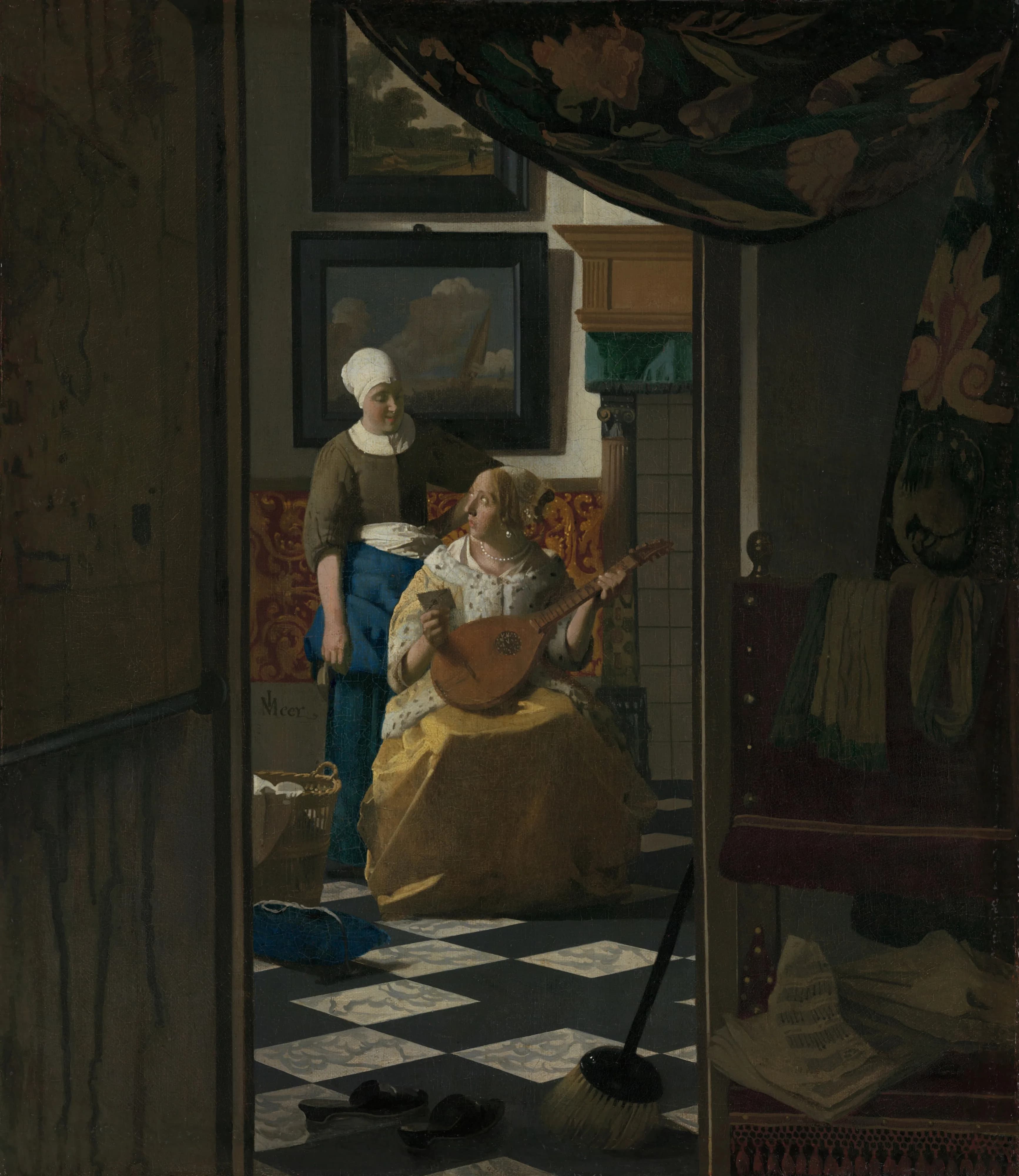
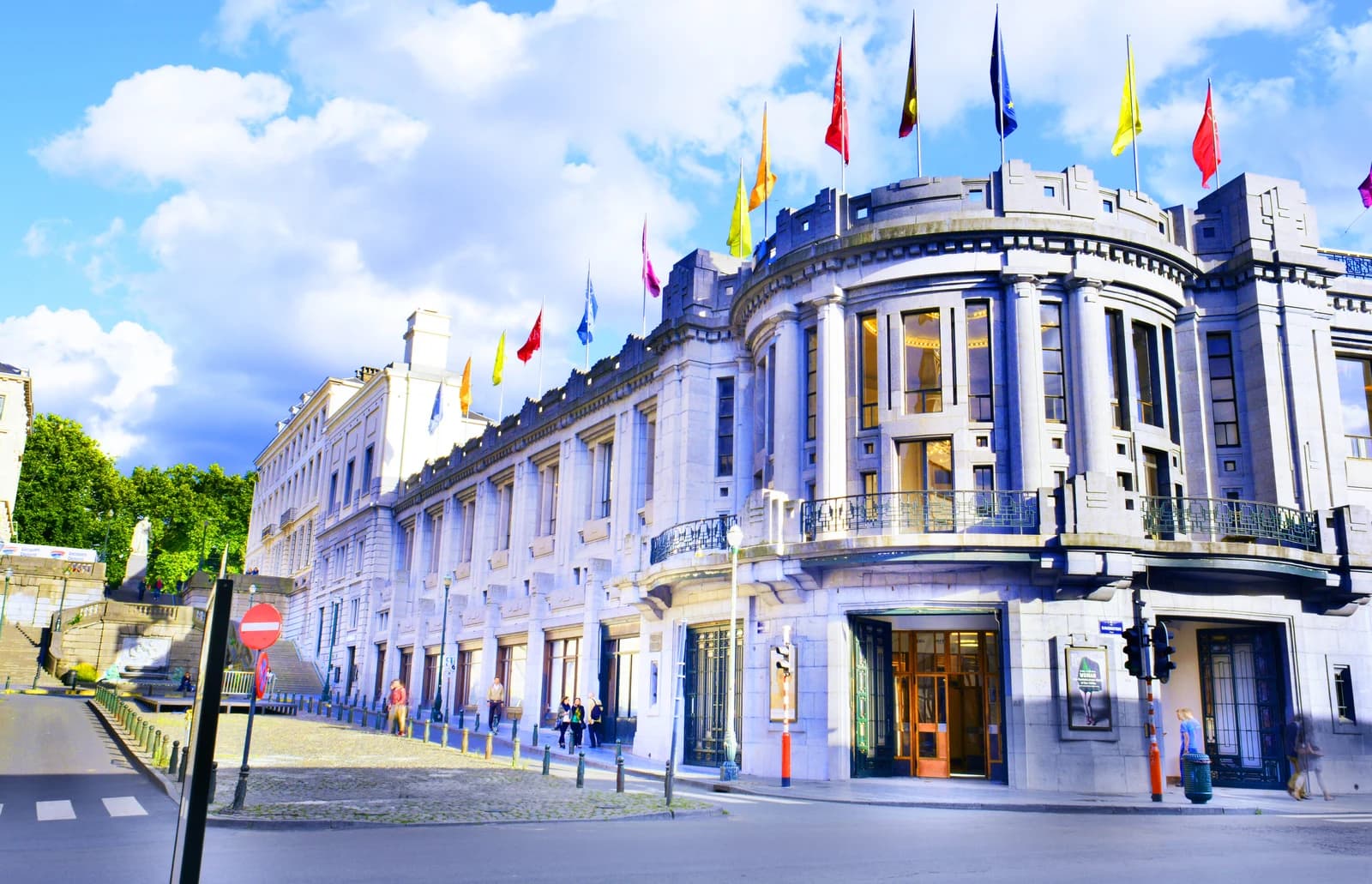
“Rembrandt en zijn tijd” was a large survey of Dutch seventeenth-century painting held at the Paleis voor Schone Kunsten in Brussels in the autumn of 1971. The exhibition placed Rembrandt at the centre of the Dutch Golden Age and presented his circle of contemporaries alongside him, drawing loans from major European and North American collections to illustrate the range of the period. The Love Letter, on loan from the Rijksmuseum, appeared in the catalogue as no. 112 (pp. 132-133, illustrated), one of relatively few works by Vermeer included among the broader representation of his era.
The exhibition is inseparable from one of the most dramatic incidents in the history of Vermeer’s paintings. On the opening evening of September 23, 1971, a twenty-one-year-old hotel waiter named Mario Pierre Roymans concealed himself in an electrical cabinet within the exhibition hall until the building closed. He then removed The Love Letter from the wall, but when the framed canvas proved too large to pass through the window he had chosen as his escape route, he cut the canvas from its stretcher and frame with a potato peeler, folded it, and hid it on his person. His motive was political: he demanded 200 million Belgian francs be donated to refugees of the Bangladesh war, and sought publicity campaigns from both Dutch and Belgian cultural institutions. Police arrested Roymans on October 6 after a tip-off, and he led them directly to the painting, which he had hidden under the mattress in his hotel room. The canvas was returned to the Rijksmuseum on October 8 and shown to the press on October 11.
The cutting inflicted severe damage. Paint loss ran in a band roughly half a centimetre wide along each cut edge, with more serious losses in the upper right corner and the centre-right area, and there was additional surface abrasion from the canvas being folded and concealed. Restoration took close to a year and involved an international committee of conservators working to stabilise and reintegrate the lost passages. The painting has remained in the Rijksmuseum collection since its recovery and is now one of the most closely studied of Vermeer’s domestic interiors.
- Dates
- 23 Sept 1971 – 21 Nov 1971