Letters
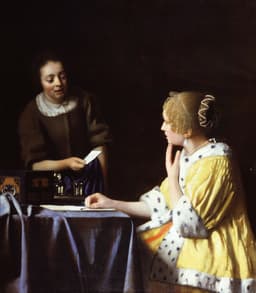
Letter-writing was a fashionable subject in the Dutch Republic, and Vermeer returned to it again and again. His women read by a window, pause mid-sentence, or pass a sealed note to a maid — quiet, private moments charged with an unspoken, usually amorous, narrative the viewer is left to complete.
A fashionable subject
Letter-writing was a favourite theme of Dutch genre painting, carried along by rising literacy and a reliable postal service, and Vermeer returned to it more often than to almost any other subject. His rooms are full of correspondence: women read it by the window, pause over it mid-sentence, and hand it to a maid to carry away.


Reading
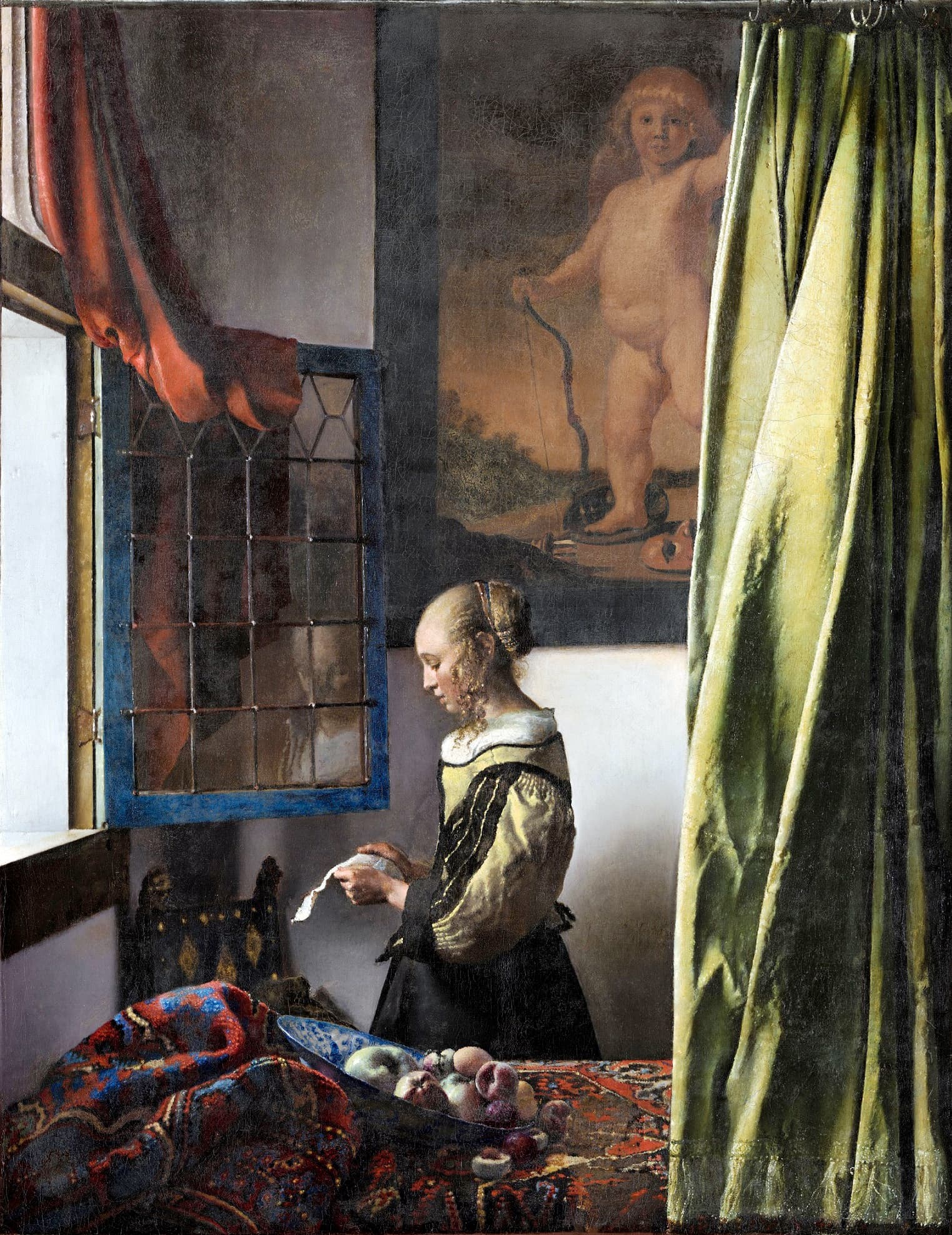
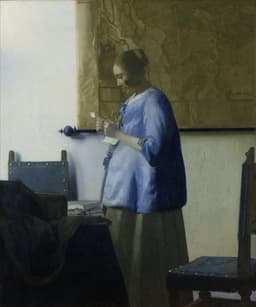
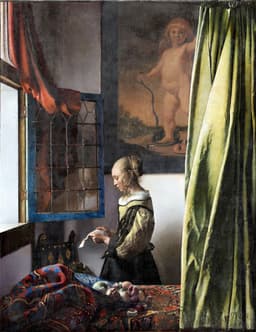
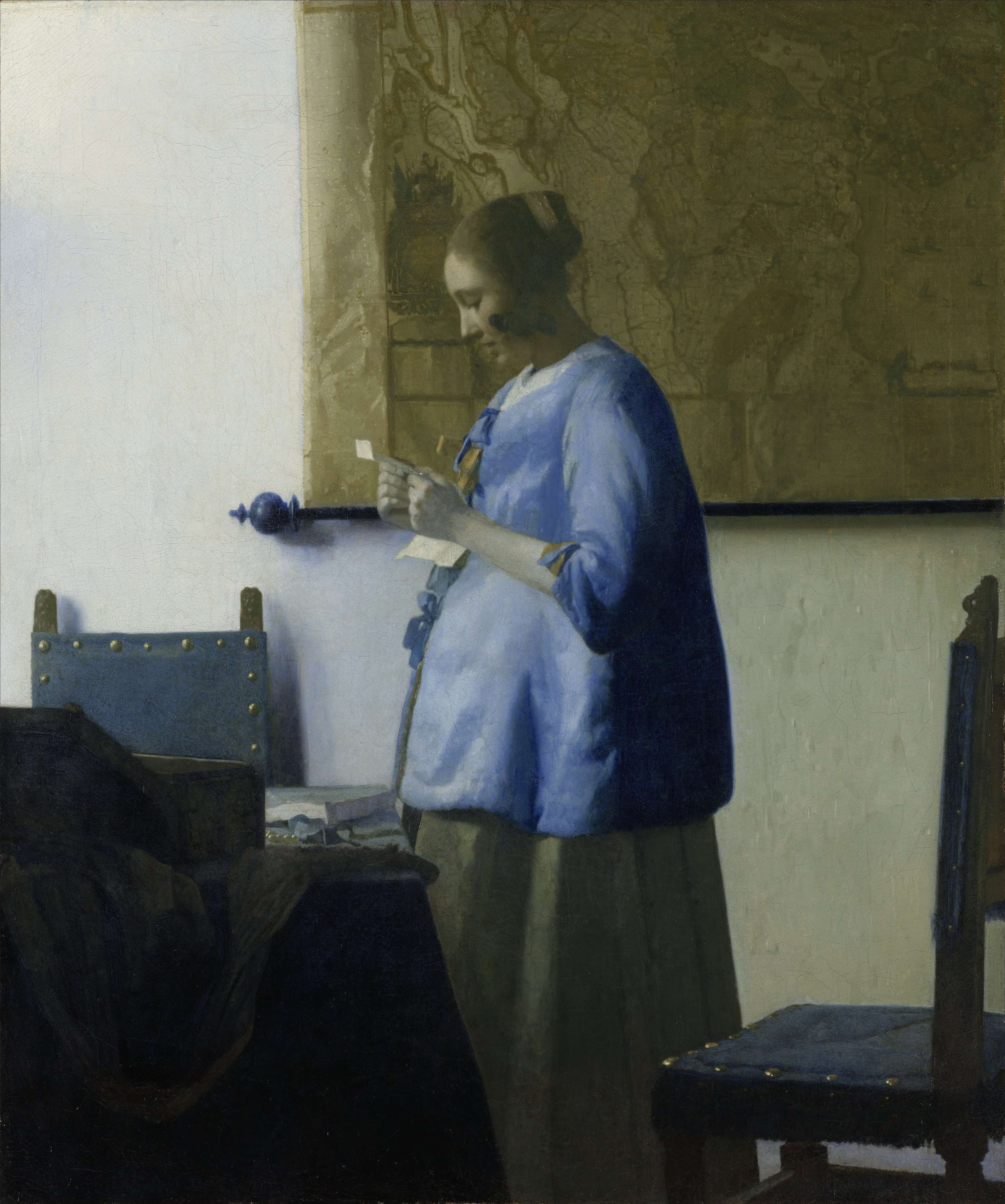
The earliest of them, the Dresden Girl Reading a Letter at an Open Window, was found during restoration to hide a painting of Cupid on the back wall, long painted over, which tilts the scene firmly toward love. In the Rijksmuseum’s Woman in Blue Reading a Letter a woman reads in profile beneath a wall map, absorbed and still.
Writing and sending
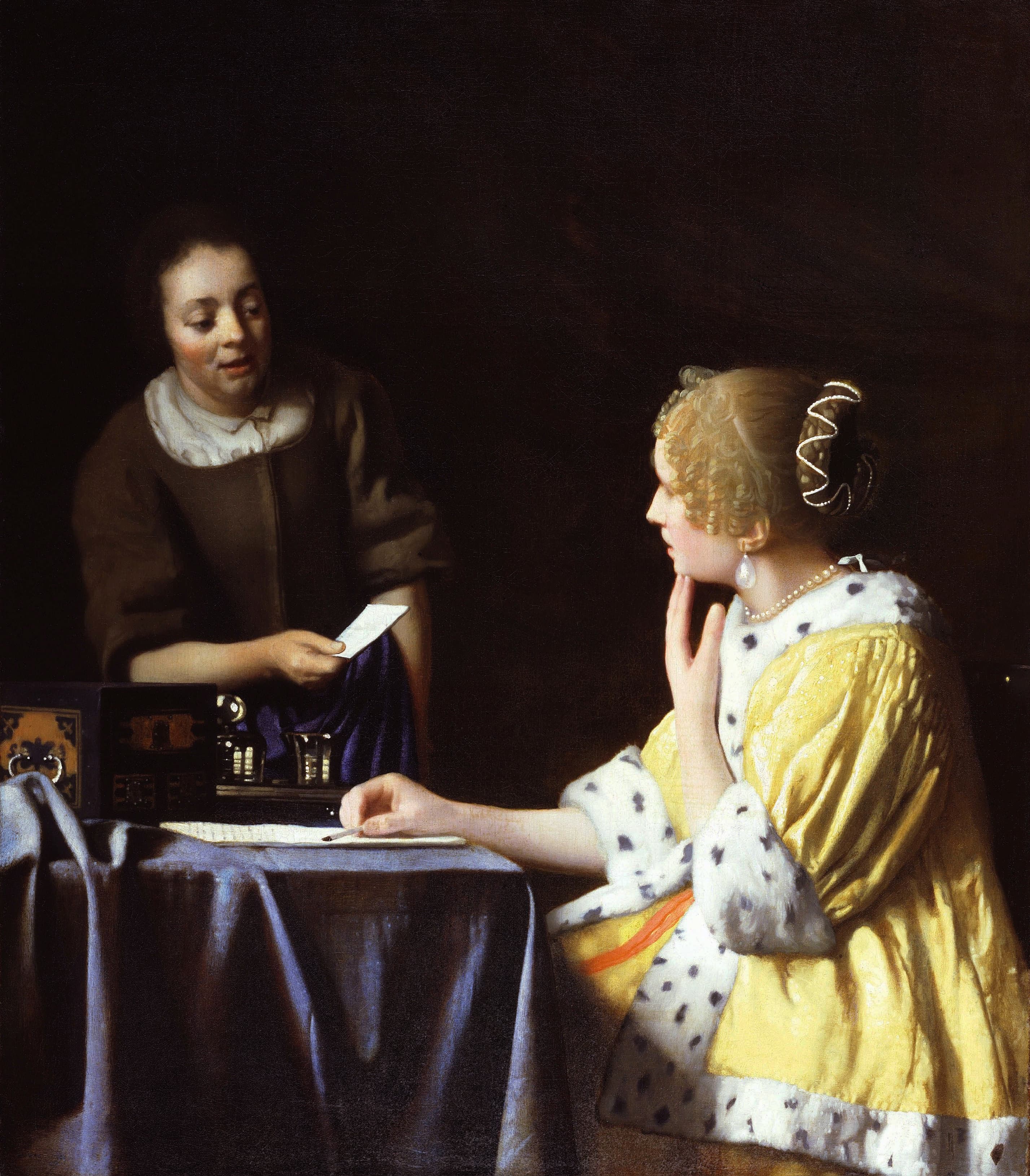
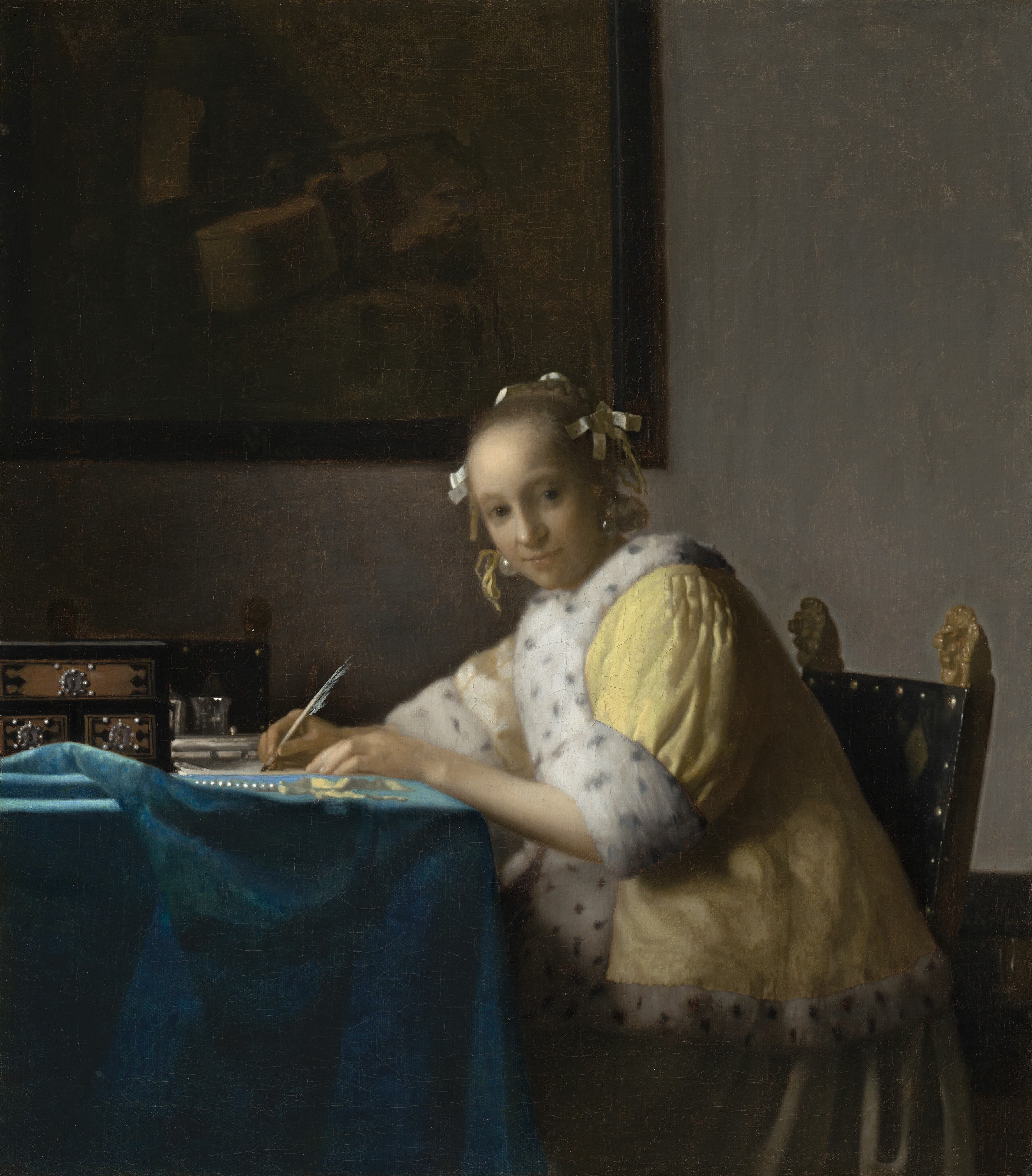
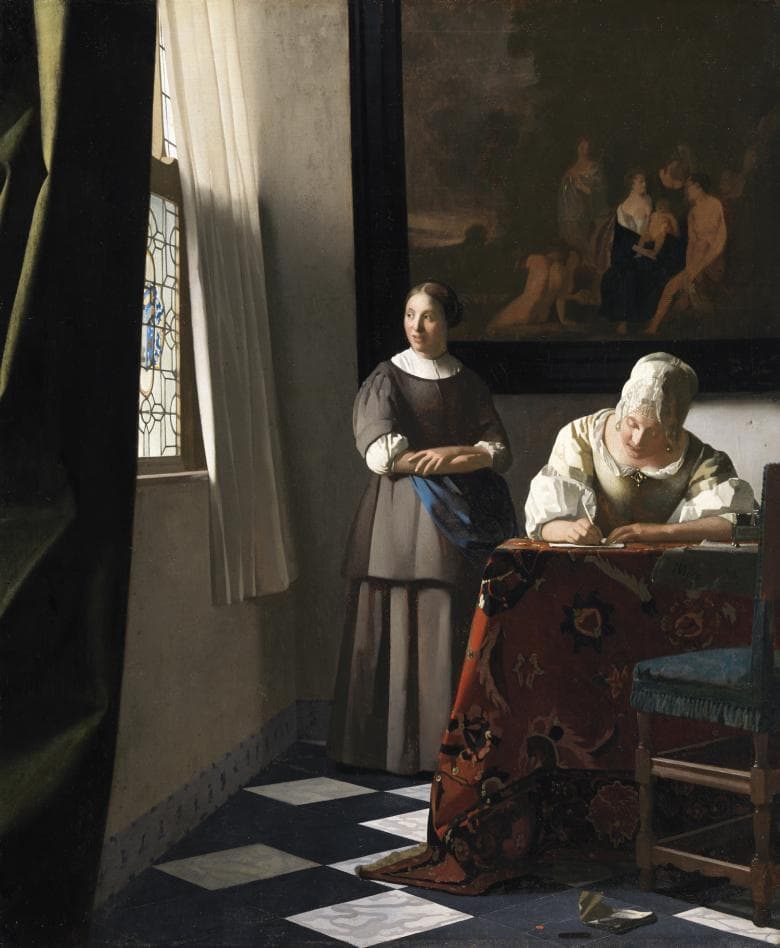
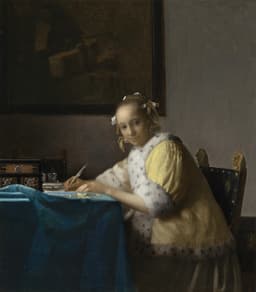
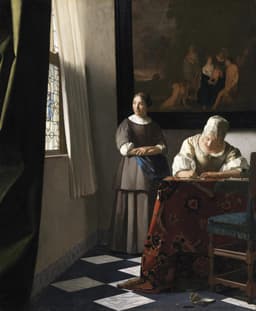
The act of writing brought its own quiet drama. A Lady Writing, in the fur-trimmed yellow jacket, looks up from the page to meet our eye, while Lady Writing a Letter with her Maid sets a patient servant waiting behind her mistress.
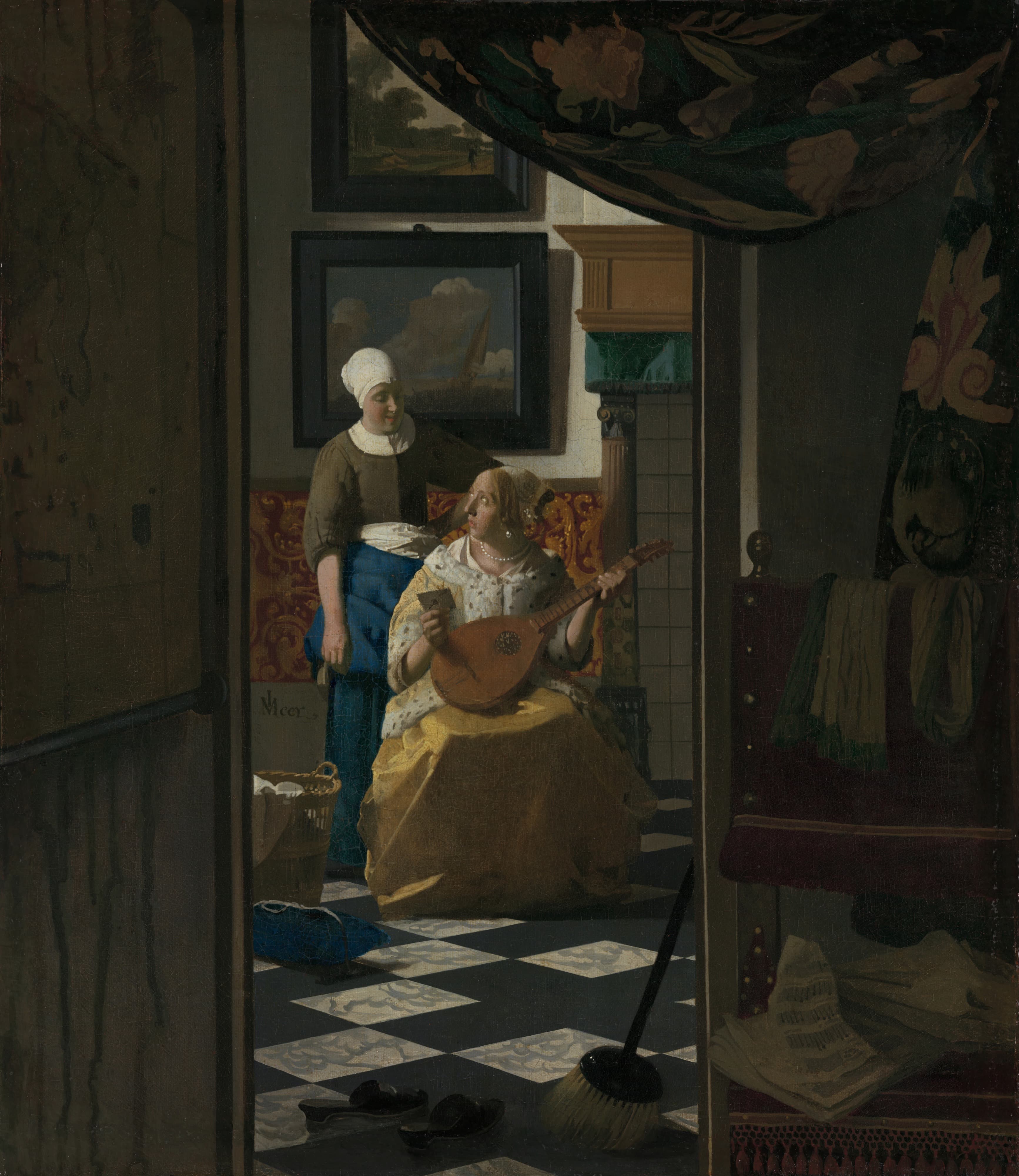
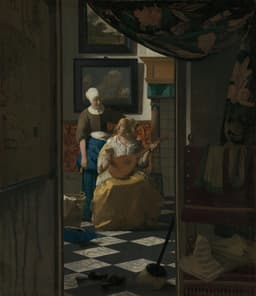
In The Love Letter, glimpsed through a doorway, a maid hands over a sealed note while the mistress looks up from her cittern, the two women exchanging a glance that the painting refuses to explain. As so often, the contents stay sealed and the narrative, usually amorous, is left for the viewer to finish.