Exhibition of Dutch Seventeenth-Century Painting
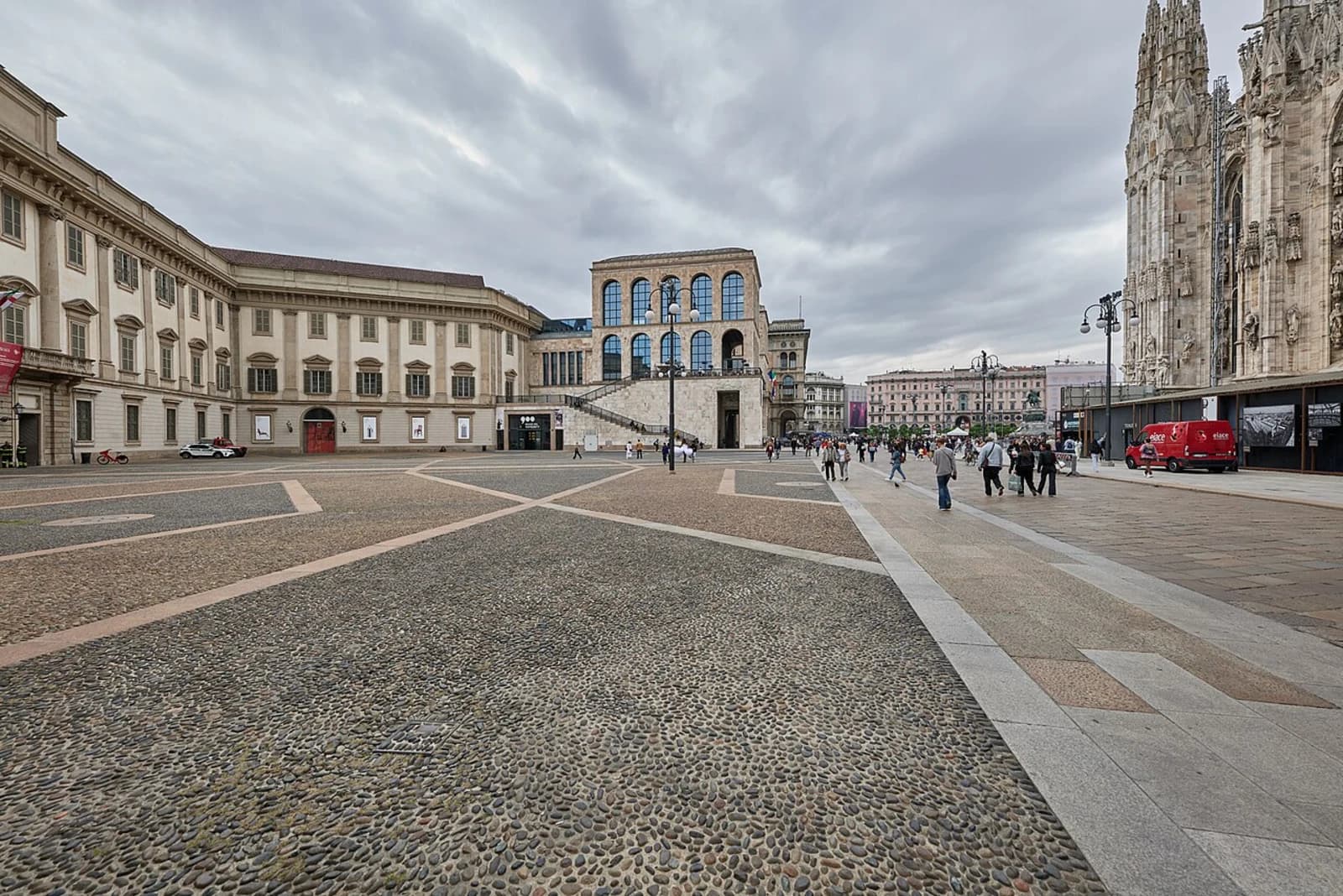
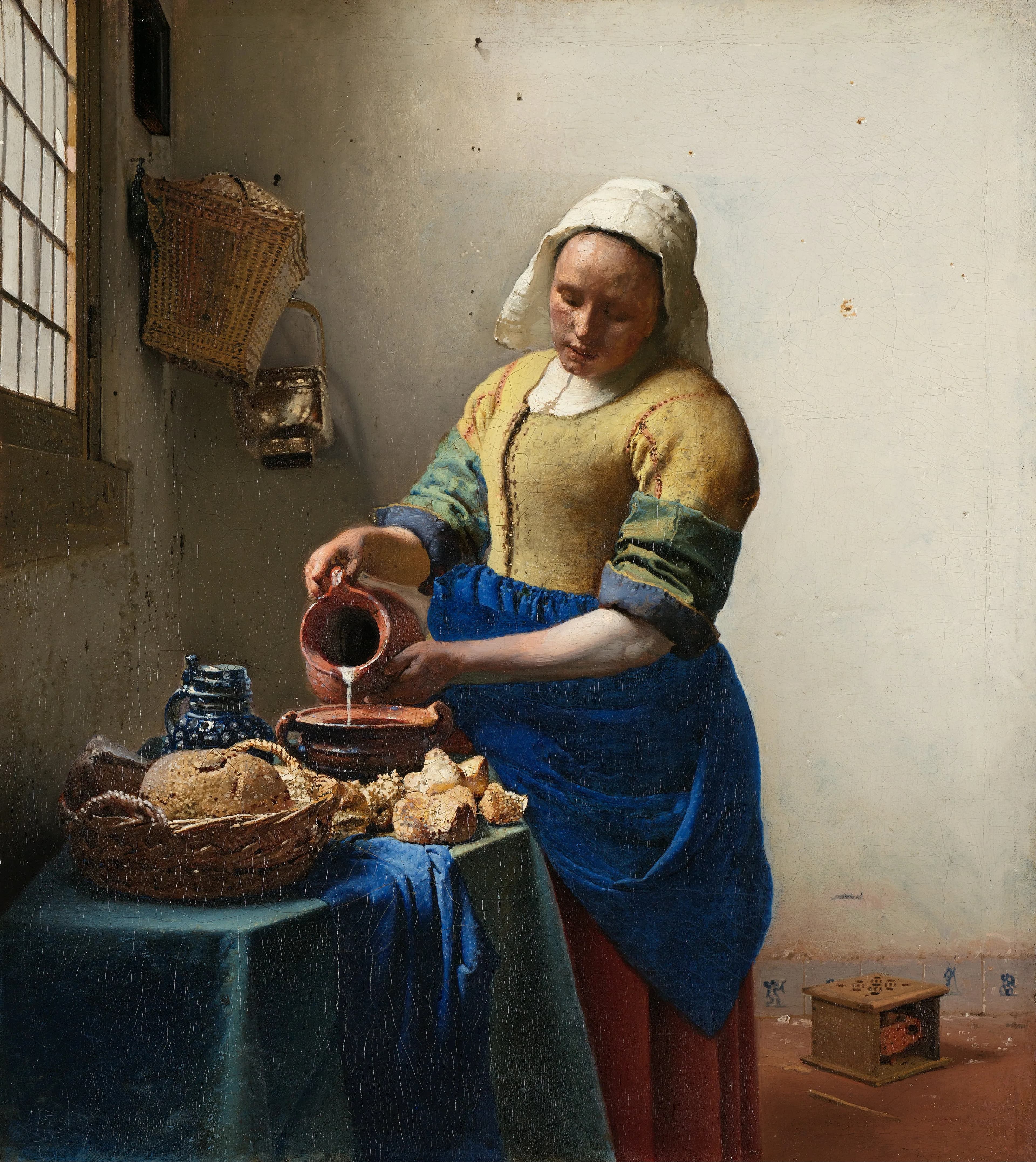
In early 1954, a large survey of Dutch Golden Age painting opened in Rome before traveling north to Milan’s Palazzo Reale, where it ran from February 25 to April 25. The exhibition brought together works by the leading masters of seventeenth-century Holland, among them Rembrandt, Frans Hals, and Jan Steen, alongside three paintings by Vermeer. The Roman edition was held at the Palazzo delle Esposizioni, and a separate catalogue was issued for each venue, both published under the title Mostra di pittura olandese del seicento. The Rome catalogue was brought out by De Luca Editore; the Milan edition was published by Silvana Editoriale d’Arte and ran to 92 pages with 89 illustrated plates. The exhibition was promoted with the support of ENIT, the Italian National Tourism Board, and the event poster reproduced Vermeer’s Milkmaid as its central image, a sign of how prominently Vermeer featured in the show.
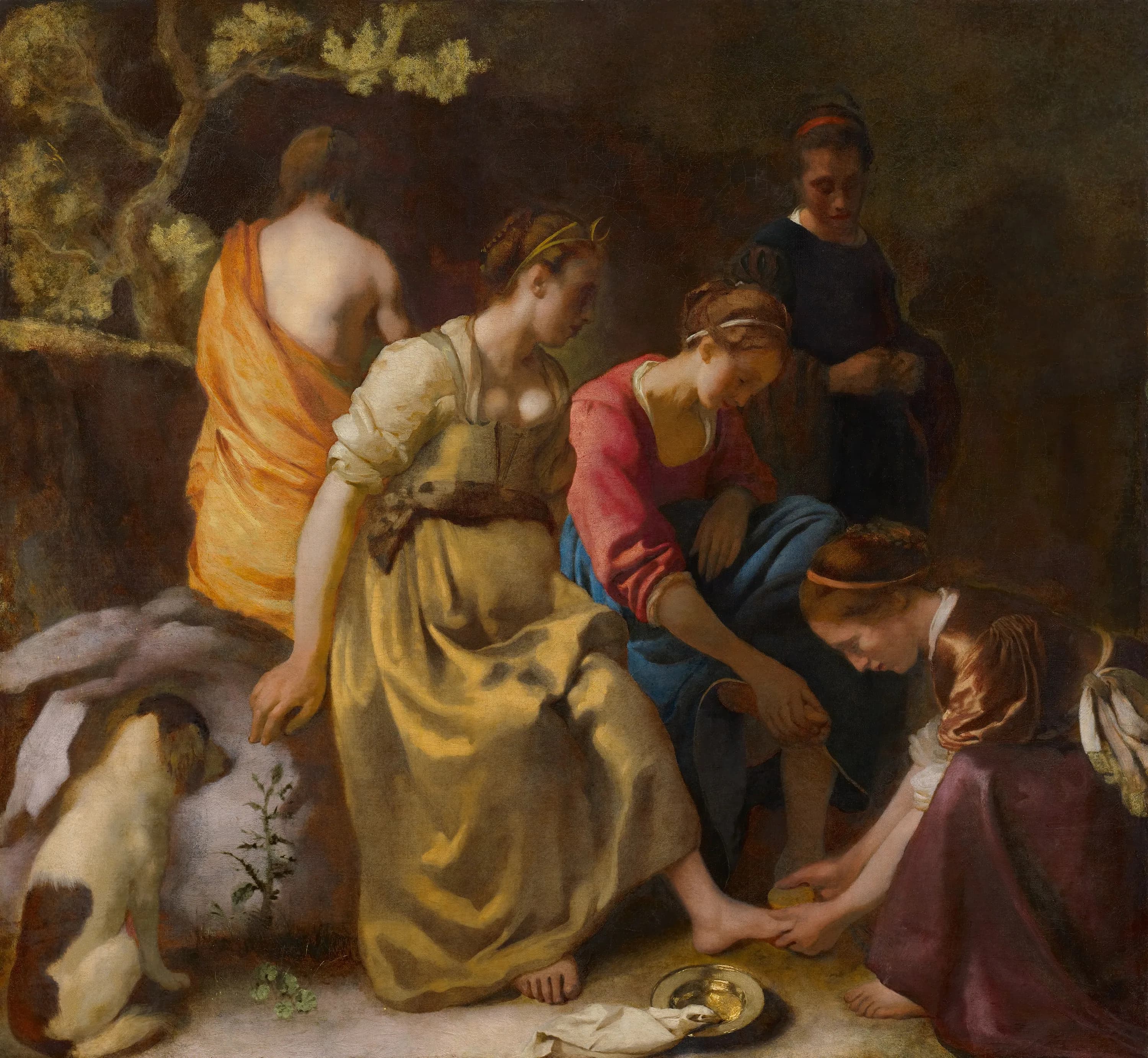
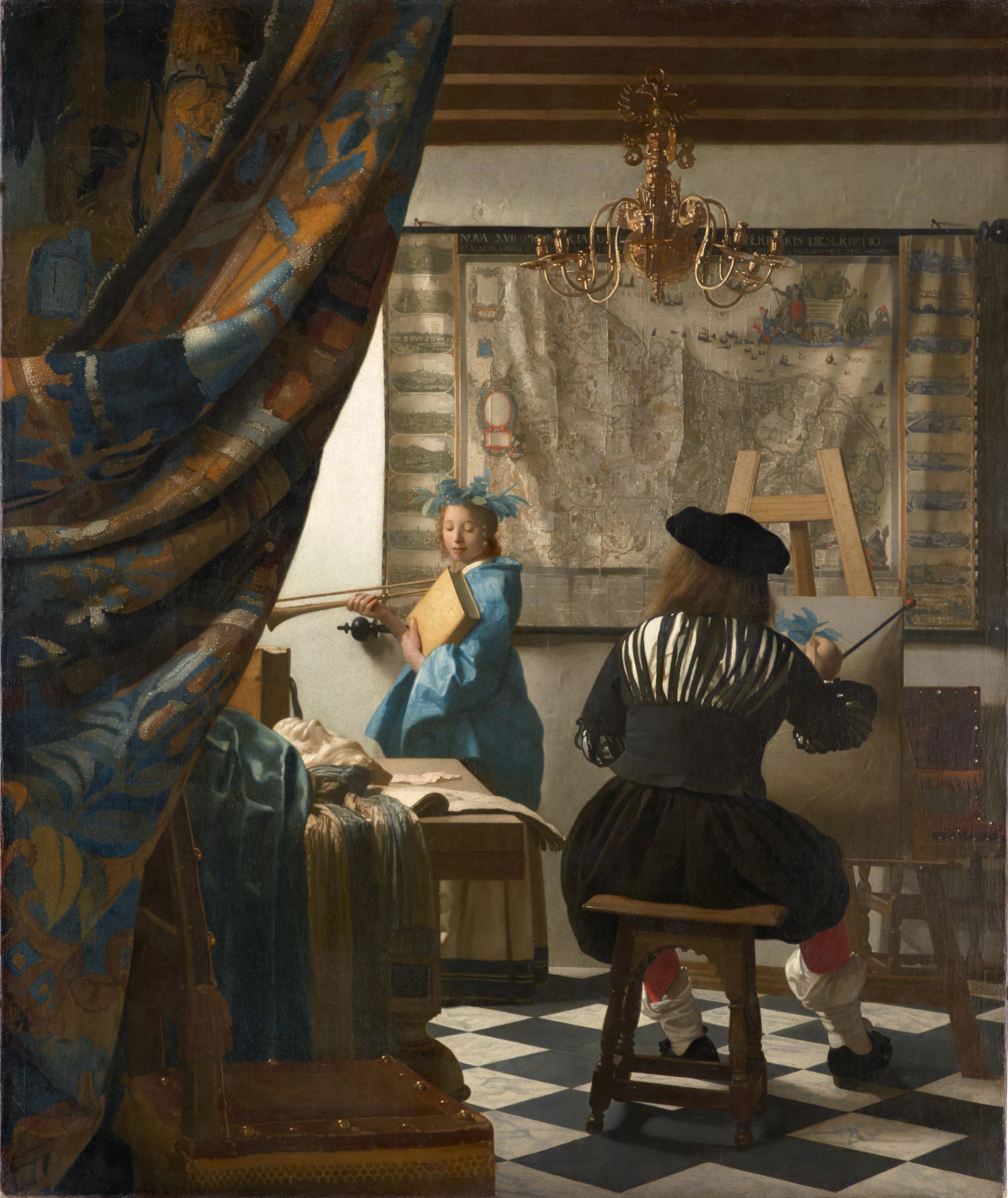
Three Vermeers appeared in the exhibition, catalogued consecutively as numbers 175, 176, and 177. Diana and Her Companions (catalogue no. 175, “La toletta di Diana”), lent by the Mauritshuis in The Hague, was illustrated as plate 30. The Milkmaid (catalogue no. 176, “La cuciniera”), lent by the Rijksmuseum in Amsterdam, appeared as plate 31. The Art of Painting (catalogue no. 177, “L’atelier”), lent by the Kunsthistorisches Museum in Vienna, was reproduced on the cover of the catalogue. The gathering of loans from three different national collections made this one of the most substantial Vermeer showings Italy had seen, and the cover placement of The Art of Painting underlined its exceptional status within the display.
For Italian audiences in 1954, the exhibition offered a rare opportunity to encounter Dutch seventeenth-century painting on a scale that went well beyond what any single collection could provide. The postwar decade saw a renewed European interest in cross-border cultural exchange, and the Mostra fitted into a broader pattern of large survey shows that brought Northern European masterworks to Southern European venues. The three-city loan from The Hague, Amsterdam, and Vienna required cooperation among the lending institutions, and the result was a display that gave Milanese viewers simultaneous access to Vermeer’s earliest surviving canvas, his most celebrated domestic interior, and the monumental allegory he kept for himself throughout his lifetime.
- Dates
- 25 Feb 1954 – 25 Apr 1954
- Museum
- PRPalazzo Reale
Paintings3
Sources
- Essential Vermeer, Vermeer Catalogue with Exhibitions for each Painting
- Essential Vermeer, The Complete Sortable Table of Vermeer Exhibitions
- Mostra di pittura olandese del Seicento (Milan edition), Silvana Editoriale d’Arte, 1954
- Il Seicento Olandese (exhibition poster, Palazzo Reale Milan 1954), Museo Nazionale Collezione Salce