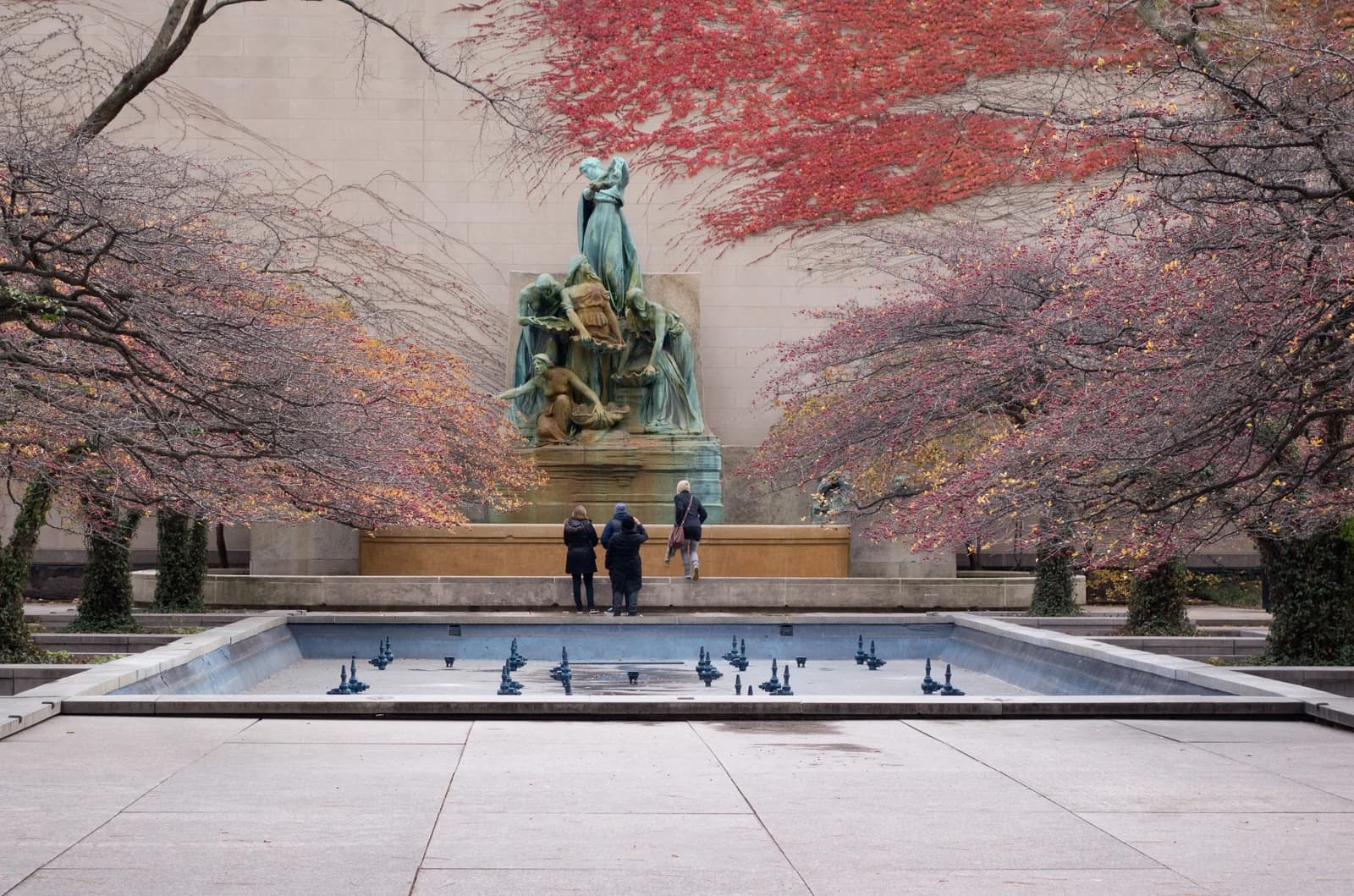
Paintings by the Great Dutch Masters of the Seventeenth Century
This loan exhibition brought together major works by Rembrandt, Hals, Vermeer, and their contemporaries under a wartime charitable purpose: the proceeds from catalogue sales benefited the Queen Wilhelmina Fund (which supported Dutch war relief) and the American Women’s Voluntary Services. The catalogue was compiled by George Henry McCall with an introduction by Professor Adriaan J. Barnouw, the Columbia University scholar who was then the leading voice in the United States for Dutch culture and literature. The show opened at the Duveen Galleries in New York from October 8 to November 7, 1942, then traveled directly to the Art Institute of Chicago, where it remained on view through December 16.
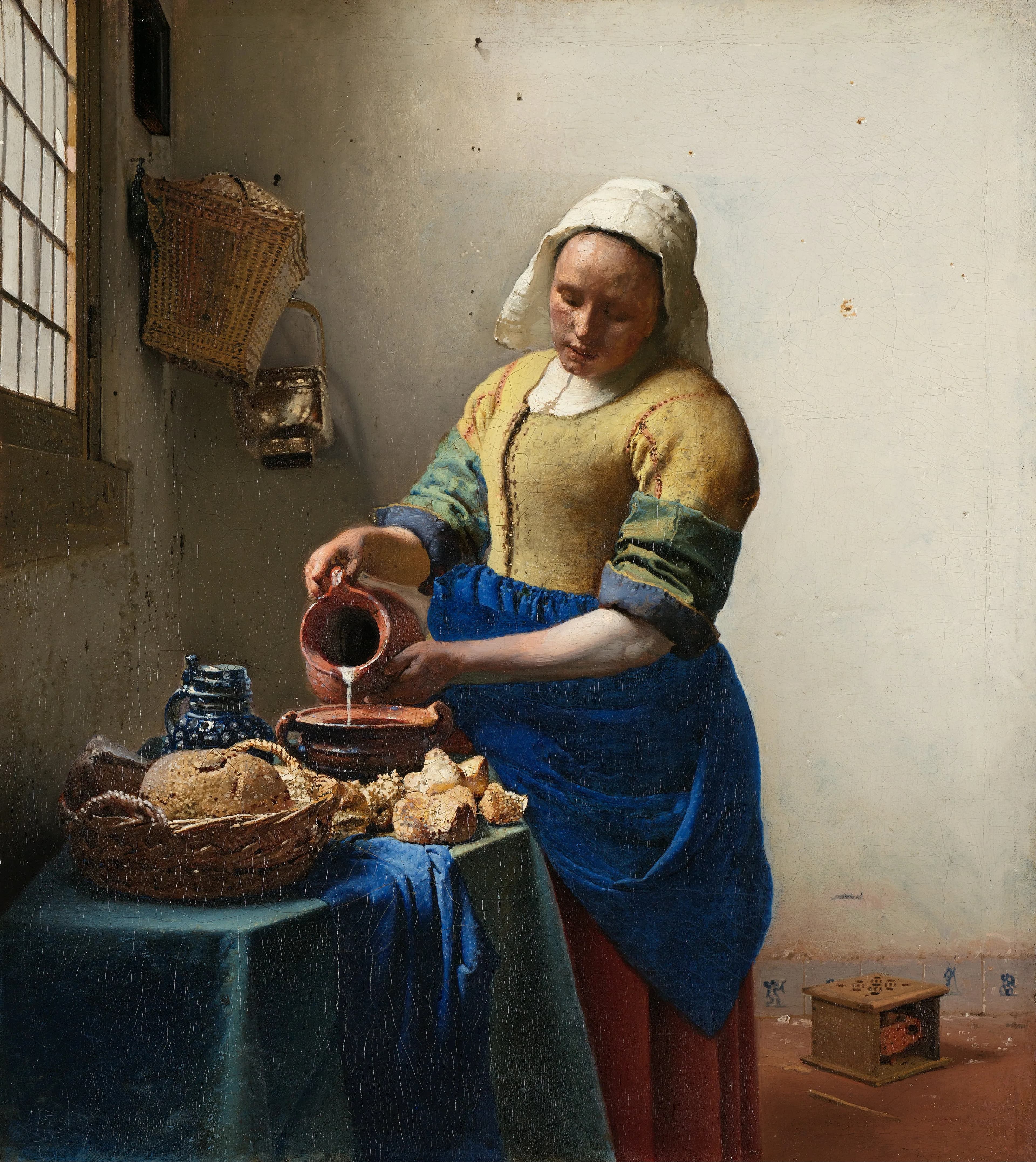
Vermeer was represented by two paintings. The Milkmaid(catalogue no. 67), owned by the Rijksmuseum since 1908, was already on an extended North American tour that had begun when it crossed the Atlantic for the 1939 New York World’s Fair. With the Netherlands under German occupation from May 1940, the painting remained abroad, appearing at the Detroit Institute of Arts in 1939 and 1941 and in Montreal in early 1942 before joining this exhibition. It was therefore as a wartime loan held outside the occupied Netherlands that the picture appeared in Chicago.
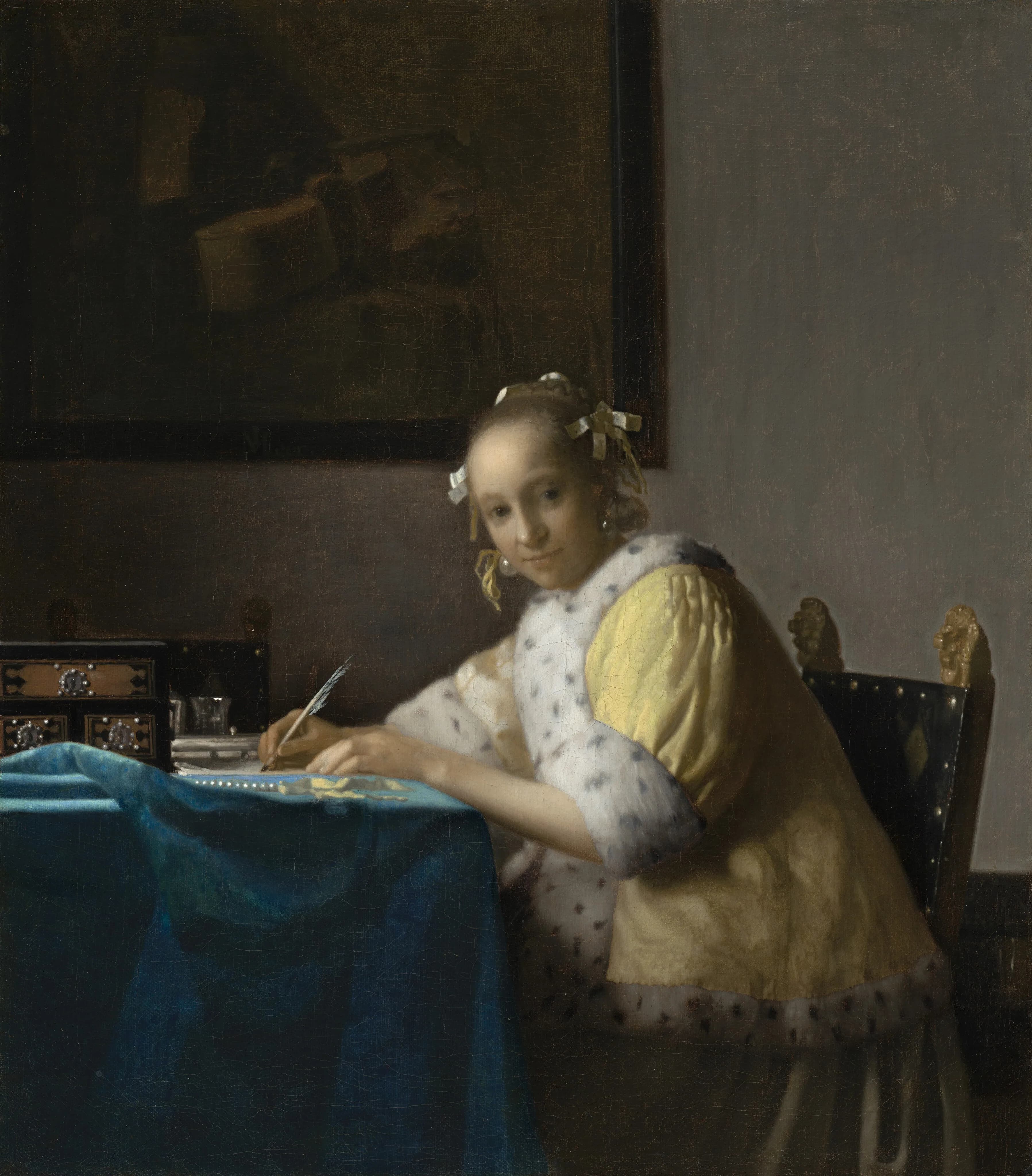
A Lady Writing (catalogue no. 68) came from a very different source. The painting had entered the collection of Sir Harry Oakes, the gold-mining magnate, in 1940 after passing through M. Knoedler and Co. in New York, having previously belonged to J. Pierpont Morgan and his son J. P. Morgan Jr. Sir Harry’s Nassau estate made him an unlikely lender to a Chicago wartime benefit, but the picture had been in active American exhibition circulation since its acquisition, appearing in New York in 1940, 1941, and 1942, and now in Chicago alongside the Rijksmuseum’s Milkmaid. Sir Harry was murdered at his Nassau estate in July 1943; ownership passed to his widow Lady Eunice Oakes, who eventually consigned the picture to Knoedler in 1946. It was acquired that year by Horace Havemeyer, and his sons gave it to the National Gallery of Art in Washington in 1962.
- Dates
- 18 Nov 1942 – 16 Dec 1942
- Museum
 Art Institute of Chicago
Paintings2
Sources
- Essential Vermeer, catalogue entry for The Milkmaid (provenance and exhibition history)
- Essential Vermeer, catalogue entry for A Lady Writing (provenance and exhibition history)
- Dutch Paintings of the Seventeenth Century: A Lady Writing, c. 1665, National Gallery of Art
- Paintings by the great Dutch masters of the seventeenth century (catalogue), HathiTrust