By the Window
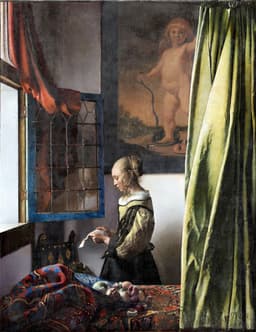
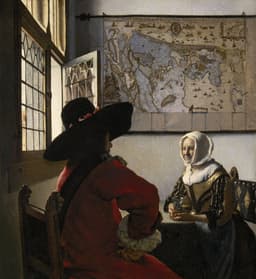
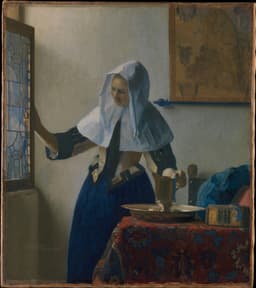
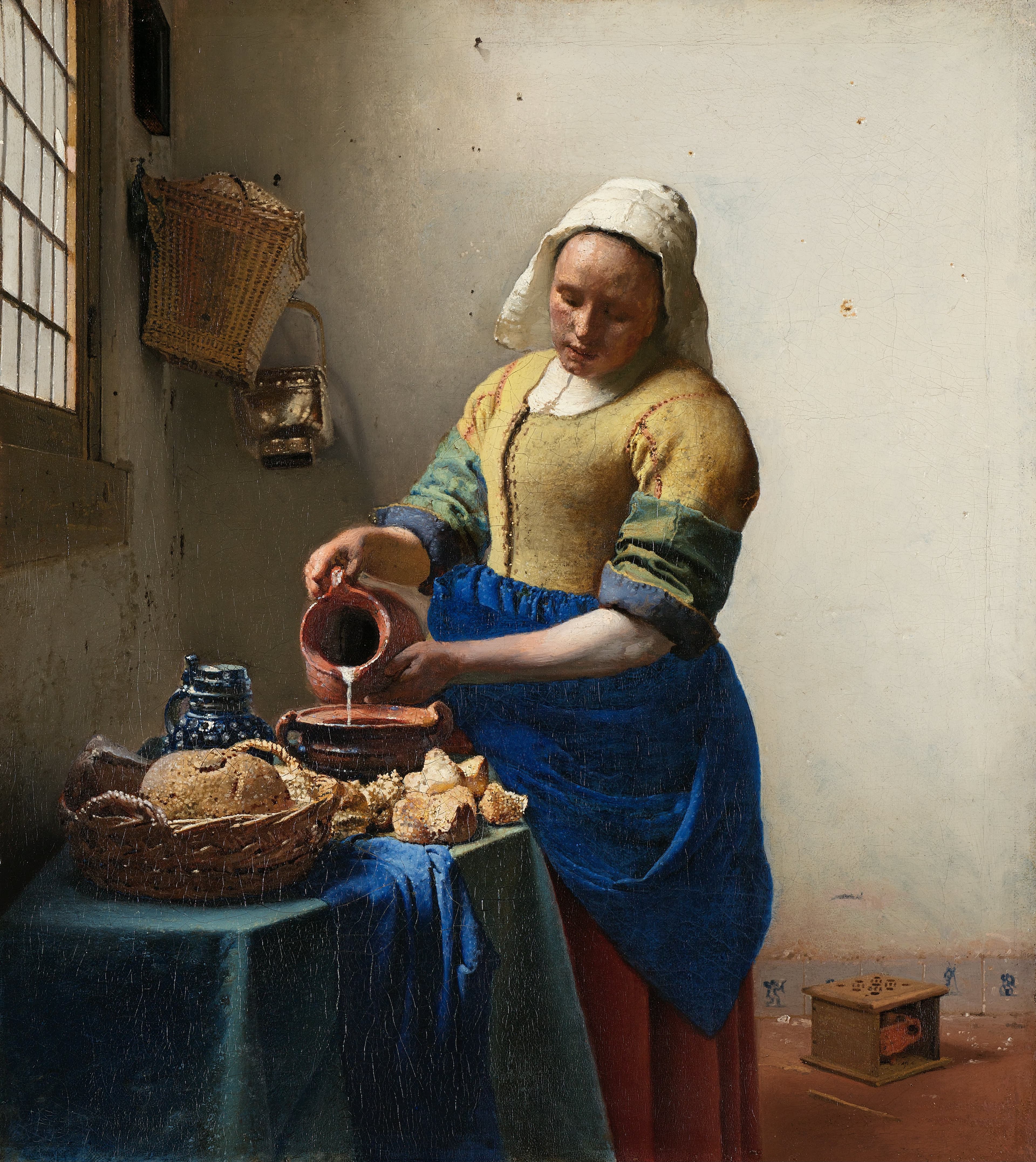
Almost every Vermeer interior is lit from a tall leaded window on the left wall, just inside or just beyond the frame. The cool daylight rakes across plaster, skin, and pewter, modelling form in soft gradations and casting the faint shadows that order each room. It is the most recognisable device in his work — from the milkmaid pouring at her window to the women who read letters, greet an officer, and tip a water pitcher beside the same panes.
Light from the left
Almost every Vermeer interior is lit the same way: a tall leaded window on the left wall, just inside the frame or just beyond it, letting in a cool, even daylight. That light is the engine of his realism. It rakes across plaster, skin, bread, and pewter, modelling form in soft gradations and laying down the faint shadows that give each room its order.
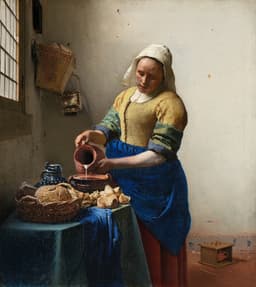
In The Milkmaid the window does almost everything: it picks out the crust of the bread in tiny beads of light, warms the bare wall, and gives weight to the thin stream of milk. Nothing in the room is idealised, yet the whole of it glows.
At the casement
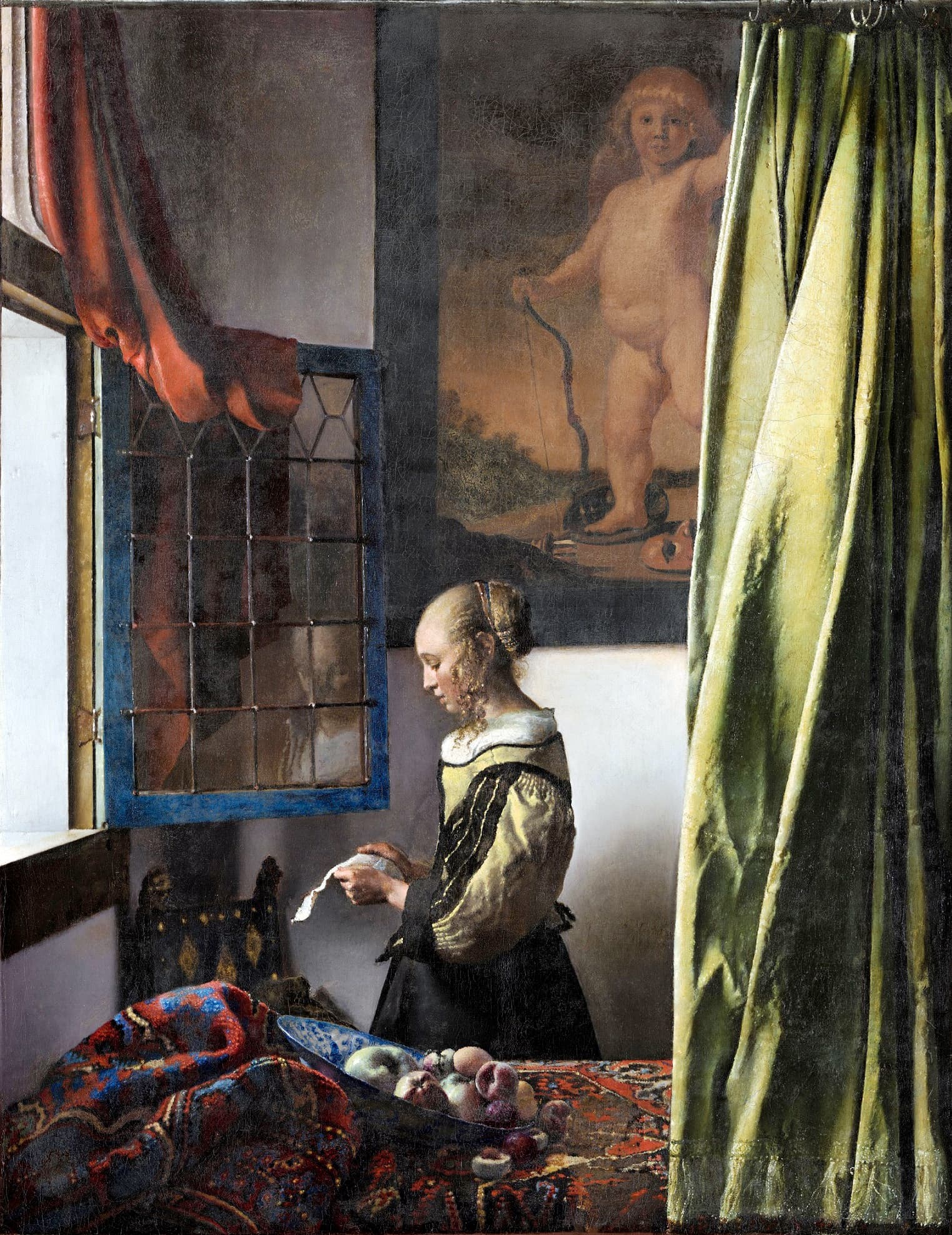
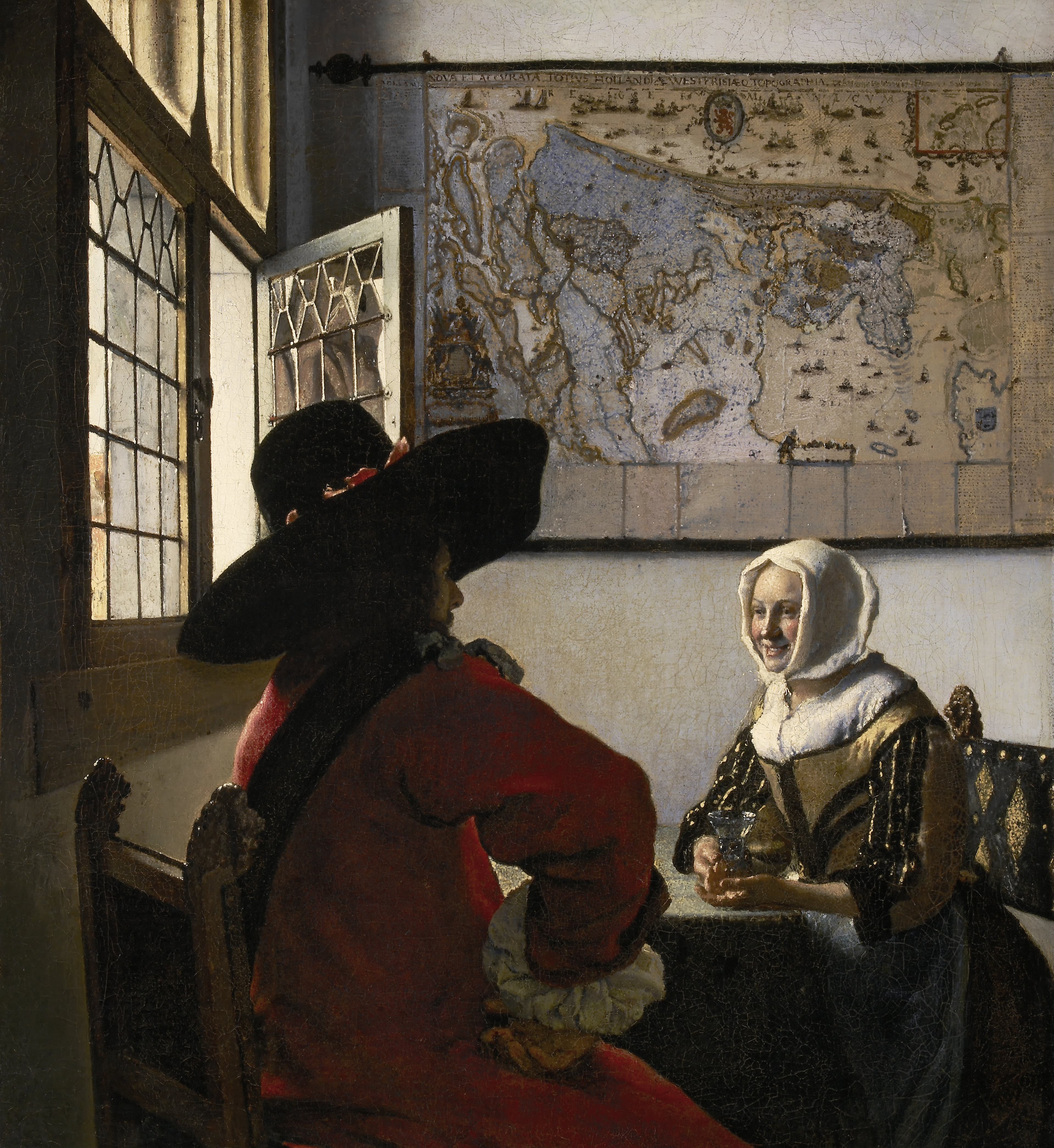
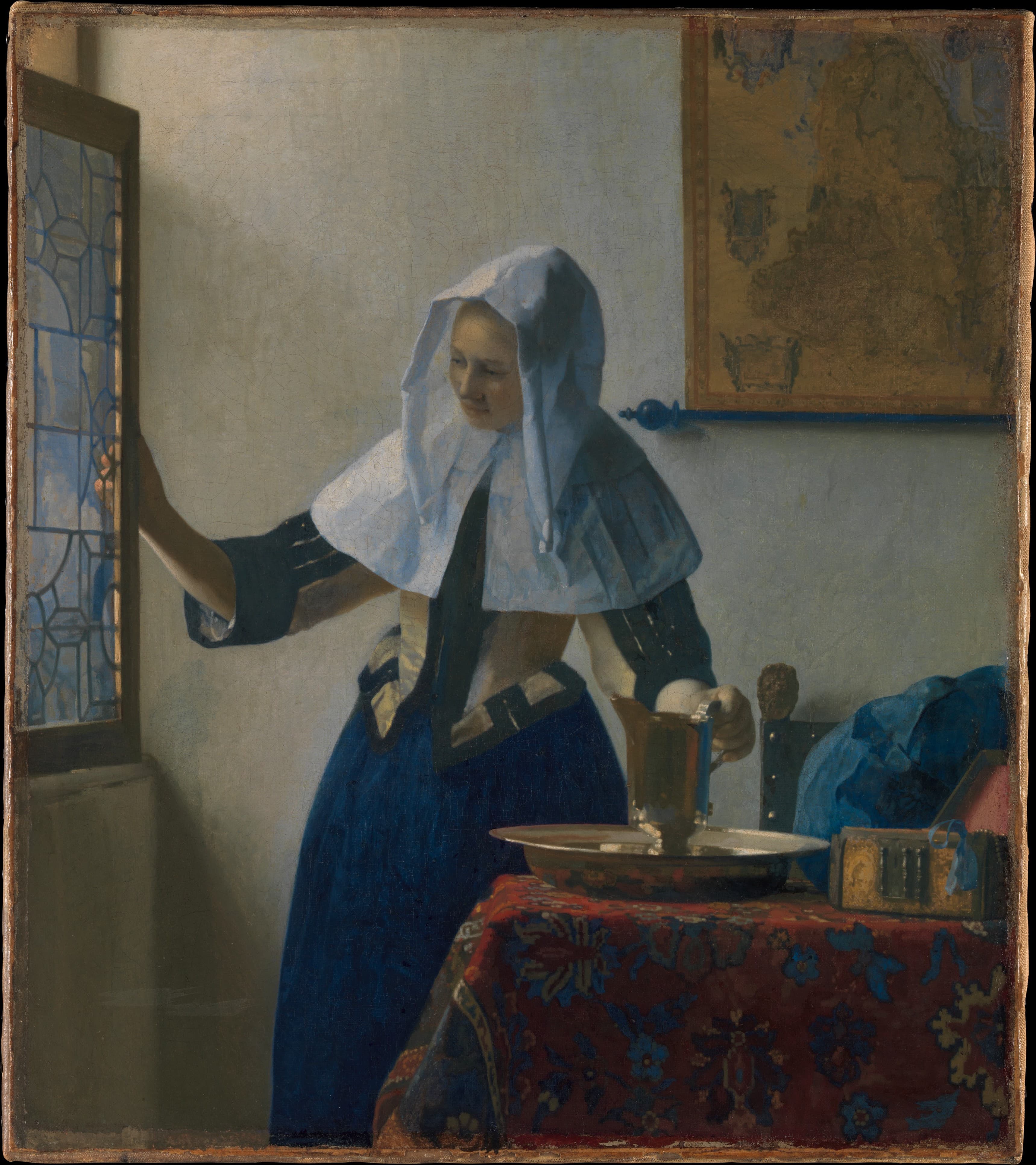
Sometimes the window is part of the action. The Young Woman with a Water Pitcher rests one hand on the leaded casement as she opens it, the light breaking into colour through the panes; in the Dresden Girl Reading a Letter at an Open Window the open window throws her faint reflection back at us. In Officer and Laughing Girl the open casement floods the room so strongly that the officer in the foreground falls into near silhouette against it.