Austria's America Exhibition: Art Treasures from Vienna
From 1949 to 1952, Austria mounted one of the most ambitious cultural diplomacy campaigns of the postwar era, sending masterworks from the Kunsthistorisches Museum on a grand tour of the United States. Travelling under the title “Kunstschätze aus Wien” (Art Treasures from Vienna), the exhibition visited Washington D.C., New York, Chicago, Minneapolis, Detroit, Toledo, Philadelphia, and several other cities, introducing American audiences to the imperial Habsburg collections and reminding the world of Austria’s place in the European cultural tradition. When the works returned safely home, the Kunsthistorisches Museum presented them together in Vienna under the title “Österreichs Amerika-Ausstellung,” opening on 1 May 1953 and running through October of that year.
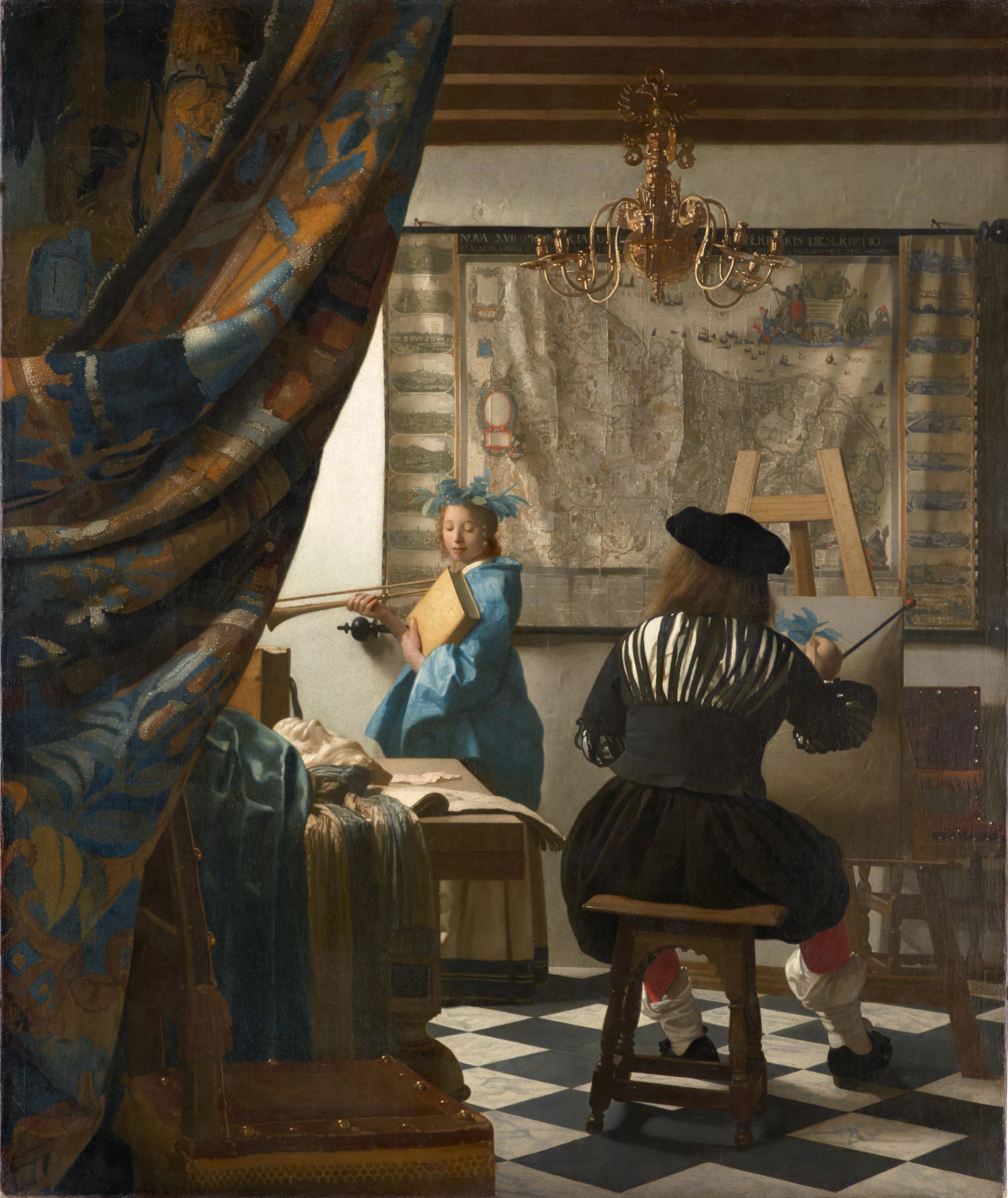
The homecoming exhibition gave Viennese audiences the chance to see together the very canvases that had crossed the Atlantic and toured American museums. Among the highlights was Vermeer’s “The Art of Painting“ (c. 1666–68), one of the largest and most iconographically elaborate works the painter ever produced. The composition depicts an artist at work in his studio before a model posed as Clio, the muse of history, holding a trumpet and a volume of Thucydides. A large chandelier, a detailed map of the Netherlands, and a richly draped curtain drawn back to reveal the scene all contribute to an allegory of painting’s power to confer lasting fame. The picture remained in Vermeer’s possession until his death and passed through several private hands before entering the Czernin collection in Vienna in the nineteenth century.
The painting’s recent history was fraught. In 1940 Adolf Hitler purchased it from Count Jaromir Czernin, reportedly for his planned Führermuseum in Linz, and it was concealed in a salt mine at Altaussee during the final years of the war. After liberation it was placed in Austrian state custody and eventually assigned to the Kunsthistorisches Museum, whose legal claim was formalised in the years that followed. Its inclusion in the American tour and its prominent place in the Vienna homecoming exhibition thus carried a deeper resonance: the canvas had survived wartime seizure and displacement, and its return to public display in Austria was itself an assertion of cultural continuity and recovery.
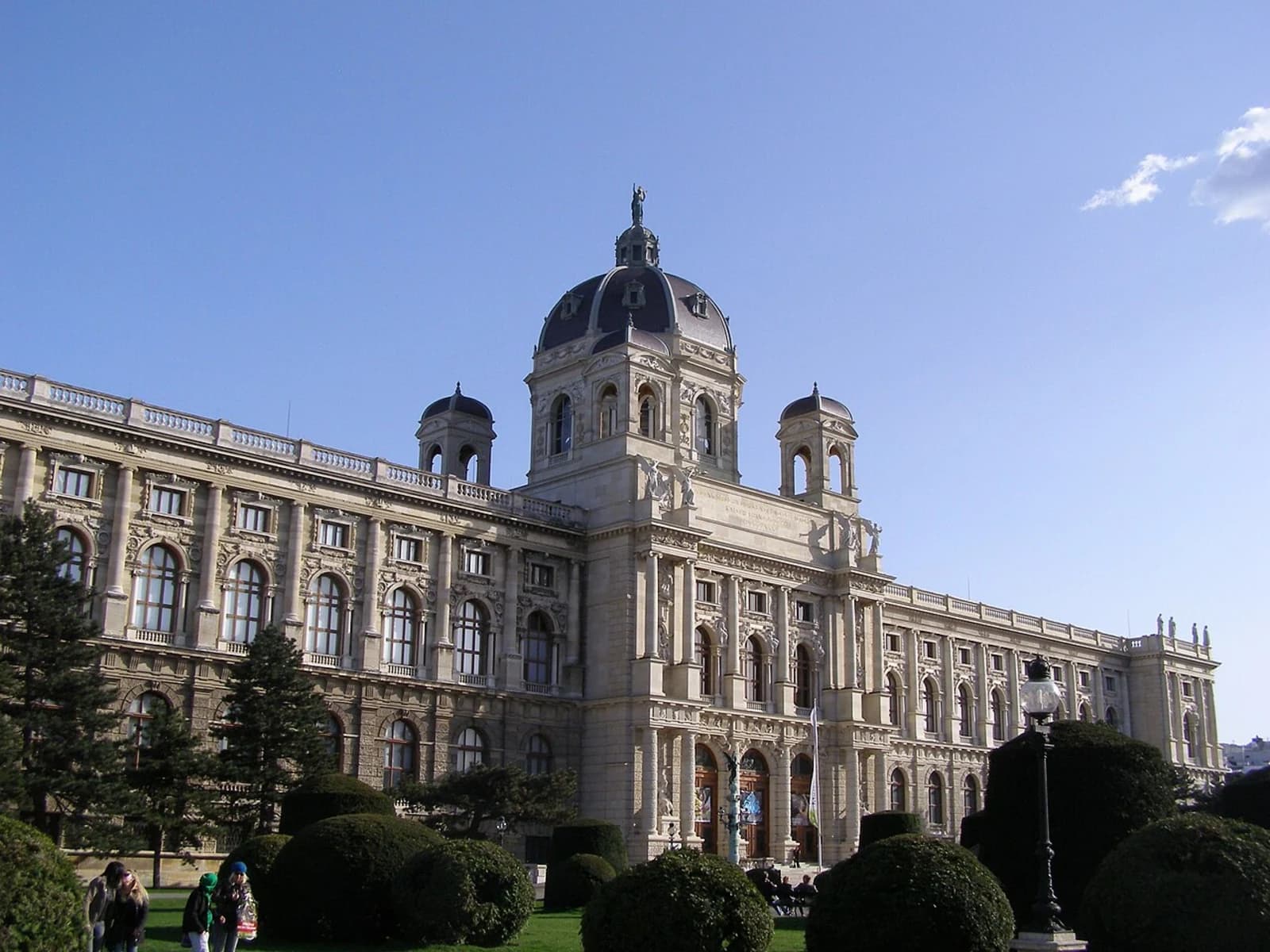
The timing of the exhibition also carried political weight. Austria in 1953 remained under four-power Allied occupation, and the Austrian State Treaty restoring full sovereignty would not be signed until 1955. In that context, demonstrating the richness of the Habsburg artistic heritage to both American and domestic audiences was an act of national self-presentation as much as a cultural event. The Kunsthistorisches Museum, founded by Emperor Franz Joseph I and opened in 1891 to house the imperial collections, provided a setting that underlined the depth and continuity of Austrian civilisation.
- Dates
- 1 May 1953 – 25 Oct 1953
- Museum
 Kunsthistorisches Museum