Art treasures from the Vienna collections
In the spring of 1951, the Toledo Museum of Art hosted a major stop on one of the most significant postwar cultural exchange tours ever mounted on American soil. “Art Treasures from the Vienna Collections“ brought approximately eighty masterworks from the Kunsthistorisches Museum in Vienna to a series of major United States museums, offering American audiences their first direct encounter with treasures that had been inaccessible throughout the years of war and occupation. The Toledo presentation ran from 1 May to 28 June 1951.
The tour had opened at the National Gallery of Art in Washington in late 1949 and subsequently traveled to several other American cities through the early 1950s. The selection encompassed masterpieces by Raphael, Titian, Pieter Bruegel the Elder, Velázquez, Rubens, and Rembrandt, presenting a sweeping panorama of European painting from the Renaissance through the seventeenth century. The loan was conceived as an act of diplomatic goodwill at a pivotal moment in the postwar reconstruction of cultural relations between Austria and the United States.
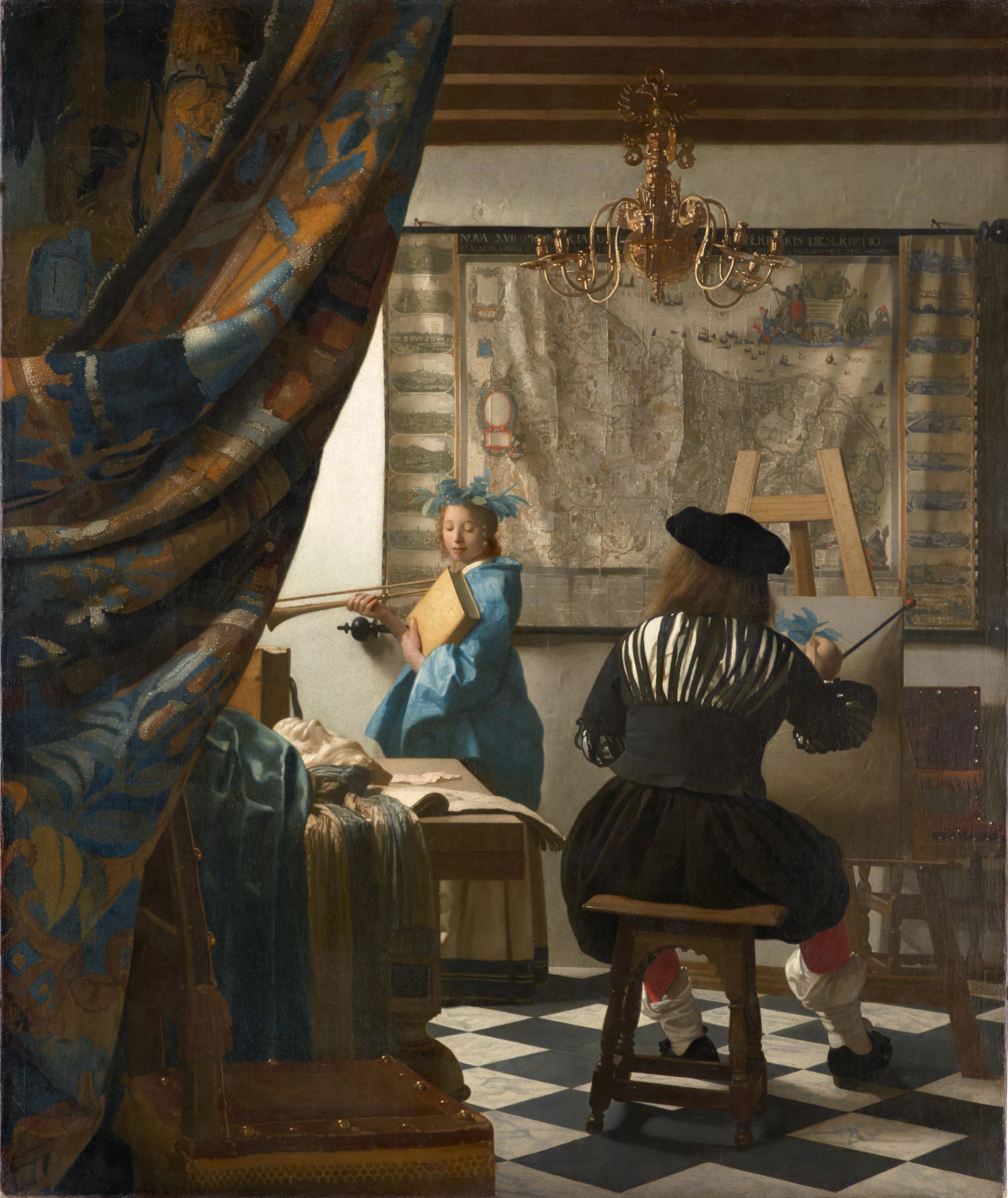
Vermeer’s contribution to the tour was “The Art of Painting” (c. 1666–68), one of his largest and most carefully considered canvases, in which a painter works from a model costumed as Clio, the muse of history, in a richly appointed interior. The painting had passed through turbulent recent history: confiscated by the Nazi regime from its previous owners, it was placed in Austrian state ownership after the war and assigned to the Kunsthistorisches Museum, where it has remained. Its appearance in Toledo gave Midwestern visitors a rare opportunity to stand before a work that Vermeer himself apparently kept and never sold.
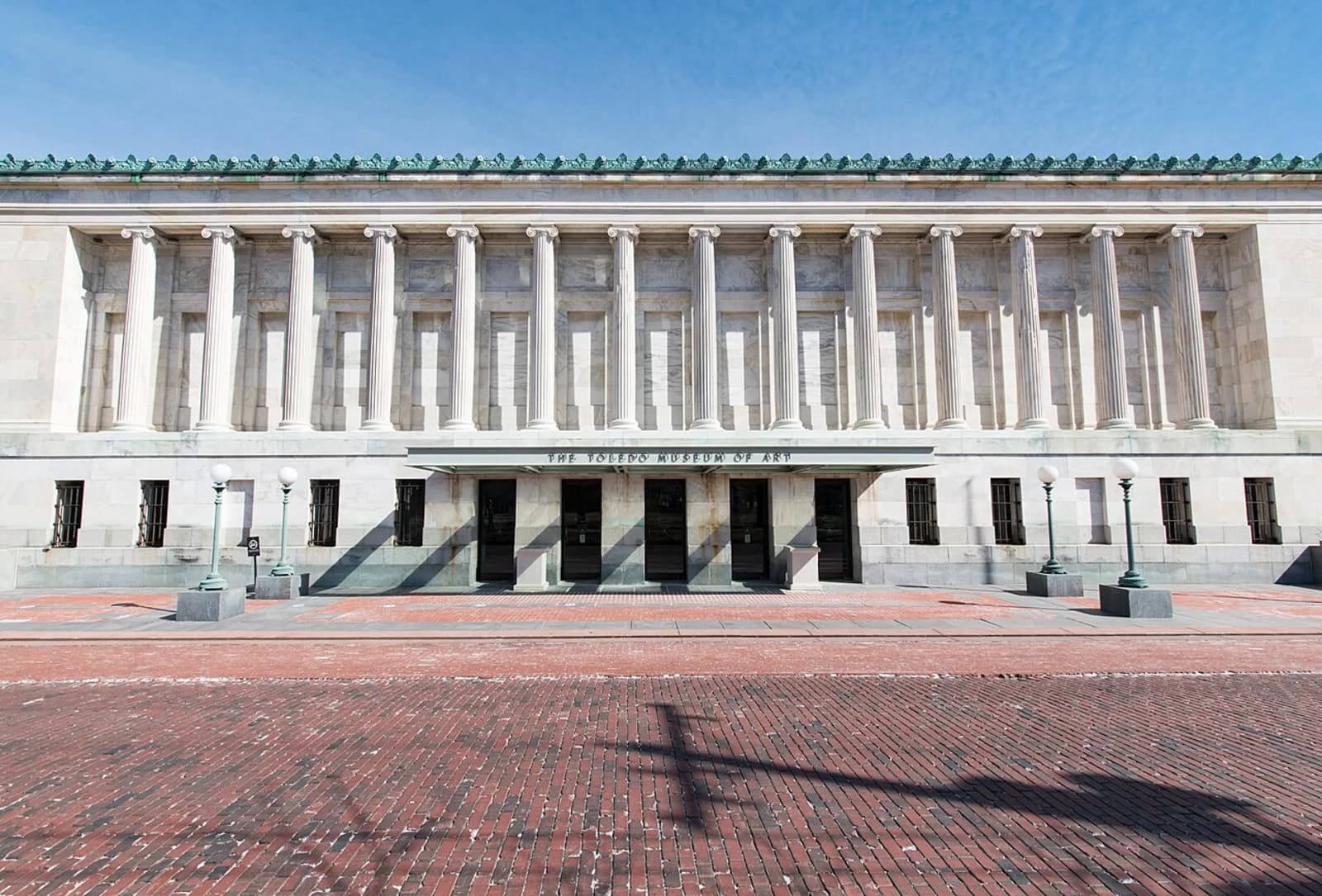
The Toledo Museum of Art, founded in 1901 and housed in a neoclassical building in downtown Toledo, Ohio, is one of the foremost encyclopedic art museums in the American Midwest. Its participation in the Vienna tour reflected its standing as a serious institutional partner for loans of the highest caliber, and the exhibition drew considerable public and scholarly attention to the museum during its two-month run.
- Dates
- 1 May 1951 – 28 Jun 1951
- Museum
 Toledo Museum of Art