Space in European Art: Council of Europe Exhibition in Japan
Held at the National Museum of Western Art in Ueno from 28 March to 14 June 1987, this large-scale loan exhibition brought together works tracing the representation of space across the full sweep of European painting, from ancient Greece through to the early twentieth century. It was organised under the auspices of the Council of Europe, the Strasbourg-based intergovernmental body whose long-running exhibition programme had, since its inaugural 1954 presentation on European humanism, used major museum loans to articulate the shared artistic inheritance of the continent. The Japan showing was a significant extension of that mission, bringing the programme to an international audience outside Europe for the first time in a sustained way.
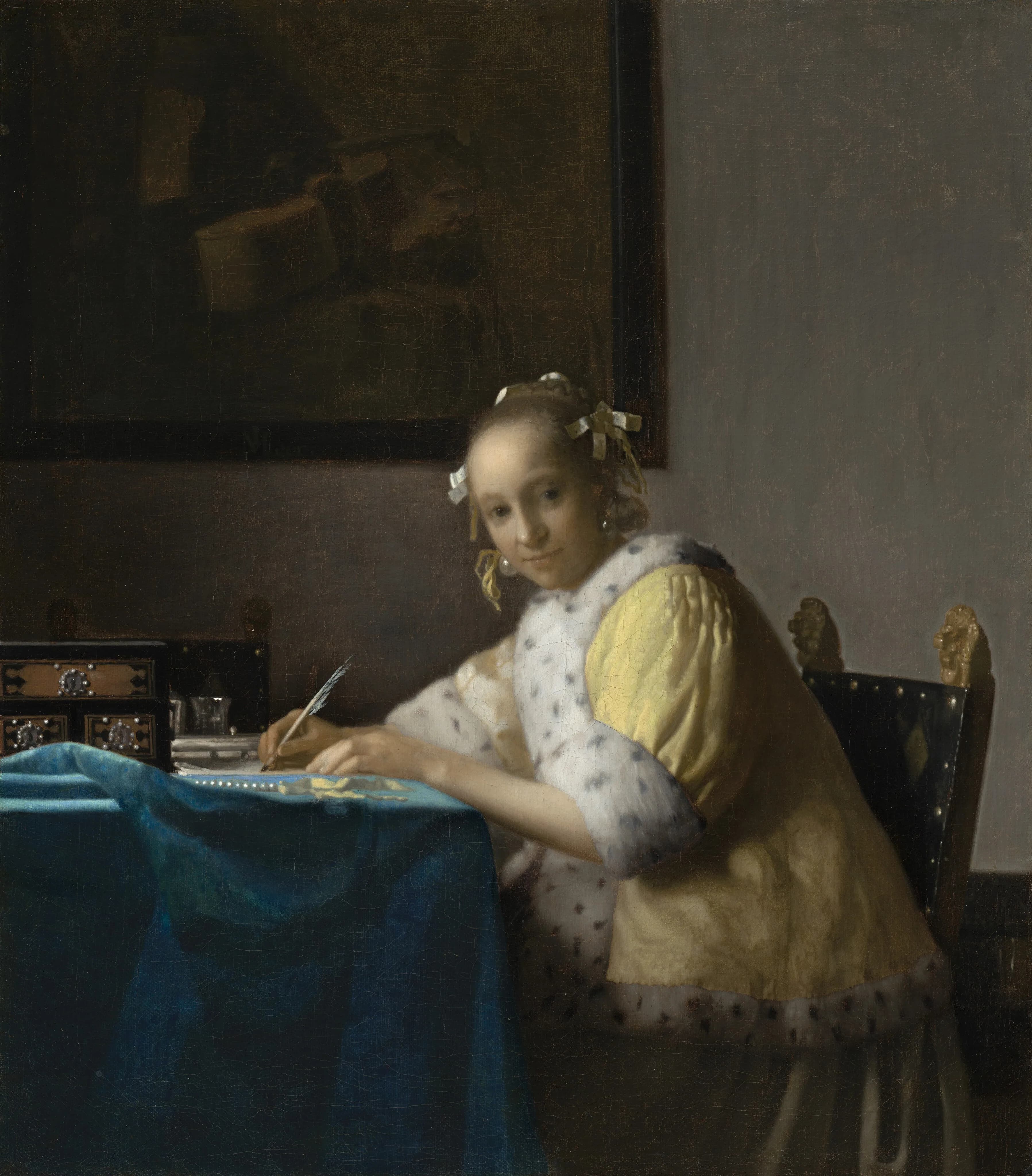
The exhibition was a broad chronological survey, its works chosen to illustrate how successive generations of European artists from Michelangelo, Dürer, and Bruegel through to the Impressionists developed and transformed pictorial methods for suggesting depth and three-dimensional volume on a flat surface. The thematic scope ranged from the geometric perspective systems of the Renaissance to the atmospheric and optical approaches explored in the seventeenth and nineteenth centuries. Vermeer’s “A Lady Writing” (National Gallery of Art, Washington), catalogued as no. 86, represented the Dutch Golden Age contribution to this history: a small, luminous interior in which the fall of light from a single window, the recession of the table surface, and the quiet stillness of the figure combine to create a sense of enclosed, contemplated space that is characteristic of Vermeer at his most refined.
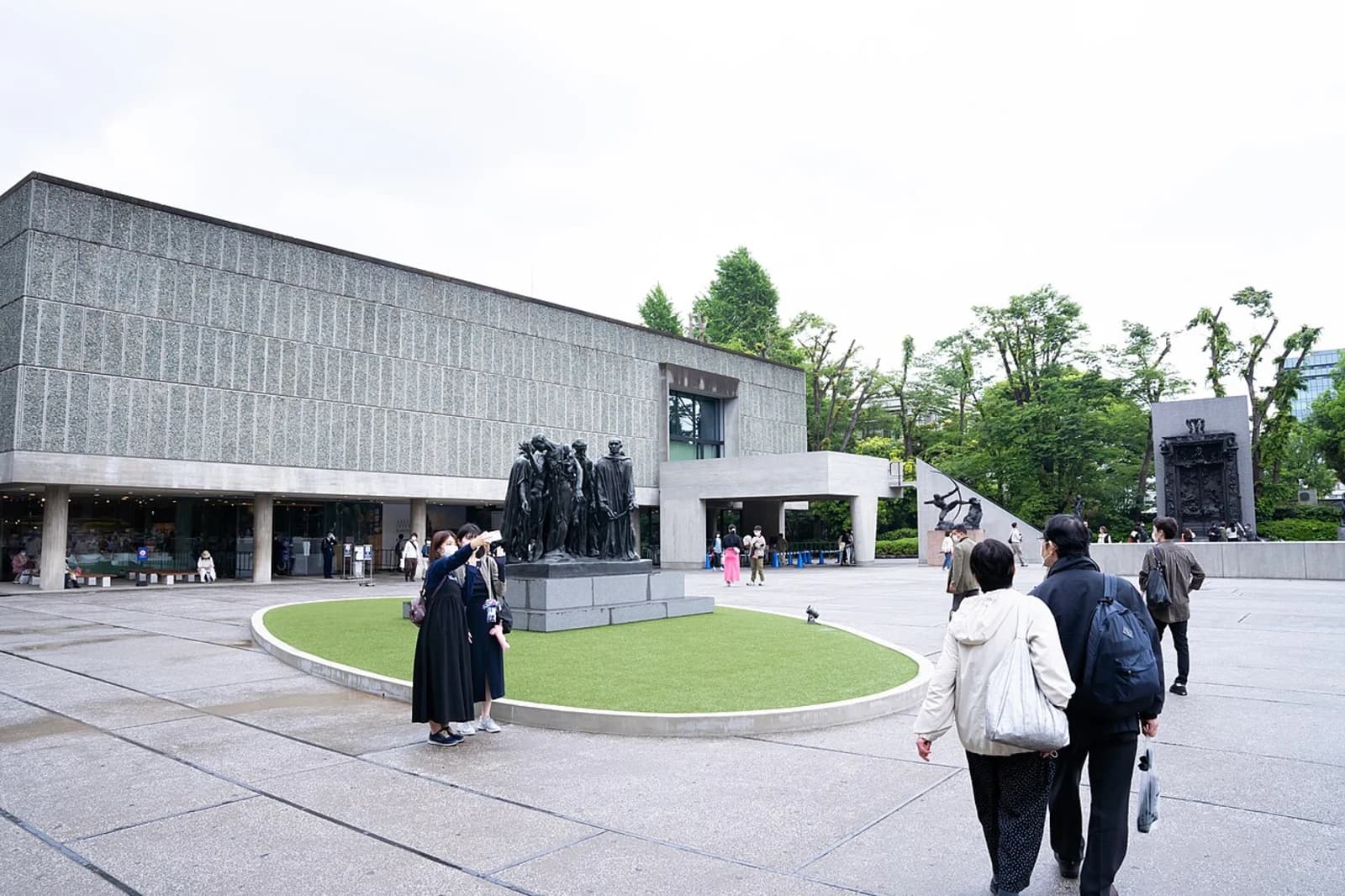
For Japanese audiences the exhibition offered a rare opportunity to see canonical European originals in Tokyo without travelling to European collections. The National Museum of Western Art, itself a product of an earlier Franco-Japanese cultural exchange (the building was designed by Le Corbusier and opened in 1959 to house the Matsukata Collection of French art), was a fitting host for an exhibition concerned precisely with the transmission and development of European visual traditions.
- Dates
- 28 Mar 1987 – 14 Jun 1987