China Art Palace
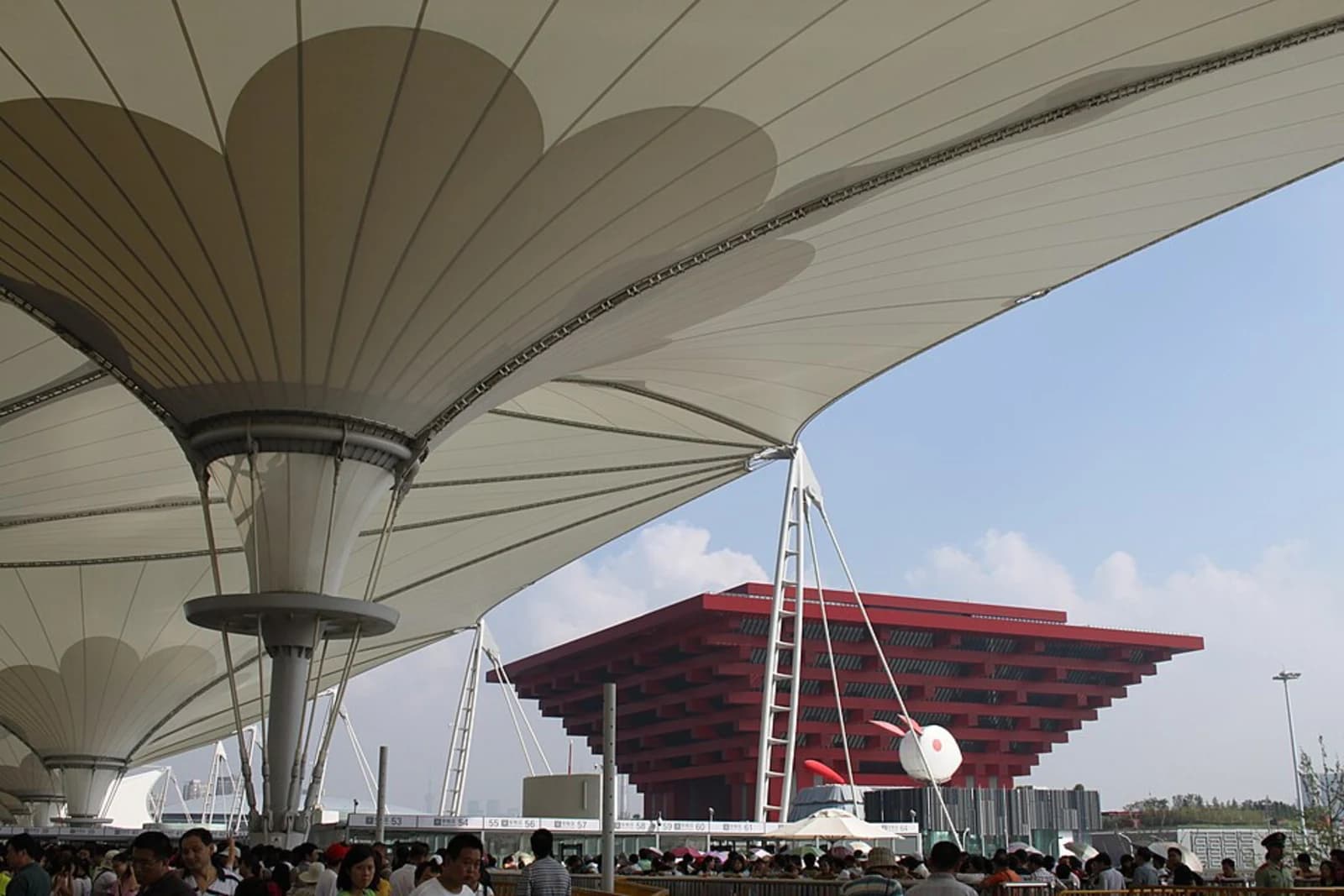
On 1 October 2012, China’s National Day, Shanghai inaugurated the China Art Museum in the building that had served as the China Pavilion at the 2010 Shanghai World Expo. Designed by He Jingtang and known informally as the “Oriental Crown,” the pavilion was the largest national pavilion ever built for a World Expo and had drawn close to 17 million visitors during the six-month exposition. Rather than dismantling the structure after the Expo closed, the Shanghai municipal government converted it into a permanent public art museum spanning 64,000 square metres, making it the largest art museum in Asia. The inaugural programme included permanent galleries devoted to modern and contemporary Chinese art alongside a series of special exhibitions, among them international loans that announced the museum’s ambition as a venue for global cultural exchange.
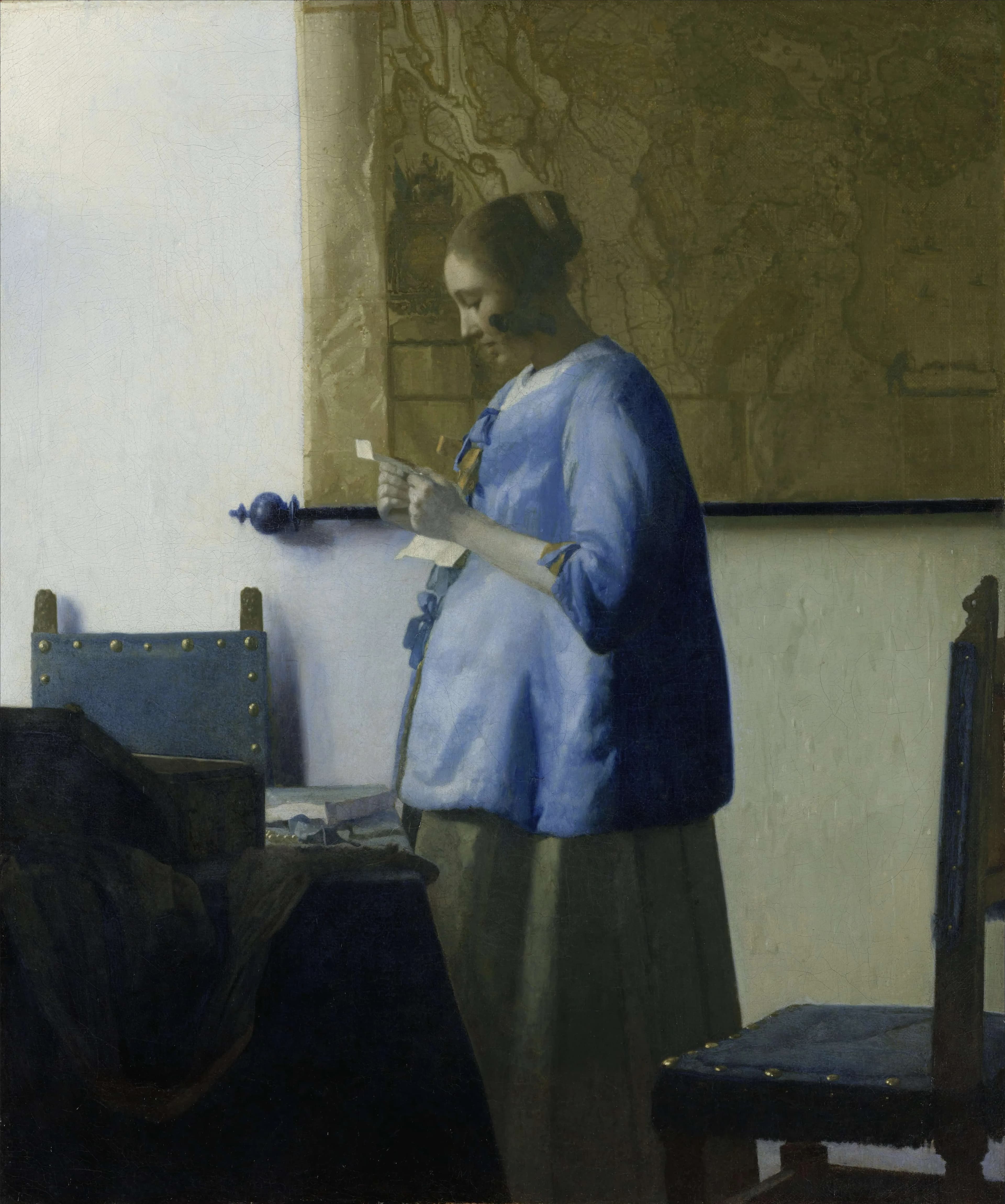
Vermeer’s Woman in Blue Reading a Letter was among the works loaned to mark the museum’s opening. The painting, which has belonged to the Rijksmuseum in Amsterdam since 1885, was at that time travelling on an international tour organised in advance of the Rijksmuseum’s own grand reopening on 13 April 2013, following a decade-long renovation of the nineteenth-century building. The tour took the painting to venues across three continents: from Japan earlier in 2012 (the Bunkamura Museum of Art in Tokyo), to Shanghai in October, then on to the Museu de Arte de São Paulo from December 2012 to February 2013, and finally to the J. Paul Getty Museum in Los Angeles in early 2013 as the last stop before the Rijksmuseum reopened. The Shanghai showing, timed to coincide with the China Art Museum’s inauguration, marked the first time the painting had been exhibited in mainland China.
Woman in Blue Reading a Letter dates from around 1662 to 1664 and depicts a young woman absorbed in reading a letter, her figure bathed in cool diffused light from a window at the left. The composition is characteristic of Vermeer’s mature style: a spare interior with no superfluous detail, the figure given monumental stillness by the blue of her morning jacket and the map on the wall behind her. The painting entered the Rijksmuseum via the bequest of Arnoldus des Tombe and has remained one of the cornerstones of the collection. Its appearance at the China Art Palace’s opening was a diplomatic as well as cultural gesture, linking one of the world’s most celebrated Dutch Golden Age works to the launch of a major new institution committed to presenting international art at scale in China.
- Dates
- 1 Oct 2012 – 31 Oct 2012