Rembrandt and His Time
“Rembrandt und seine Zeit” was a large-scale loan exhibition devoted to Dutch and Flemish painting of the seventeenth century, staged at the Museum zu Allerheiligen in Schaffhausen from April to October 1949. The show surveyed the full breadth of the Golden Age, presenting Rembrandt van Rijn alongside contemporaries including Frans Hals, Jan Steen, Pieter de Hooch, Jacob van Ruisdael, and Gerard ter Borch. The exhibition catalogue ran to more than two hundred entries, among them significant loans from major German and Dutch collections that had survived the Second World War in storage or evacuation.
The exhibition was one of a celebrated series of international loan shows organised at Schaffhausen under museum director Walter Ulrich Guyan and with the strong diplomatic backing of city president Walther Bringolf. Because Switzerland had remained neutral during the war and had provided substantial humanitarian aid to neighbouring countries, German and other European institutions were notably willing to entrust their masterworks to Schaffhausen in the late 1940s. The city had itself suffered from the accidental American bombing of April 1944, which damaged the museum building, making the postwar cultural programme a deliberate act of civic renewal. Exhibitions on Titian, Rembrandt, and Edvard Munch in these years transformed a regional museum into an internationally recognised venue and drew audiences of hundreds of thousands.
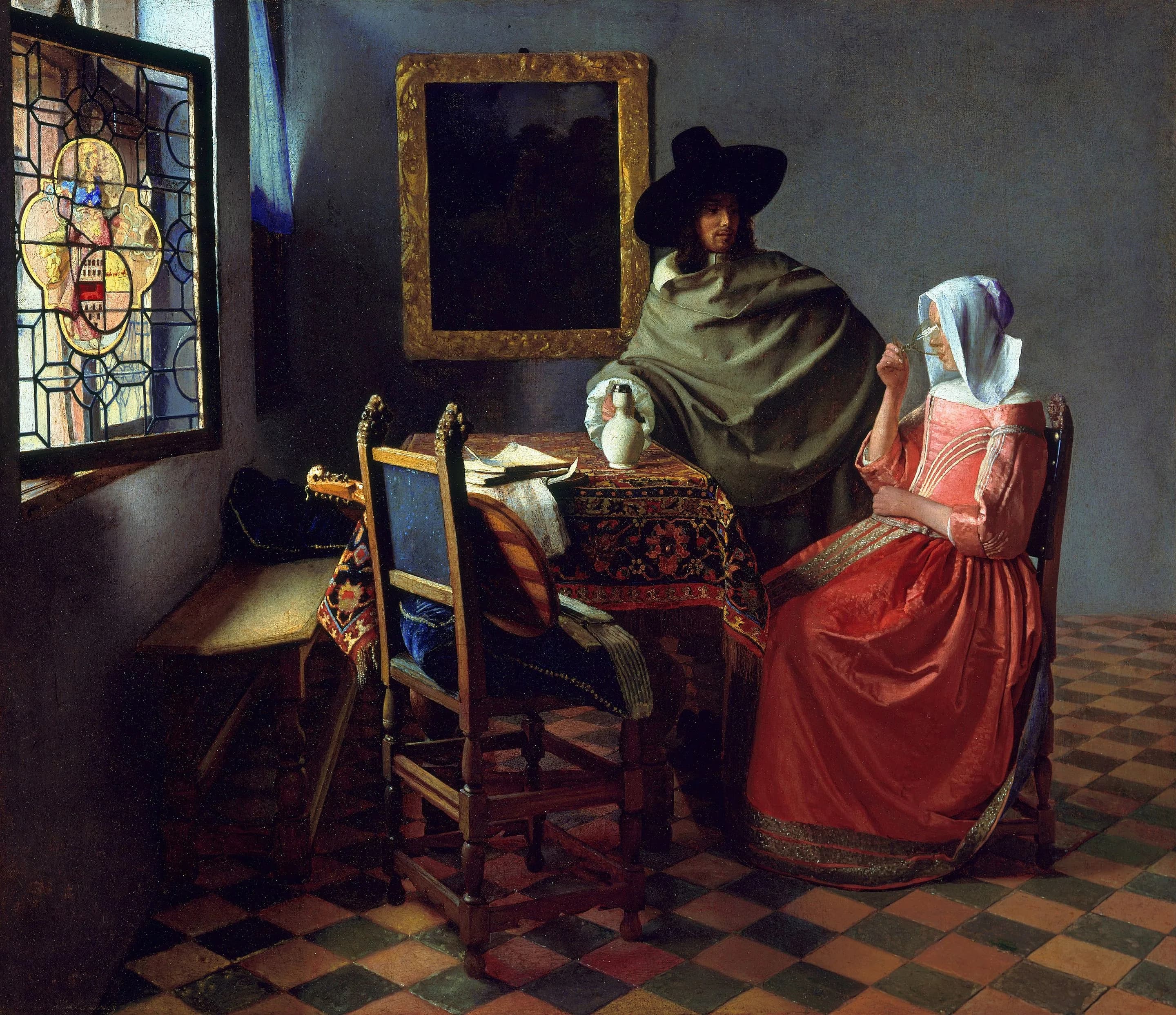
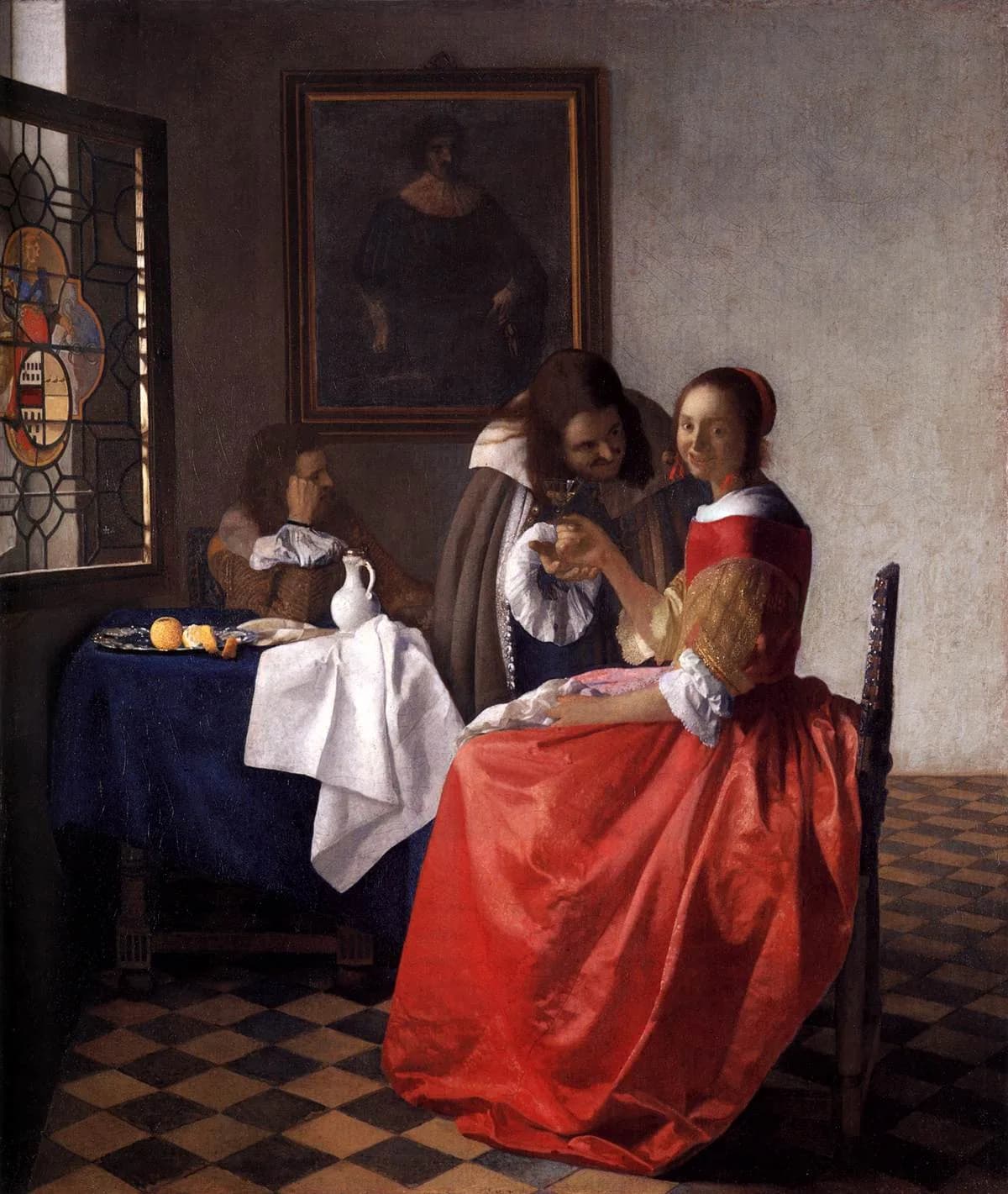
Vermeer was represented by two of his most ambitious interior scenes involving wine and social ritual. The Glass of Wine (Gemäldegalerie, Berlin) and The Girl with a Wine Glass (Herzog Anton Ulrich-Museum, Braunschweig) were hung together as a pair, offering visitors a rare opportunity to compare the two works in person. Both paintings centre on a seated young woman offered wine by a male companion, and the pairing highlighted how Vermeer developed and refined the theme across what scholars have identified as closely consecutive compositions. The Girl with a Wine Glass appeared in the catalogue as no. 188 with an illustration, representing one of the earliest occasions either work travelled outside its home institution for public display.
- Dates
- 10 Apr 1949 – 2 Oct 1949
- Museum
 Museum zu Allerheiligen