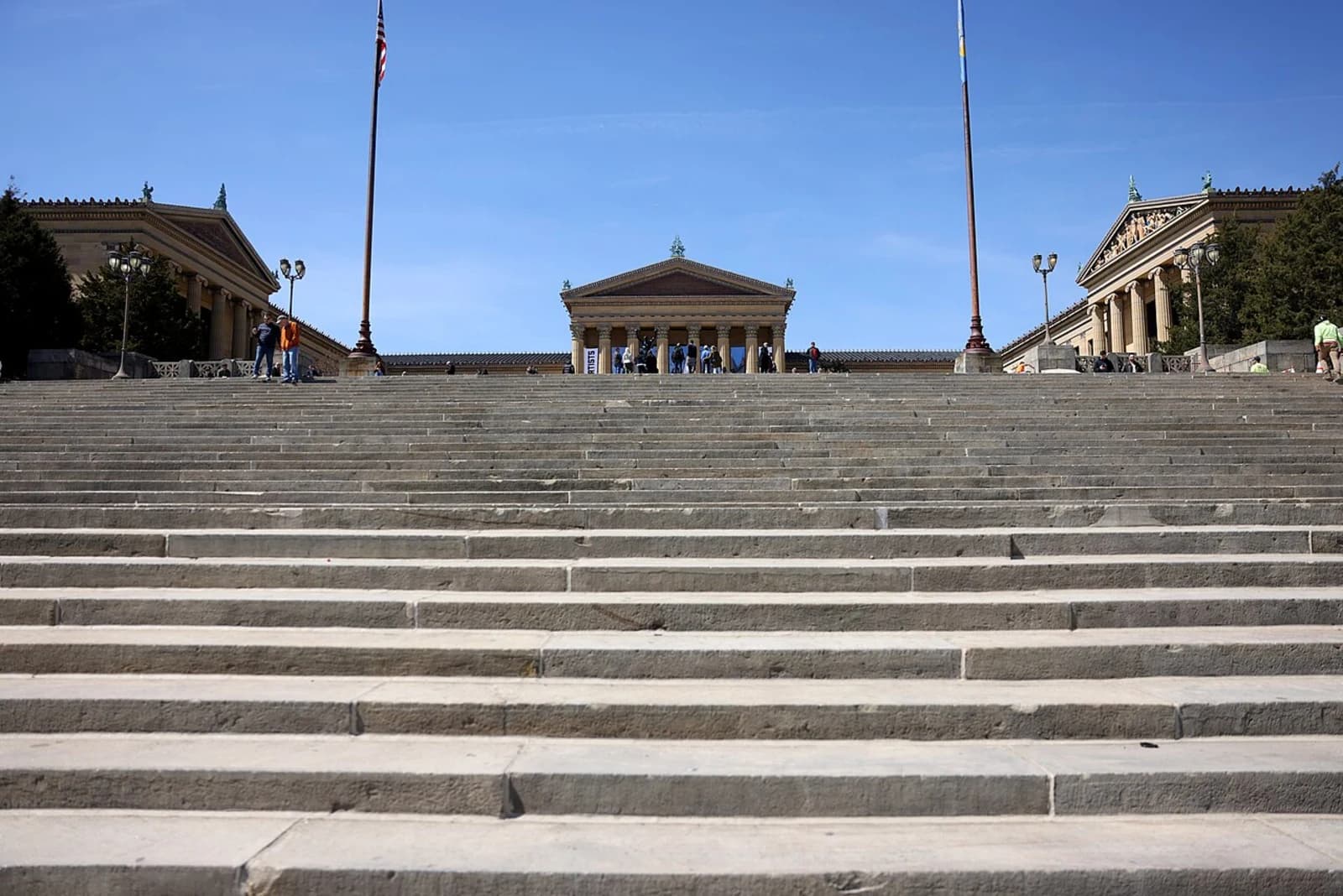
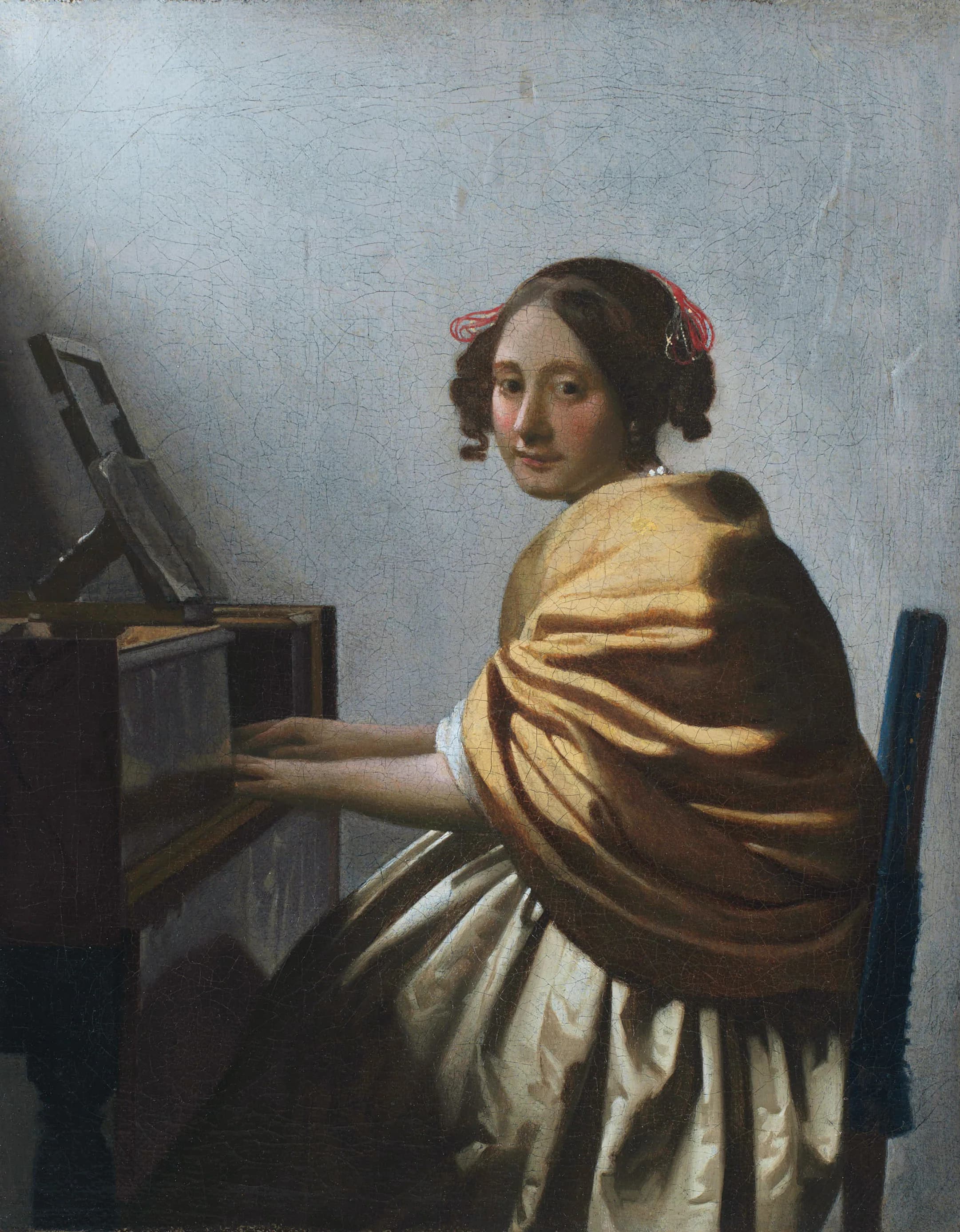
Young Woman Seated at a Virginal by Johannes Vermeer
From August 2004 to March 2005, the Philadelphia Museum of Art displayed a single painting whose attribution had been one of the longest-running controversies in Vermeer scholarship: A Young Woman Seated at the Virginals (c. 1670-72). The work had passed through the collection of the South African diamond magnate Alfred Beit by 1904, and in 1960 was acquired by the Brussels collector Baron Frédéric Rolin, who remained its devoted champion until his death in 2002. In July 2004, the heirs of Rolin consigned the painting to Sotheby's in London, where it sold as the last original Vermeer composition in private hands for approximately £16.2 million, far exceeding the house estimate of £3 million. The buyer, shortly identified as the Las Vegas developer Steve Wynn, placed the painting on immediate loan to Philadelphia, where it was displayed among the permanent collection galleries of European painting, overseen by assistant curator Lloyd DeWitt. No separate catalogue was published for the showing.
The attribution question had been acute since the 1940s, when the Van Meegeren forgery scandal cast suspicion on a range of previously accepted Vermeers, and the scholar A. B. de Vries called the work the product of an early nineteenth-century imitator. The picture had been excluded from the major 1996 Vermeer retrospective in Washington and The Hague. It was included in the 2001 exhibition Vermeer and the Delft School at the Metropolitan Museum of Art in New York, arranged by Walter Liedtke, though it arrived too late to enter the printed catalogue. The 2004 Sotheby's sale was preceded by technical examination that found compelling evidence for Vermeer authorship: the canvas appeared to come from the same bolt as The Lacemaker in the Louvre, the pigments were consistent with the Vermeer palette including natural ultramarine and lead-tin yellow, green earth was present in the flesh tones, and a pin-hole at the vanishing point matched his recorded practice with a perspective device.
Critical opinion in 2004 remained divided despite this technical evidence. Walter Liedtke and Arthur Wheelock accepted the picture as a genuine Vermeer, though Wheelock thought some passages might have been retouched or completed after the death of Vermeer in 1675. Directors and specialists at the Mauritshuis were not persuaded, finding the handling of the figure unconvincing. The National Gallery curator Axel Rüger proposed that the picture might have been left unfinished by Vermeer and completed by another hand. The Philadelphia showing, coming immediately after the auction, placed the painting before a wide audience at precisely the moment when the debate was most active. By 2008, when Wynn sold the work to Thomas Kaplan for the Leiden Collection in New York, the painting had gained broad acceptance among specialists, though questions about individual passages in its execution have persisted. It remains the only Vermeer in private hands.
- Dates
- 11 Aug 2004 – 1 Mar 2005

Paintings1
Sources
- The Leiden Collection — Young Woman Seated at a Virginal, catalogue entry
- Essential Vermeer — A Young Woman Seated at the Virginals (exhibition and attribution history)
- The Art Newspaper — Young woman at a virginal: A Vermeer? Oh yes it is! Oh no it is not! (2001)
- Philadelphia Museum of Art — exhibition page: A Young Woman Seated at the Virginals by Johannes Vermeer
- John Haber, Haber's Art Reviews — A New Attribution to Vermeer