
Diamond Jubilee Exhibition: Masterpieces of Painting
The Philadelphia Museum of Art opened in 1876, and its seventy-fifth anniversary in 1950 became the occasion for a year-long programme of celebrations. The centrepiece was the Diamond Jubilee Exhibition: Masterpieces of Painting, a loan show drawn from American public and private collections that ran from November 4, 1950 through February 11, 1951. Under the directorship of Fiske Kimball, who had transformed the institution over a quarter-century from a provincial gallery into one of the leading art museums in the country, the exhibition sought to demonstrate how comprehensively great European painting was represented in the United States. The museum bulletin for Winter 1950 commemorated the milestone with a retrospective of the jubilee year.
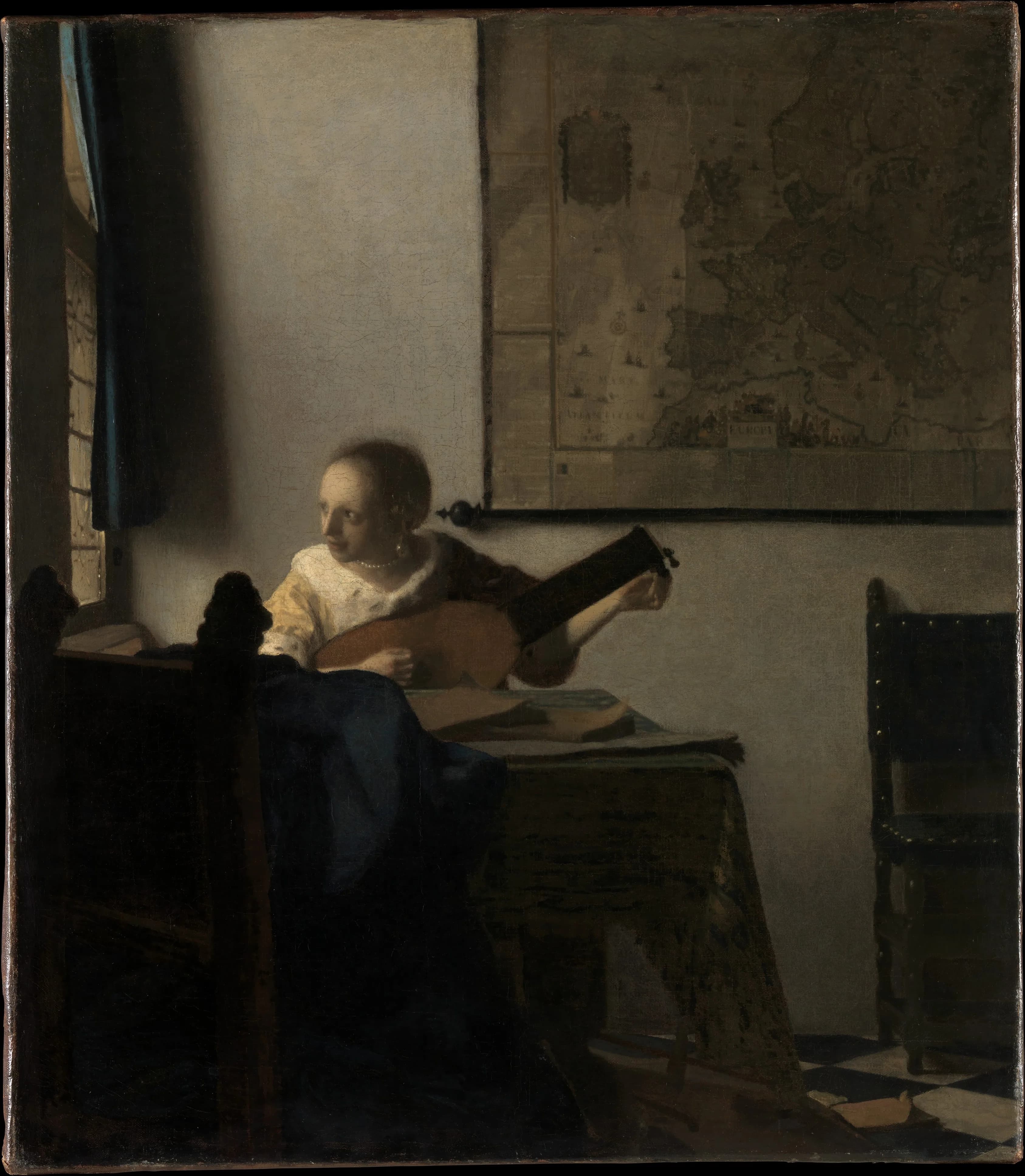
Vermeer was represented by Woman with a Lute (c. 1662-64), catalogue no. 42, on loan from the Metropolitan Museum of Art in New York, where the picture had been since the Huntington bequest of 1900. The painting shows a young woman turning from her lute toward a window on the left, her gaze directed outward rather than at her instrument, in a composition characteristic of Vermeer in its play between absorbed attention and the suggestion of something beyond the frame. Its loan to Philadelphia for a major anniversary exhibition reflected the Metropolitan Museum willingness to circulate key works for celebratory occasions, and placed the Vermeer alongside acknowledged masterpieces drawn from collections across the eastern seaboard.
The Diamond Jubilee exhibition was among the last major projects Kimball organised before his retirement. It marked a moment when Vermeer reputation in America was firmly established but still concentrated in a handful of authoritative institutions. The Huntington bequest had brought the Woman with a Lute to New York at a time when Vermeer attribution was still being settled; by 1950 the picture place in the canonical list of accepted works was secure, and its presence at the jubilee exhibition reflected the status that Dutch Golden Age painting had acquired in American collecting over the preceding century.
- Dates
- 4 Nov 1950 – 11 Feb 1951

Paintings1
Sources
- Essential Vermeer — exhibition history for Woman with a Lute (catalogue no. 42)
- Director’s Exhibition records — Diamond Jubilee Exhibition: Masterpieces of Painting (Box 13, Folder 13), Philadelphia Museum of Art Archives
- The Philadelphia Museum Bulletin, No. 224 (Winter 1950) — Diamond Jubilee issue (via JSTOR)