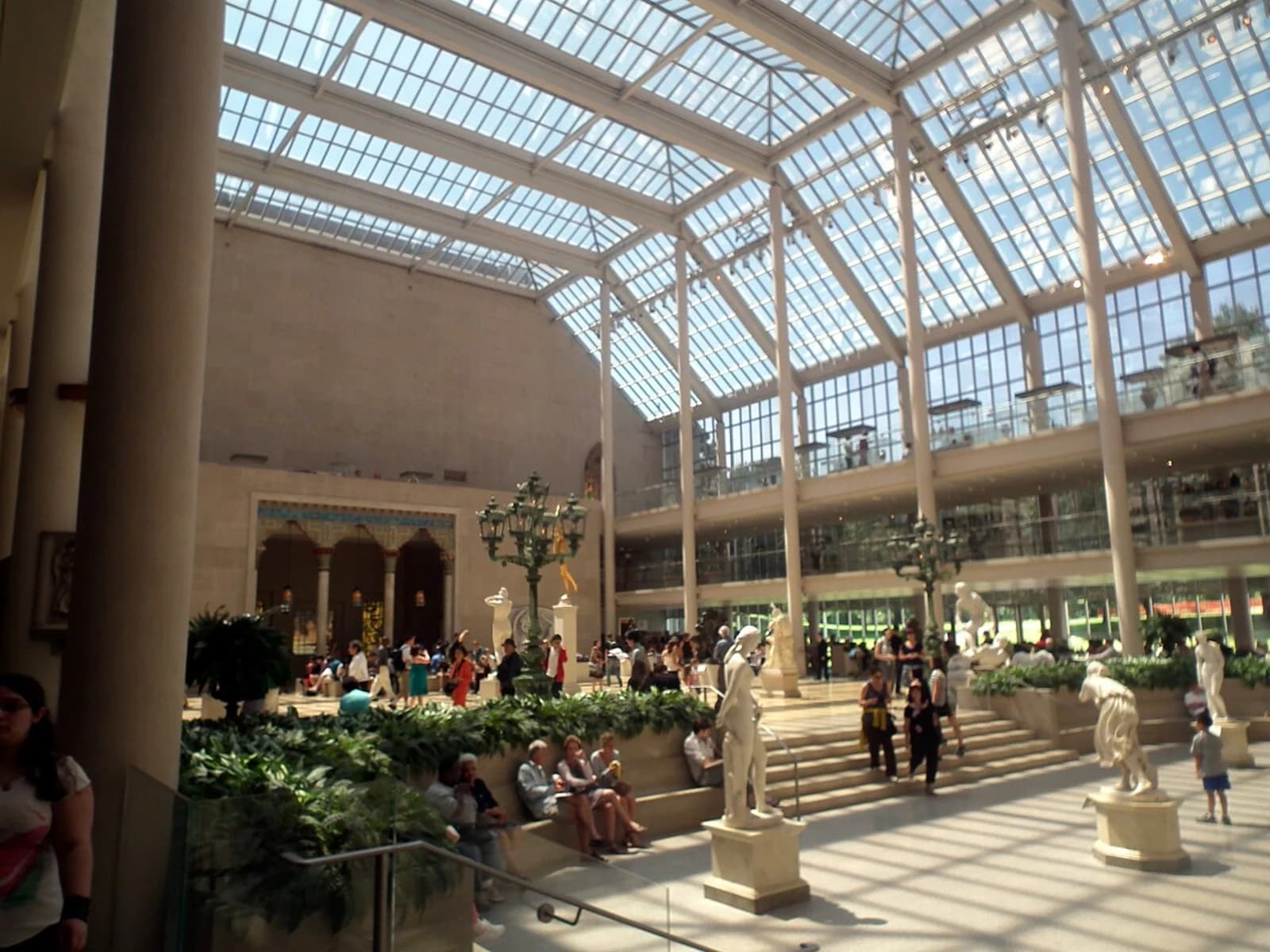
Art Treasures of the Metropolitan
“Art Treasures of the Metropolitan” opened on 7 November 1952 and ran for nearly ten months, presenting a comprehensive survey of the Metropolitan Museum of Art’s own holdings drawn from both its European and Asiatic collections. The exhibition was presented by the museum’s curatorial staff and accompanied by a substantial catalogue published by Harry N. Abrams, with a foreword by director Francis Henry Taylor and an introductory essay by Edith Standen of the Textiles department. The catalogue, running to 240 pages and illustrated with 130 colour reproductions, organised the collection across seven broad categories: ancient art, medieval art, drawings, paintings, prints, decorative arts, and Oriental art. At the time the Metropolitan was one of the few American institutions with a collection of sufficient depth to mount a survey of this breadth entirely from its own reserves.
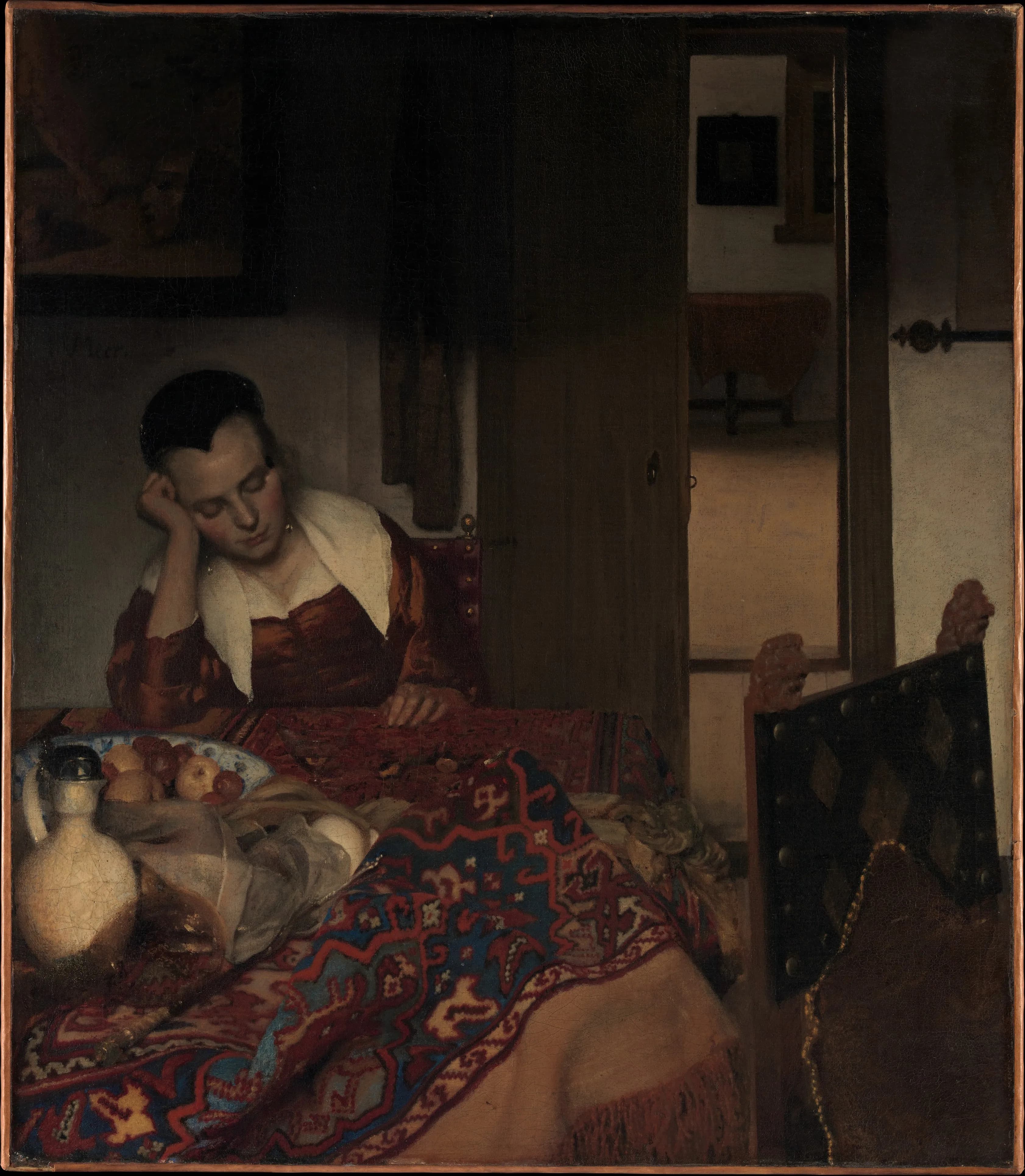
Vermeer’s A Maid Asleep (catalogue no. 117) was among the paintings selected from the European galleries. The canvas, painted around 1656–57, had entered the Metropolitan through the bequest of the merchant and collector Benjamin Altman in 1913, following its purchase from Rodolphe Kann via Duveen Brothers in 1908. Because the Altman bequest stipulates that the works may not be lent, A Maid Asleep has remained at the Metropolitan since its arrival, and the 1952 exhibition offered visitors an occasion to see it alongside the broader range of the museum’s treasures rather than in its usual permanent installation. The painting depicts a young woman at a table, her head lowered in sleep, with a half-open door behind her revealing a further interior, a composition understood by later scholars as an early experiment in the spatial recession that would become a hallmark of Vermeer’s mature work.
Francis Henry Taylor, who directed the Metropolitan from 1940 to 1955, shaped the museum into a more publicly engaged institution and oversaw major expansions of attendance and membership during the post-war years. The 1952 exhibition reflected his philosophy of bringing the museum’s accumulated holdings before a broad public in a coherent, accessible form. The show coincided with the early 1950s, a period when American museums were reasserting the depth and quality of their permanent collections after the disruptions of the Second World War, and the catalogue served as a lasting record of what the Metropolitan had built across more than eight decades of collecting.
- Dates
- 7 Nov 1952 – 7 Sept 1953

Paintings1
Sources
- Essential Vermeer, Complete Vermeer Exhibition History (1838–2025)
- Art treasures of the Metropolitan: a selection from the European and Asiatic collections — HathiTrust catalog record
- Art treasures of the Metropolitan (1952) — Internet Archive
- Johannes Vermeer, A Maid Asleep — The Metropolitan Museum of Art