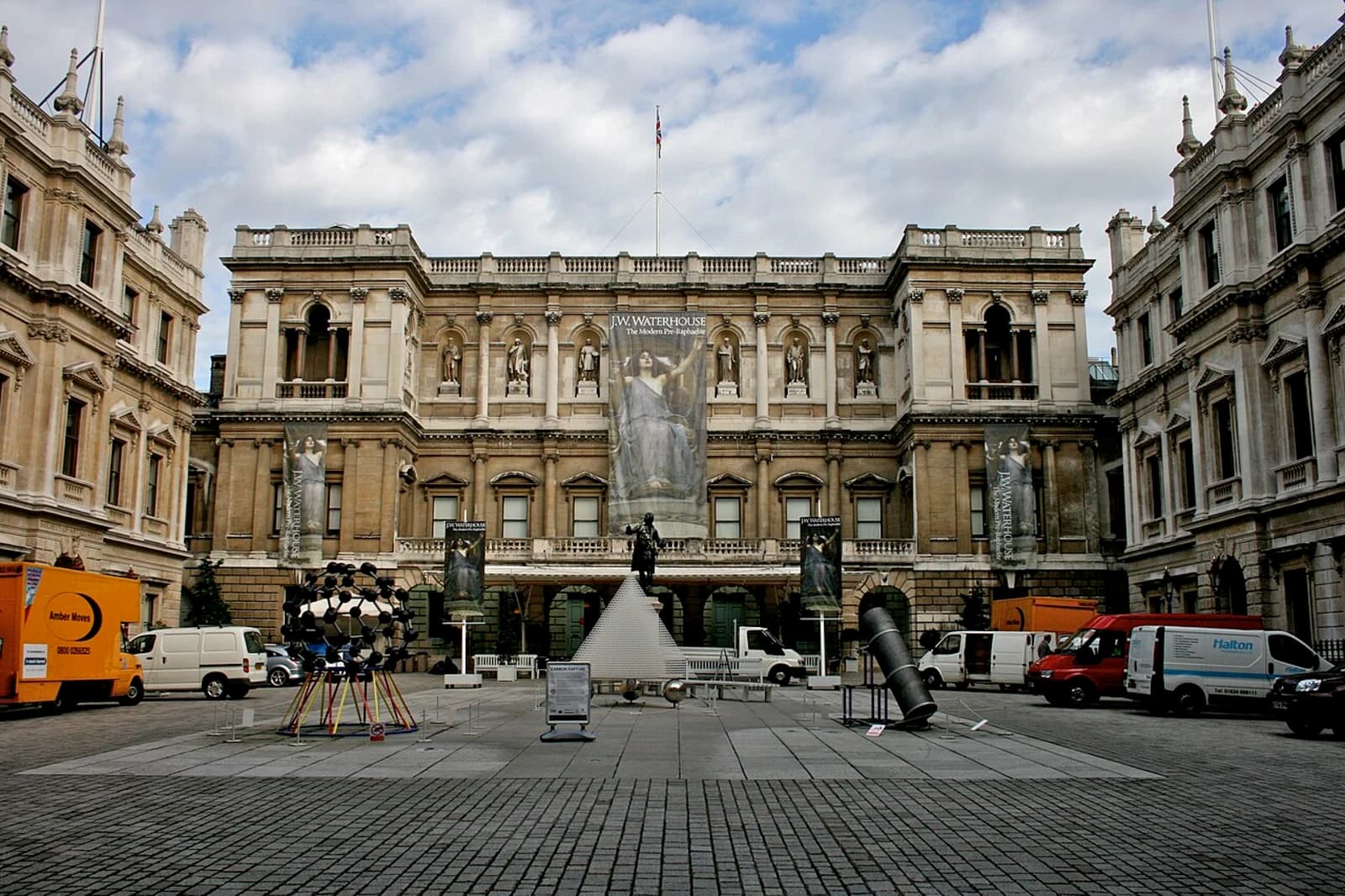
An Exhibition of the Old Masters, Associated with Works of Deceased Masters of the British School
The 1871 Winter Exhibition at the Royal Academy of Arts was the second in the annual loan series the Academy had inaugurated the previous year upon moving to Burlington House. Titled “An Exhibition of the Old Masters, Associated with Works of Deceased Masters of the British School,” the series offered London audiences sustained access to privately held European and British paintings during the winter months, when the Summer Exhibition was closed.
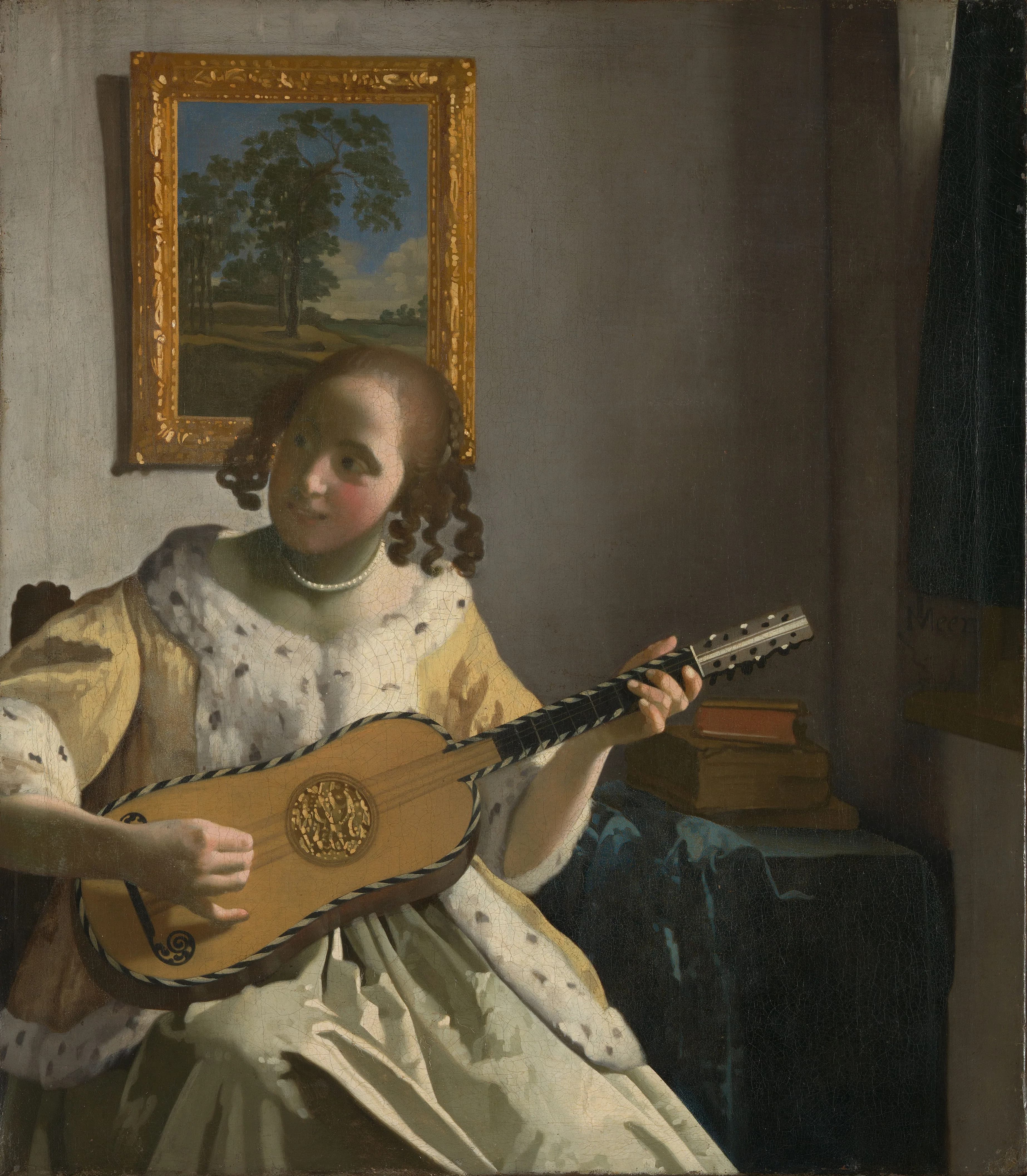
The single Vermeer in the show was The Guitar Player, catalogued as no. 266 under the title “A Lady Playing a Guitar” and attributed to “John Vandermeer van Delft.” It was lent by the Rt. Hon. W. Cowper-Temple, William Francis Cowper-Temple (later 1st Baron Mount Temple), who had inherited the picture from his stepfather Henry John Temple, 3rd Viscount Palmerston, on Palmerston’s death in 1865. Cowper-Temple kept it at Broadlands, his Hampshire estate, until his own death in 1888, when his nephew Evelyn Ashley sold it to the dealers Thomas Agnew and Sons. Edward Cecil Guinness acquired it shortly afterwards, and it entered Kenwood House as part of the Iveagh Bequest in 1927, where it remains.
The slightly awkward attribution “John Vandermeer van Delft” reflects the state of Vermeer’s reputation in Britain in 1871, only five years after Théophile Thoré-Bürger’s landmark 1866 catalogue had begun to restore the artist’s name to wider recognition. Early exhibition labels and catalogue entries from this period frequently mangled or disambiguated his name.
- Dates
- 1 Jan 1871 – 31 Dec 1871
- Museum
 Royal Academy of Arts
Paintings1
Sources
- Essential Vermeer, Complete Vermeer Exhibition History (1838–2025), essentialvermeer.com
- Wikipedia, “The Guitar Player (Vermeer),” provenance and ownership section, en.wikipedia.org
- Wikipedia, “Temporary exhibitions at the Royal Academy,” en.wikipedia.org