Double Vision: Vermeer at Kenwood
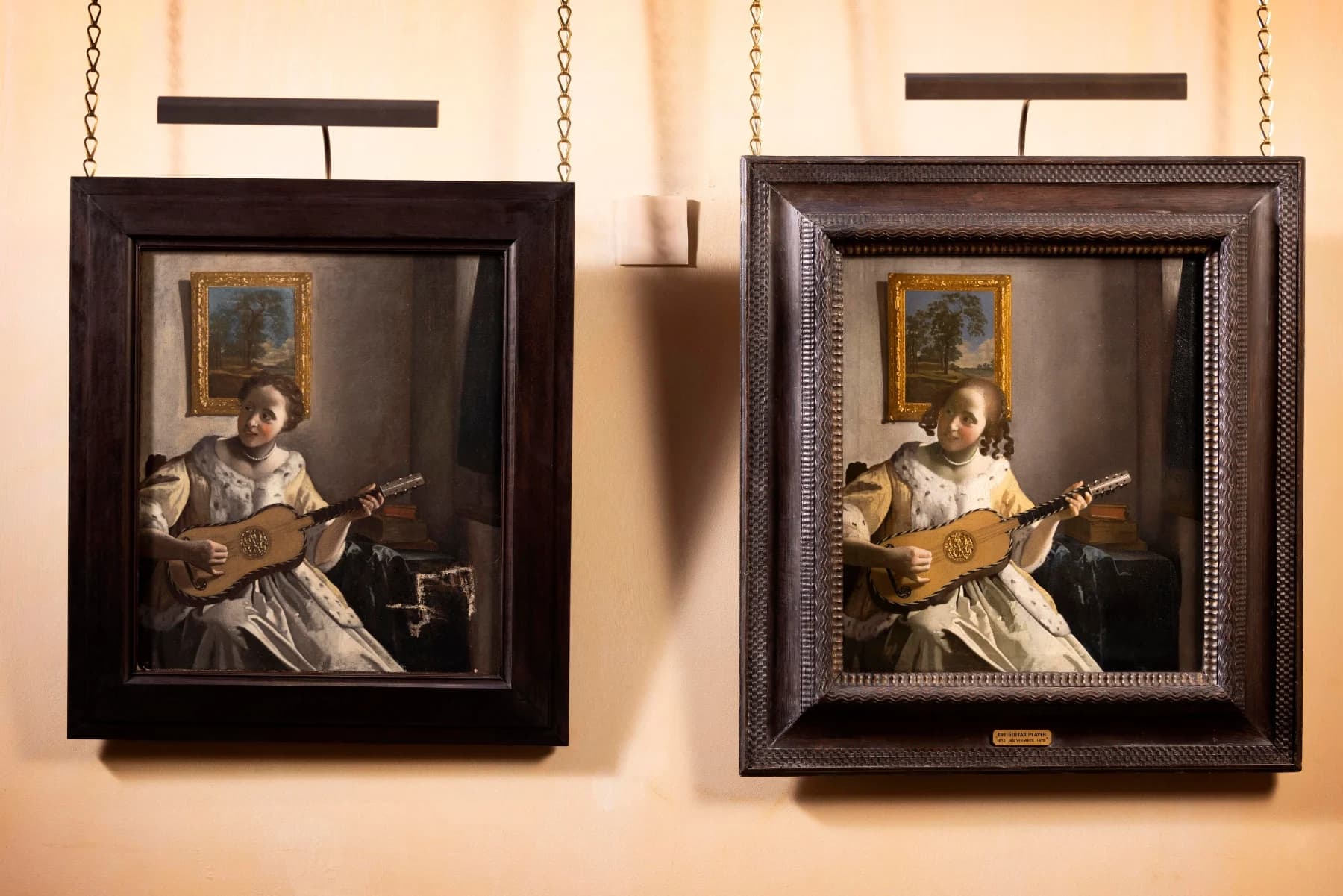
Marking the 350th anniversary of Vermeer’s death in 1675, Double Vision brought together two paintings of the same scene, both known as The Guitar Player, and hung them side by side for the first time in more than three hundred years. One is Kenwood’s own The Guitar Player, signed by Johannes Vermeer and painted around 1672. The other, A Lady Playing the Guitar, travelled from the John G. Johnson Collection at the Philadelphia Museum of Art. The small display turned on a single question that has divided scholars for a century: who painted the second picture, and when.
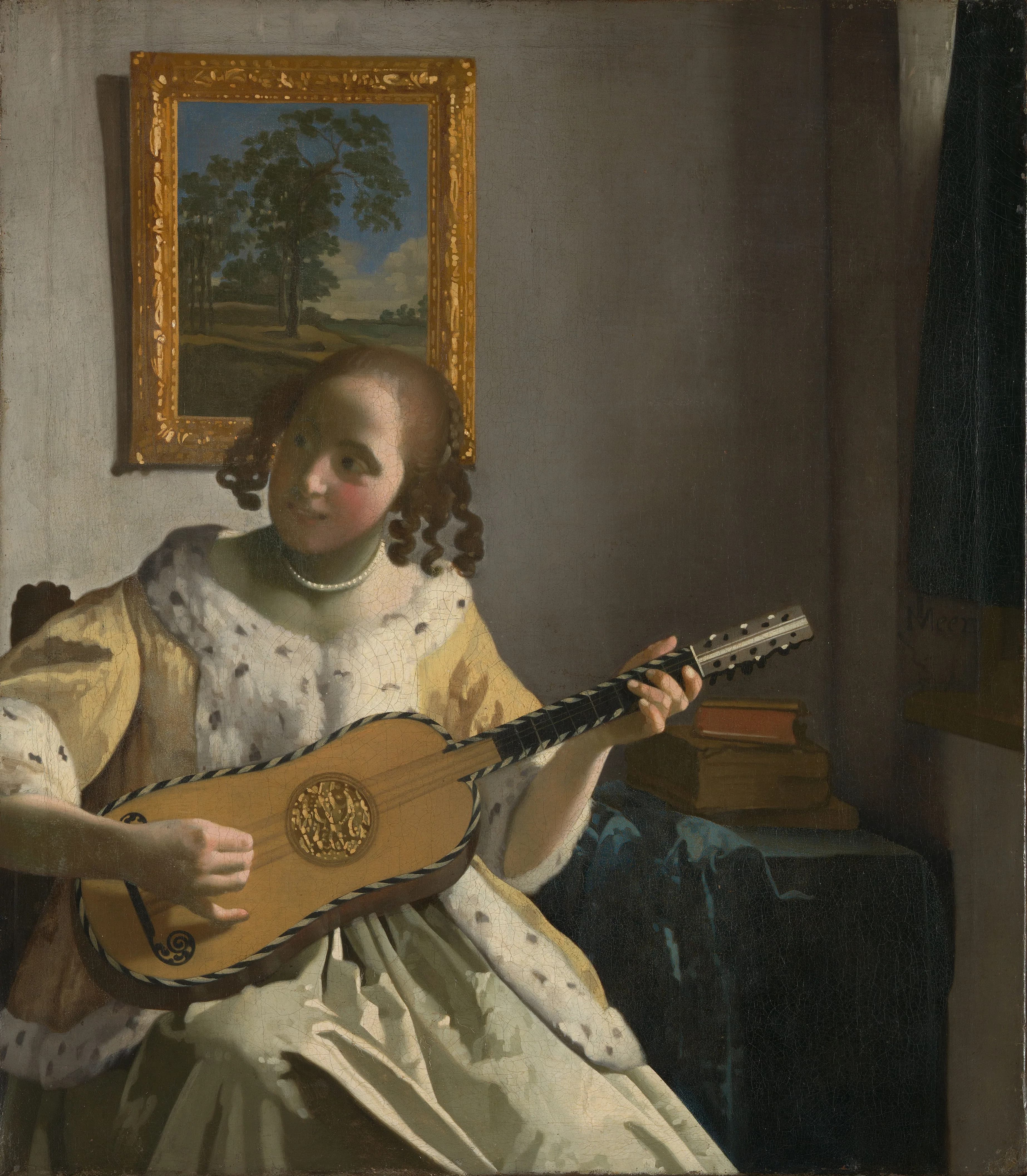
Kenwood’s version is one of only around thirty-seven surviving Vermeers. It came to the nation through the Iveagh Bequest, the collection assembled by Edward Cecil Guinness, first Earl of Iveagh, who bought Kenwood House and left it and its pictures to the public in 1927. Signed by the artist and remarkably well preserved, it shows a young woman with her hair in loose ringlets, prepared over a pale grey-brown ground and worked up with costly natural ultramarine.
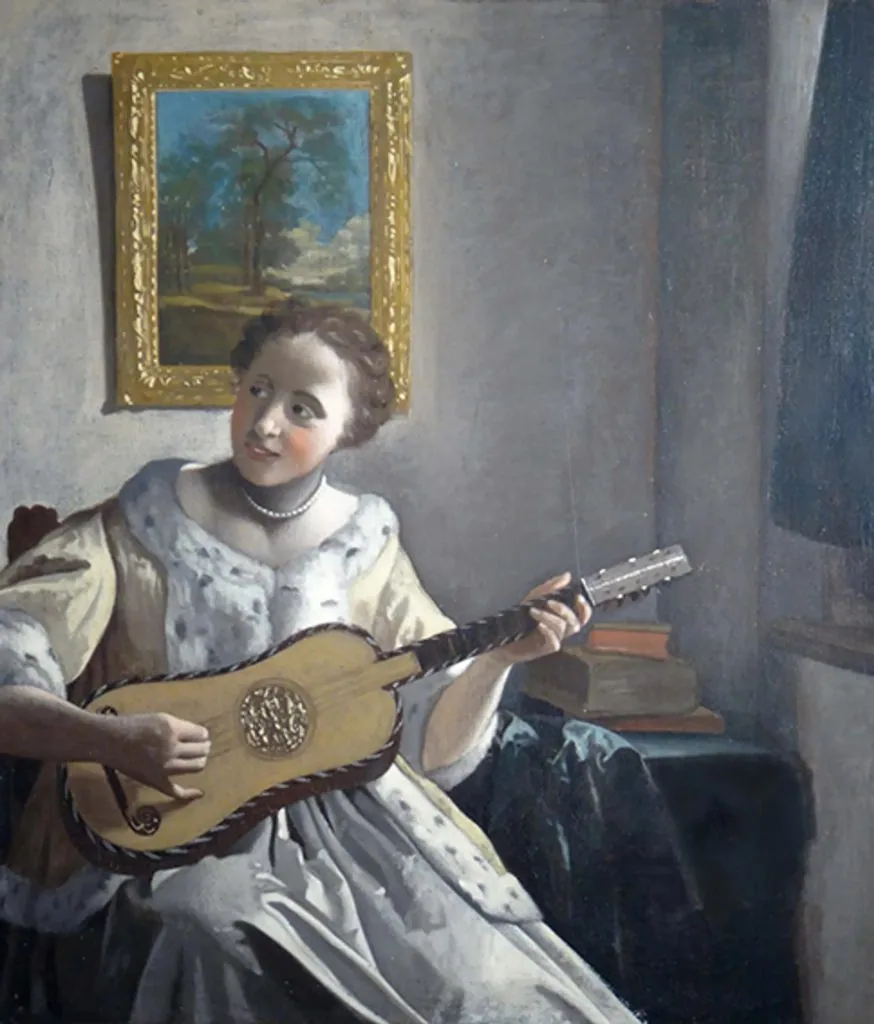
The Philadelphia picture is the puzzle. The Pennsylvania lawyer John G. Johnson bought it as a Vermeer and gave his collection to the city of Philadelphia on his death in 1917, after which the unsigned canvas spent much of the next century in storage. It repeats the composition almost exactly, but with telling differences: the sitter’s hair is not in ringlets, the painting carries no signature, and it survives in far rougher condition, shown unrestored with its damage and tears left visible. Where Kenwood used expensive ultramarine, the Philadelphia painter reached for cheaper indigo, and the two canvases were begun over grounds of different colour and composition.
Those findings came out of two years of collaborative study, from 2023 to 2025, in which scientists, conservators, curators, and art historians at the Philadelphia Museum of Art worked alongside the National Gallery of Art in Washington, the National Gallery in London, and English Heritage to compare the materials, techniques, and working methods behind the two pictures. The research narrowed the possibilities, an early copy, a studio version, or a second autograph painting, without settling them, and the results are to appear in a peer-reviewed publication. Rather than hand visitors a verdict, English Heritage built the show around looking itself. Wendy Monkhouse, the senior curator at Kenwood, described standing before the masterpiece and its “near doppelgänger” as an arresting experience, and invited the public to weigh the evidence and reach their own conclusions.
- Dates
- 1 Sept 2025 – 11 Jan 2026
- Museum
 Kenwood House
Paintings2
Sources
- English Heritage, 'Double Vision: Vermeer at Kenwood' — exhibition page
- English Heritage, 'Vermeer Painting Side-by-Side with its Twin for First Time in over 300 Years' (1 September 2025)
- The Art Newspaper — Seeing double: Vermeer painting and its mysterious 'twin' go on show in London (1 September 2025)
- Artnet News — Is This a Real Vermeer? London Show Reopens Century-Old Mystery
- Smithsonian Magazine — Did Vermeer Make a Copy of His Own Painting? A New Exhibition Invites You to Be the Judge
- CODART, Double Vision: Vermeer at Kenwood
- Essential Vermeer, Complete Vermeer Exhibition History (1838–2025), essentialvermeer.com