Art Treasures from the Vienna Collections
This exhibition brought 279 objects from the Kunsthistorisches Museum and other Vienna collections to American audiences as an act of cultural diplomacy. The Austrian government lent the works in gratitude to the United States for rescuing them from the salt mines of Upper Austria, where they had been concealed during the war; American forces discovered them alongside Michelangelo's Bruges Madonna and a handful of other masterpieces. Nearly all the pieces had been acquired by the House of Habsburg and included 128 paintings by Titian, Velazquez, Rubens, Rembrandt, and Vermeer, together with Renaissance bronzes, the Cellini Salt Cellar, arms and armor, and Flemish tapestries.
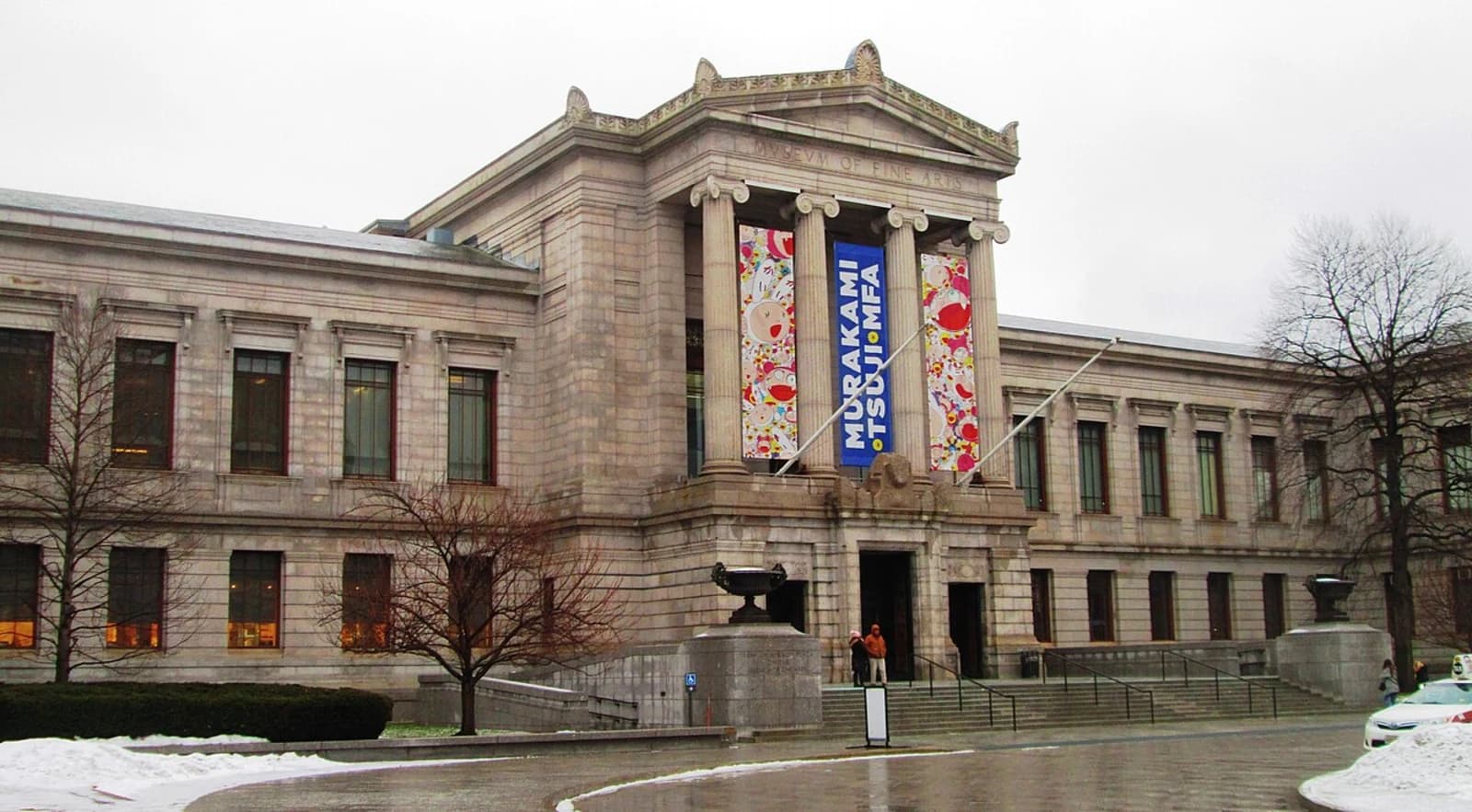
The tour opened in Europe (Zurich, Brussels, Amsterdam, Paris, Stockholm, Copenhagen, London) before crossing the Atlantic. The American leg ran from late 1949 through 1952, stopping at the National Gallery of Art in Washington, the Metropolitan Museum of Art in New York, the Art Institute of Chicago, the M.H. de Young Memorial Museum in San Francisco, the Saint Louis Art Museum, the Toledo Museum of Art, and then Boston, before continuing to Philadelphia. The Boston showing at the Museum of Fine Arts, from October 1951 to January 1952, was therefore near the end of a three-year international circuit.
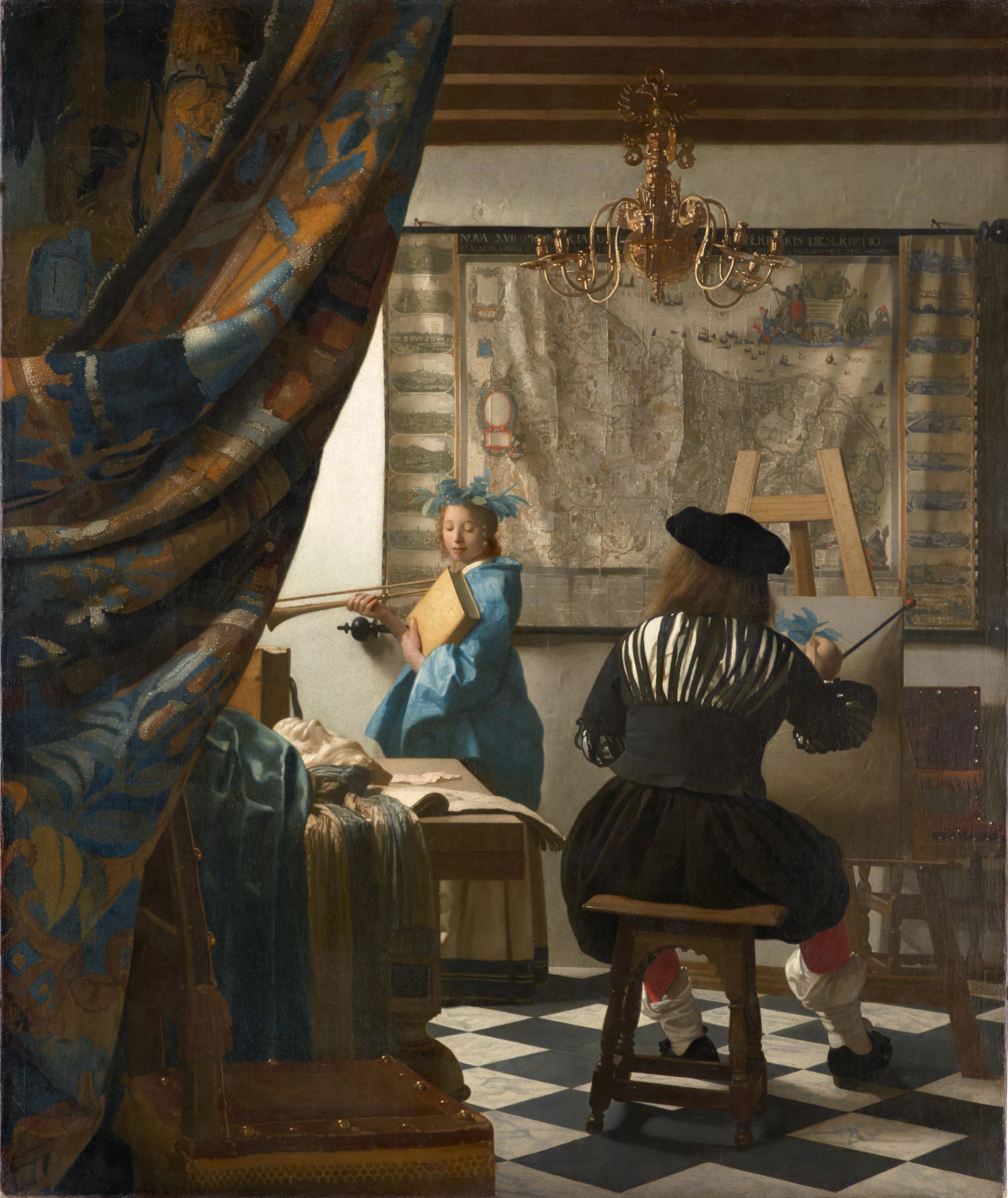
The Art of Painting, which Hitler had purchased in 1940 intending it for his planned Fuhrer Museum in Linz, was among the most closely watched works on the tour. Austria had not yet recovered full sovereignty (the State Treaty restoring it would not come until 1955), and the painting had only been formally incorporated into the Kunsthistorisches Museum collection in the years just after the war. Its appearance in Boston under the catalogue title “The Artist in his Studio” gave American visitors a rare chance to see the large allegorical canvas that Vermeer kept in his own possession until his death.
- Dates
- 1 Oct 1951 – 28 Jan 1952