The Golden Age of Dutch and Flemish Painting from the Städel Museum
“The Golden Age of Dutch and Flemish Painting from the Städel Museum” brought around 130 masterworks from the Städel Museum in Frankfurt am Main to Japan in 2011. The exhibition opened at the Bunkamura Museum of Art in Tokyo (March 3 to May 22) before travelling to the Toyota Municipal Museum of Art in Aichi Prefecture (June 11 to August 28). The selection spanned over eighty artists, including Rembrandt, Frans Hals, Peter Paul Rubens, the Brueghels, Gerard ter Borch, and Jan Steen, arranged around five major genres: still life, history painting, landscape, portraiture, and interior genre scenes.
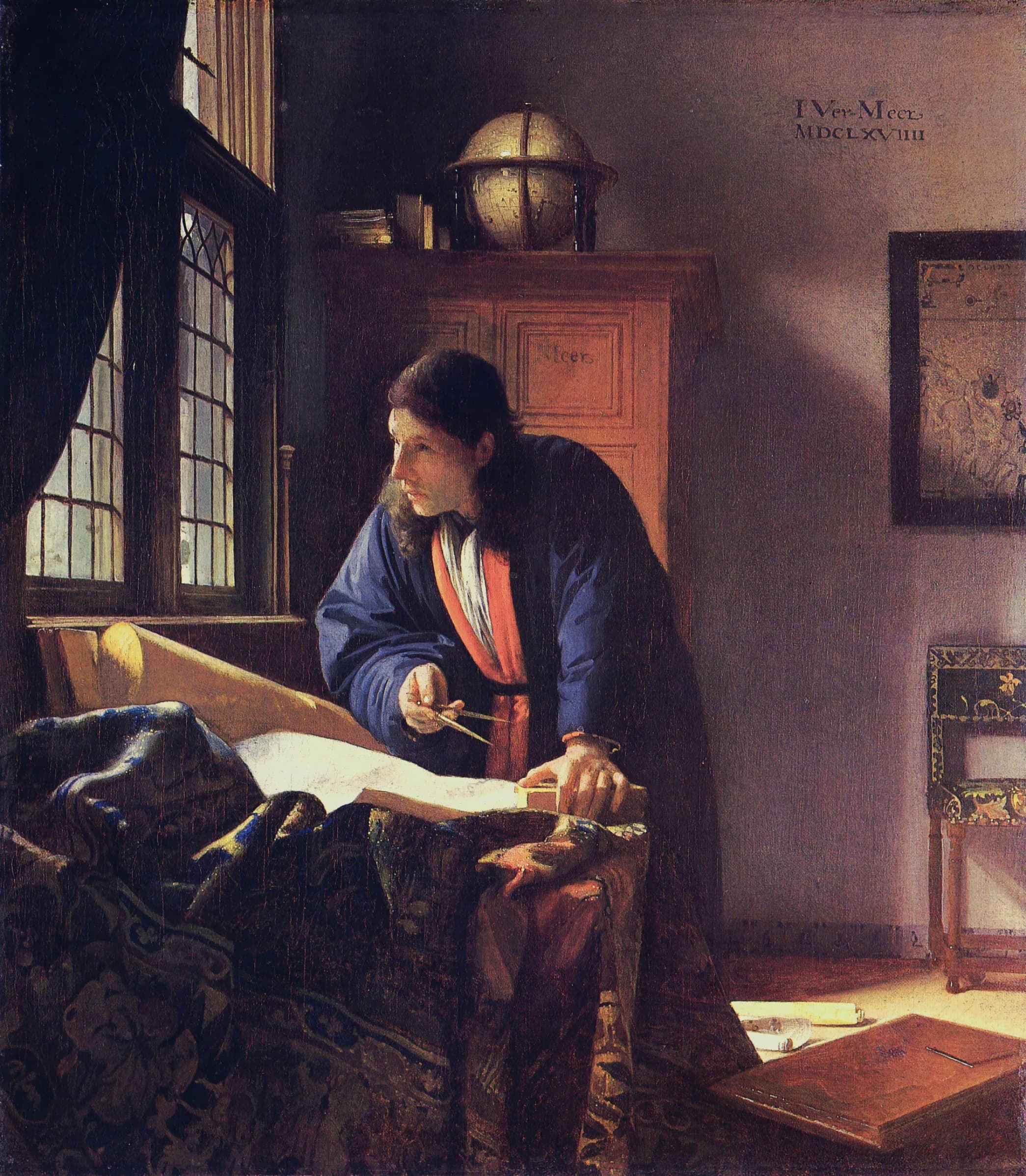
Vermeer’s The Geographer (1669) served as the focal work of the entire touring exhibition, lending it the alternative subtitle used in Japan: “Vermeer’s ’Geographer’: The Golden Age of Dutch and Flemish Paintings from the Städel Museum.” One of only two surviving Vermeer paintings to feature a solitary male figure, and one of the very few to depict a named profession, the canvas had never before been shown in Japan. The choice of The Geographer as centrepiece reflected a broader curatorial argument: that maps, charts, and globes recur throughout Vermeer’s interiors as symbols of the maritime trade that underwrote Dutch Golden Age prosperity.
The loan was exceptional in scale. The Städel Museum, founded on the bequest of Frankfurt banker Johann Friedrich Städel in 1816, was undergoing a major renovation at the time, and the 2011 Japan tour represented the largest dispersal of its holdings since the institution’s inauguration nearly two centuries earlier. The exhibition was curated by Jochen Sander, Deputy Director and Head of German, Dutch, and Flemish Painting at the Städel, who had also overseen the show’s earlier presentation at the Guggenheim Museum Bilbao (October 2010 to January 2011).
- Dates
- 11 Jun 2011 – 28 Aug 2011