Art treasures from the Vienna collections
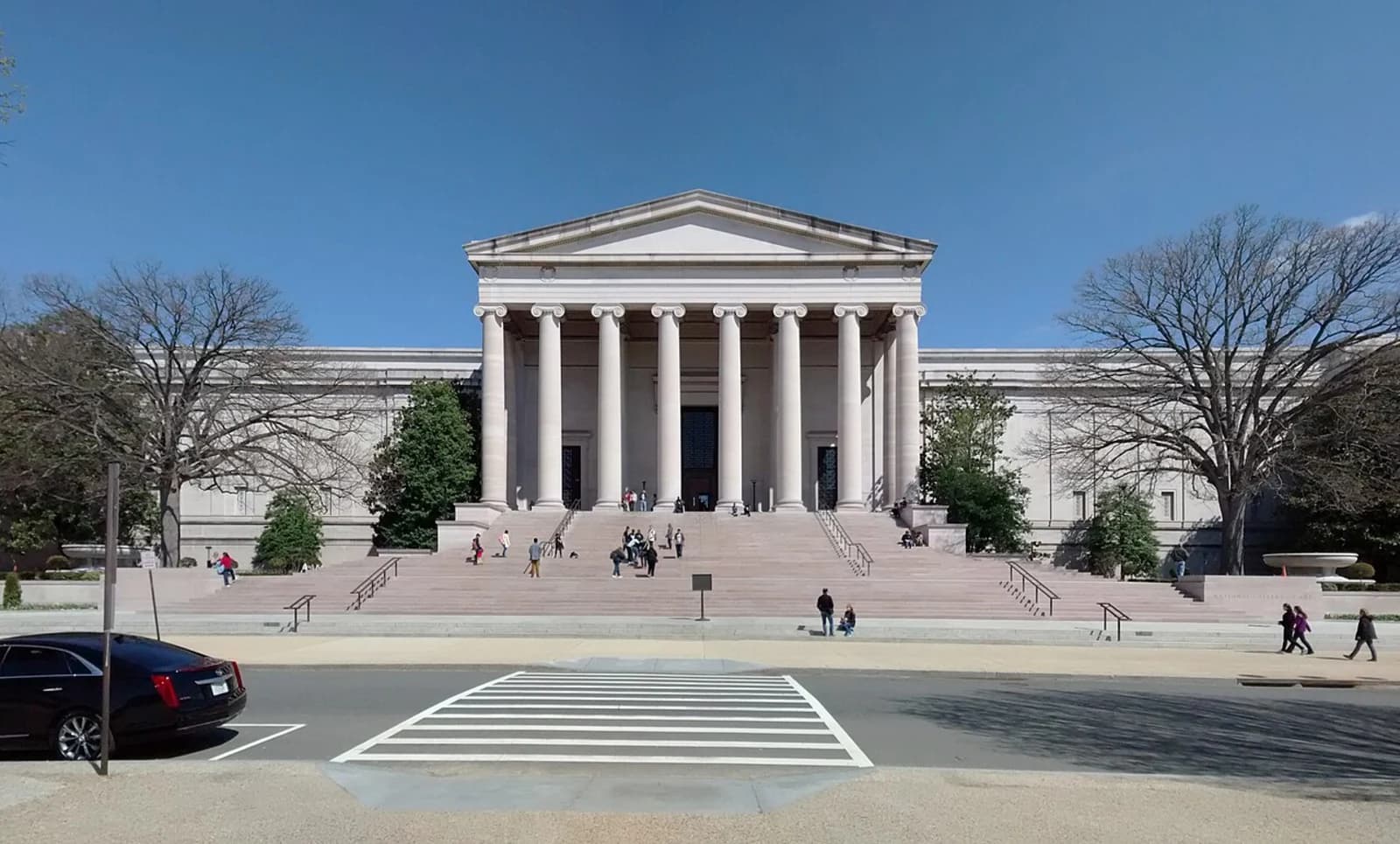
The National Gallery of Art in Washington served as the opening venue for “Kunstschätze aus Wien” (Art Treasures from Vienna), one of the most ambitious postwar cultural exchange programs ever mounted. Running from 20 November 1949 to 22 January 1950, the exhibition brought approximately 80 masterworks from the Kunsthistorisches Museum in Vienna to American audiences for the first time, presenting centuries of European painting, sculpture, and decorative arts assembled by the Habsburg dynasty.
The tour was organized jointly by the Austrian government, the Kunsthistorisches Museum, and the American host institutions, with diplomatic backing from both governments. Austria was still under four-power Allied occupation in 1949, and the exhibition served as a deliberate act of cultural diplomacy, reintroducing Austria to the international community as a custodian of European civilization rather than a wartime adversary. For the National Gallery, which had opened only in 1941, hosting the American premiere of such a prestigious loan was a significant institutional statement.
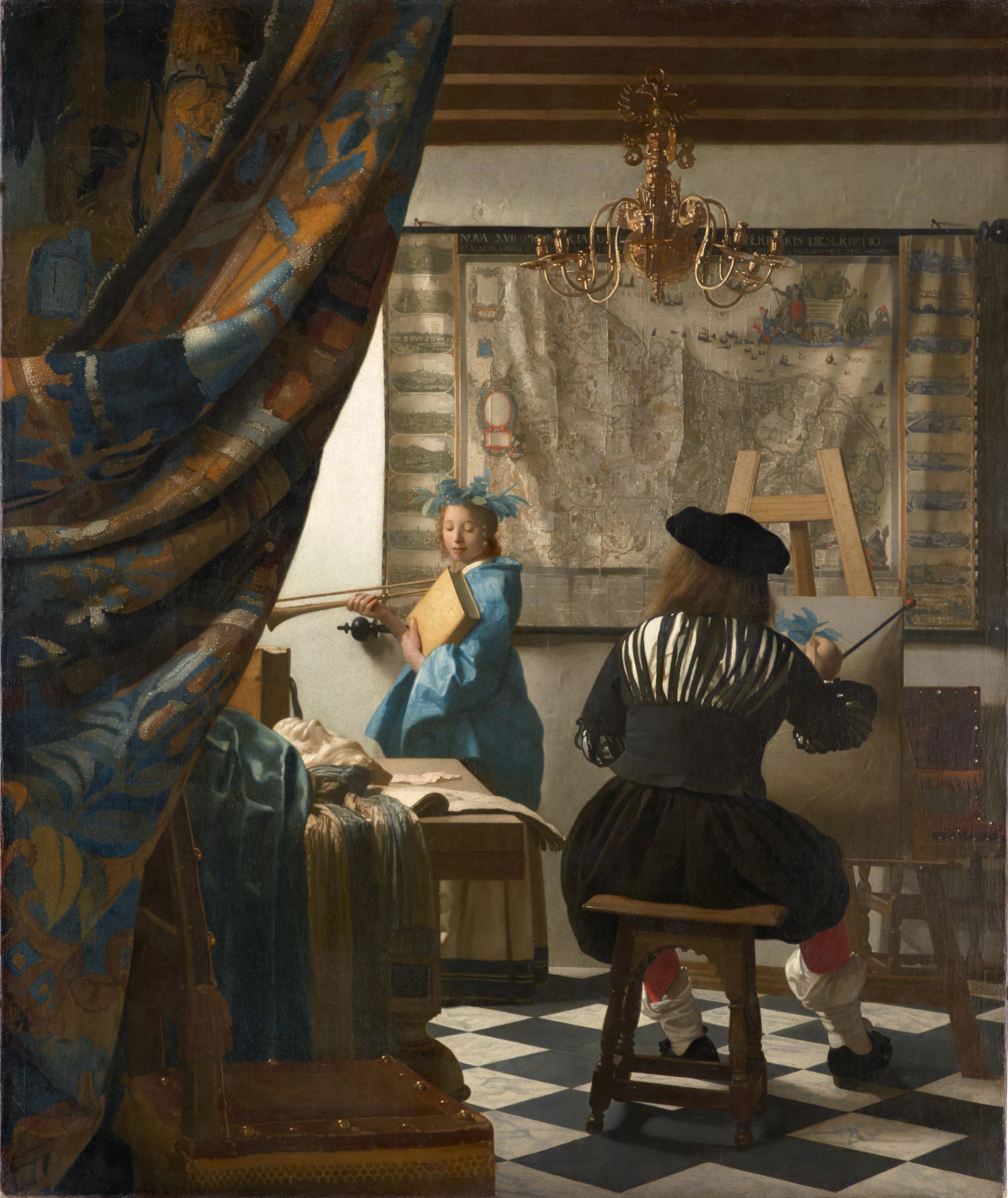
Among the loans was Vermeer’s The Art of Painting (c. 1666–68), one of his largest and most complex canvases. The work shows a painter seated at his easel in a richly appointed studio, his model dressed as Clio, the Muse of History, holding a trumpet and a volume of Thucydides. The painting’s recent history was turbulent: in 1940 Count Jaromir Czernin had sold it to Adolf Hitler, who intended it for the planned Führermuseum in Linz. Allied forces recovered it from the Altaussee salt mine in Austria in 1945 alongside hundreds of other looted works. The Austrian government subsequently placed it in state ownership, making it part of the Kunsthistorisches Museum’s permanent collection and available for this international tour.
After Washington, the exhibition traveled to the Metropolitan Museum of Art in New York, the Art Institute of Chicago, the Minneapolis Institute of Art, the Detroit Institute of Arts, the Toledo Museum of Art, and the Philadelphia Museum of Art, among other venues, continuing through 1952. The tour introduced millions of Americans to the Habsburg collections and helped reestablish Vienna’s place on the postwar cultural map.
- Dates
- 20 Nov 1949 – 22 Jan 1950
- Museum
 National Gallery of Art