Dutch Pictures 1450–1750
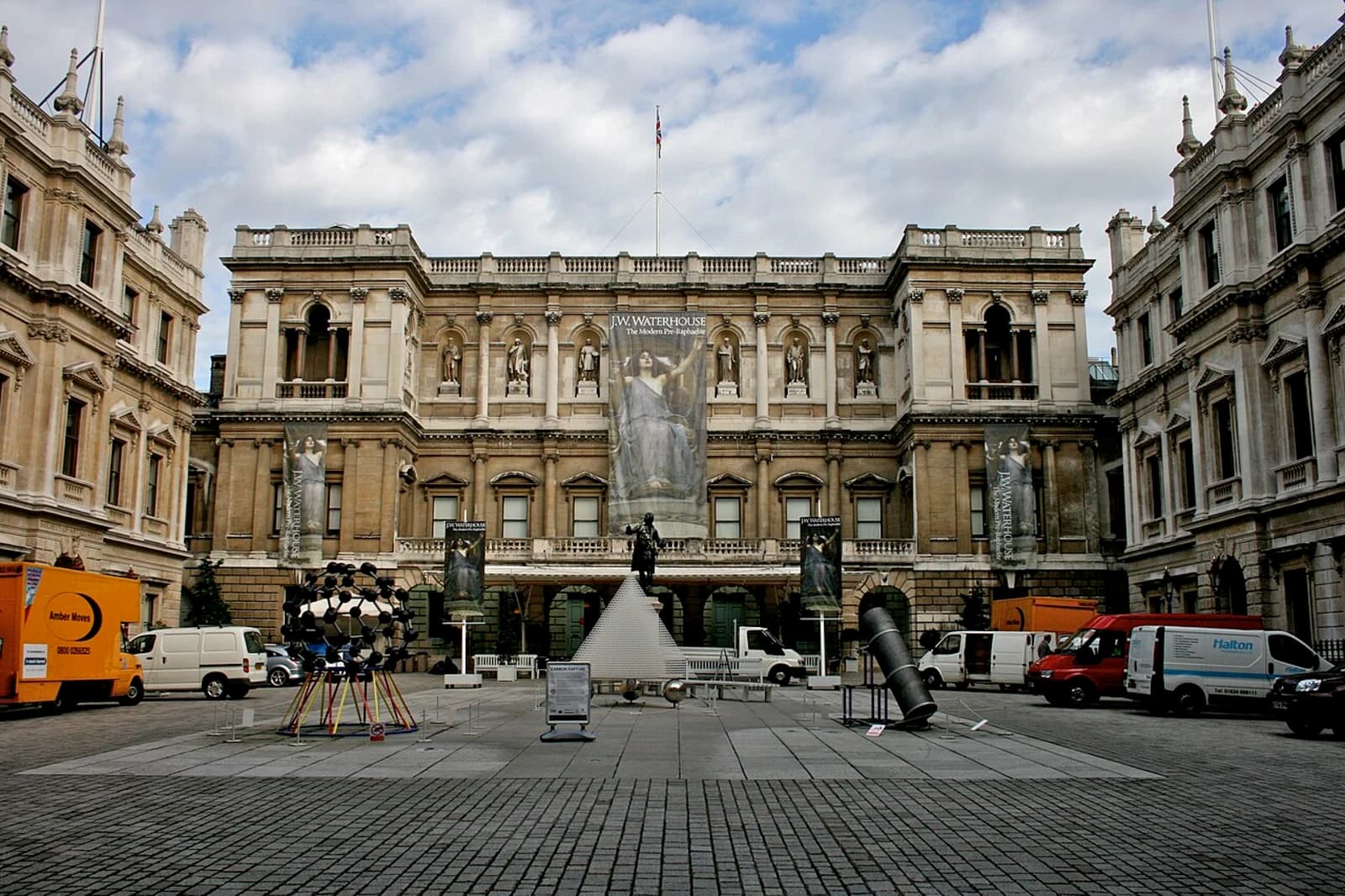
“Dutch Pictures 1450–1750” was the Royal Academy’s Winter Exhibition of 1952–53, one of the most ambitious loan shows Burlington House had staged since the Second World War. Running from 22 November 1952 through the end of March 1953, it assembled 644 works spanning three centuries of Dutch painting and drew on private collections across Britain alongside major institutional lenders. A two-volume catalogue documented the exhibition, with a separate souvenir volume reproducing 69 plates chosen from the full range of works on display. The show belonged to a tradition of grand Winter Exhibitions that the Royal Academy had organised since 1870, when it moved to Burlington House; from the 1920s onward these had taken the form of scholarly survey exhibitions rather than simple aggregations of Old Master loans, and “Dutch Pictures 1450–1750” continued that model, covering the full arc from the early Netherlandish roots of the tradition through the Golden Age and into the eighteenth century.
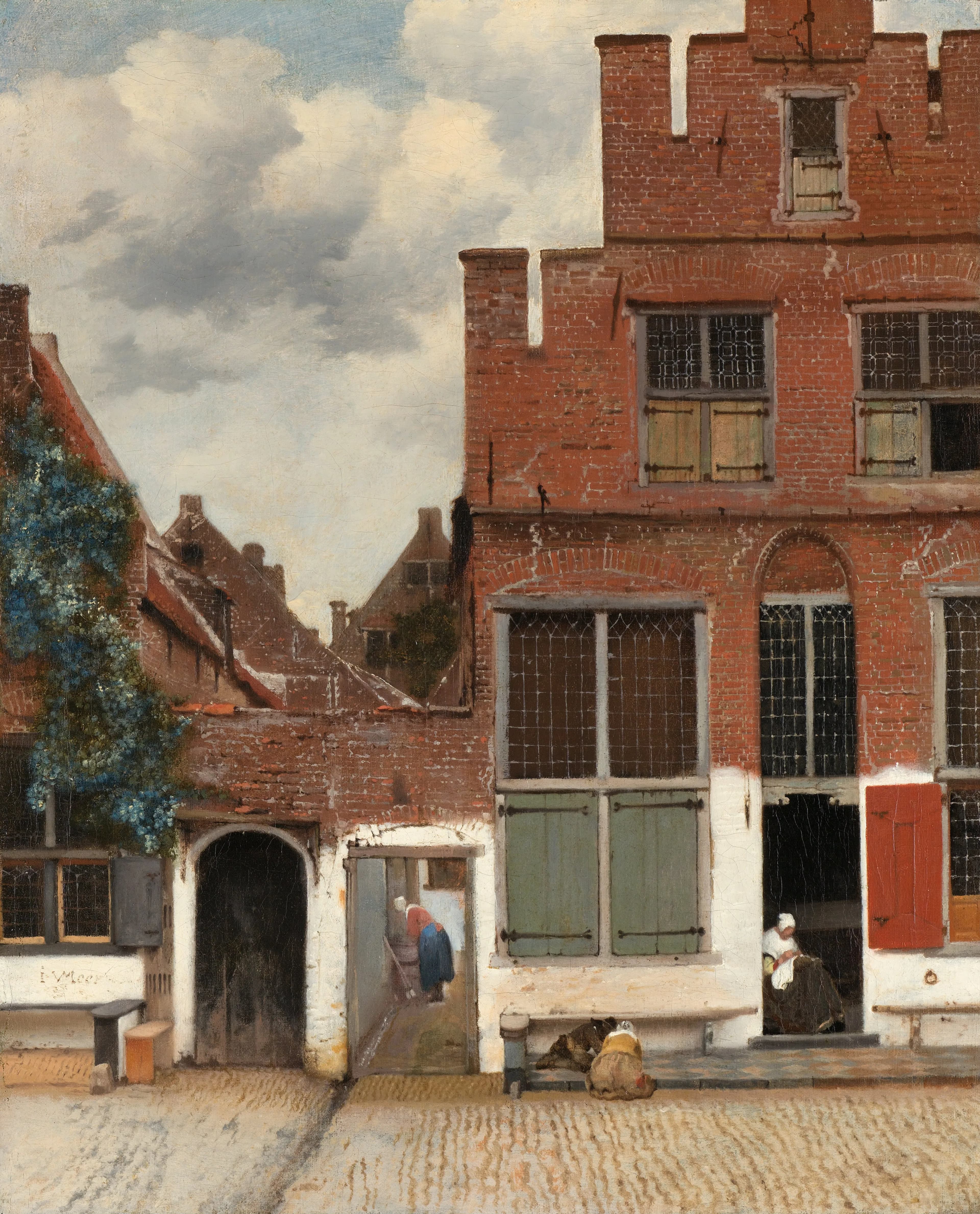
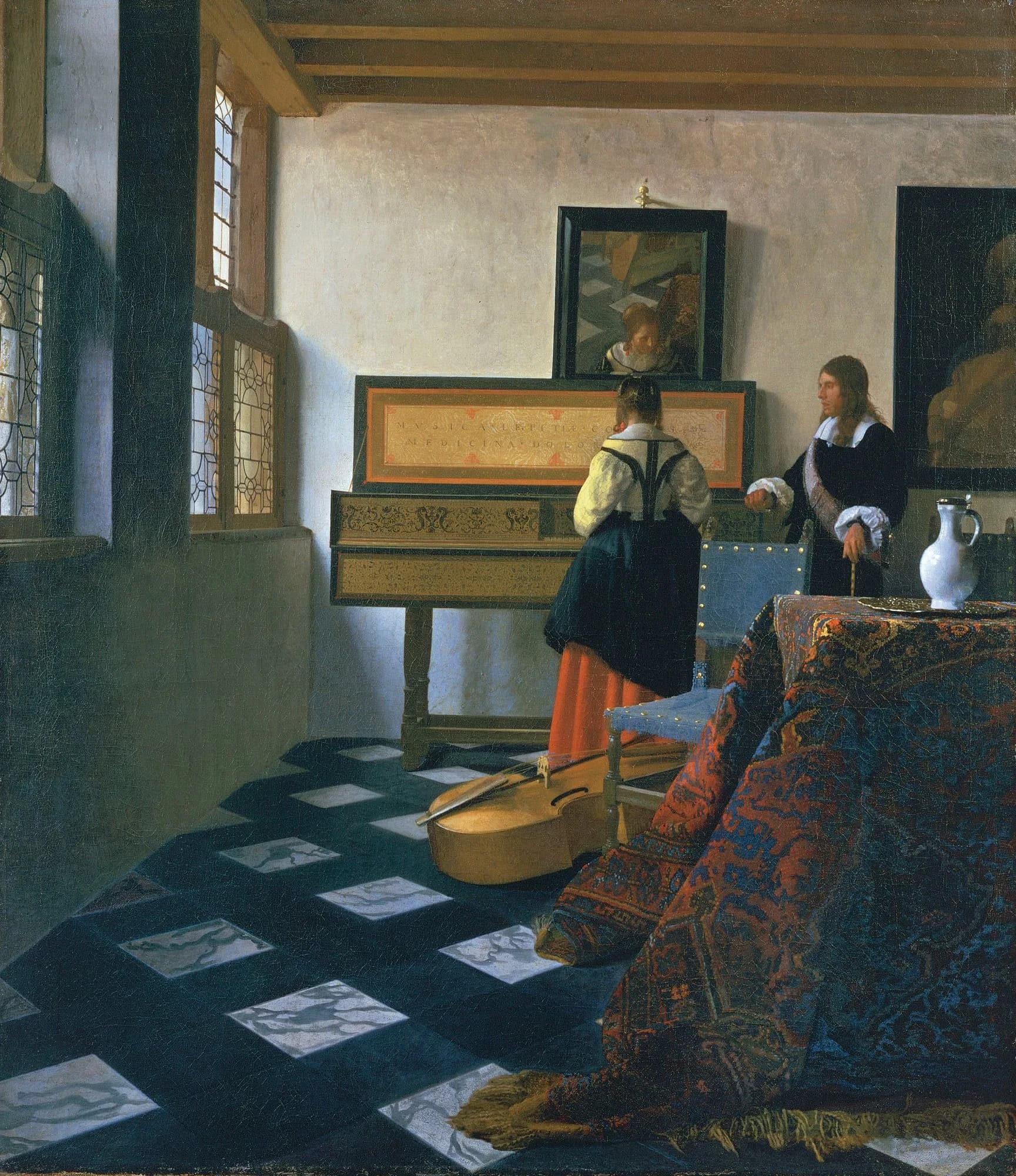
Both Vermeer paintings in the exhibition were drawn from distinguished collections. The Music Lesson (catalogue no. 515, illustrated as plate 45) came from the Royal Collection at Windsor Castle, where it had hung since George III acquired it in 1762 as part of the Consul Joseph Smith collection. Its appearance at Burlington House gave London visitors an unusual opportunity to study the painting at close range; it is rarely lent and was known at the time primarily through reproductions. The Little Street (catalogue no. 529, illustrated as plate 13) travelled from the Rijksmuseum in Amsterdam, where it had entered the national collection in 1921. Its inclusion alongside the Royal Collection Vermeer gave the exhibition a small but compelling pair of works from two of his most distinct modes: the architectural exterior and the domestic interior.
The exhibition appeared at a moment when scholarly interest in Vermeer was growing steadily. The post-war decades saw increasing attention to questions of attribution, technique, and the painter’s place within the broader tradition of Dutch genre painting, and a show of this scale, drawing on the depth of British private holdings as well as continental loans, served as an important reference point for connoisseurship and catalogue work in the years that followed.
- Dates
- 1 Nov 1952 – 28 Mar 1953
- Museum
 Royal Academy of Arts